

7 Reasons Why Retro Enthusiasts Love CRT Displays
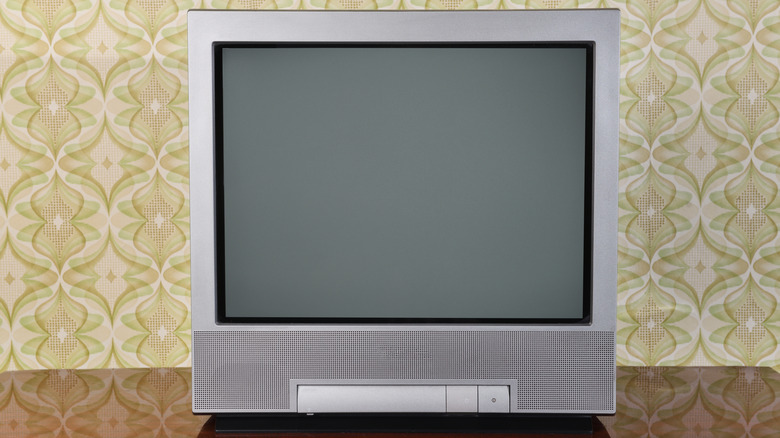
If you walk into a store to buy a television these days, you're most likely only going to find a flat-panel TV using OLED, LCD, QLED, and more. There are no more big CRT (Cathode Ray Tube) TVs to be bought, and surely we've all moved on from those beastly TVs of yore?
Well, not so fast. While CRT production for home TVs stopped in the U.S. around the mid-2000s, and most people no longer use them, there's a strong community of CRT enthusiasts from all over the world who buy, preserve, and use these old TVs. The internet is filled with retro and AV enthusiast forums and groups that pore over listings looking for that holy grail CRT that's been sealed in a box since the '90s. Why?
As it turns out, while flat panel TVs surpass CRTs in many ways that matter for commercial success, CRTs are still better in a few key areas that almost guarantee that the typical videophile will want at least one of these lead and glass machines hanging around somewhere. If that sounds surprising, you'll want to stick around to find out exactly what makes CRTs so good when used for the right reasons. Who knows? Perhaps by the end, you'll be looking for your own back-breaking goggle-box.
They display classic games the way developers intended
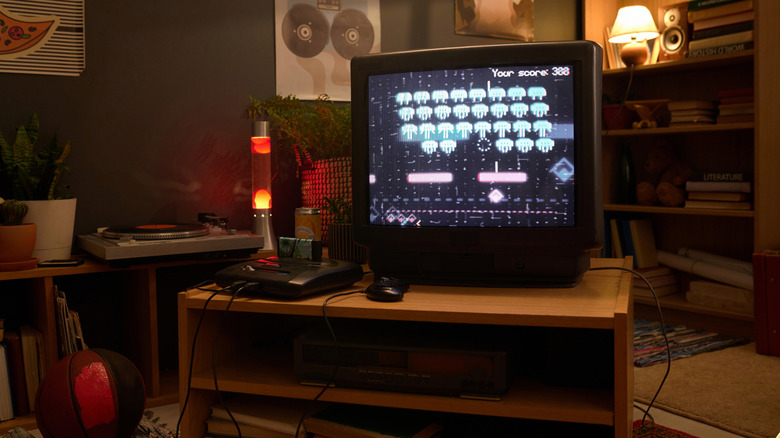
CRTs are popular among retro gaming enthusiasts because the games they want to play were developed with this older display technology in mind. The game developers would take advantage of the unique properties you get when you fire electron beams at phosphors, which means that playing these same games on a modern flat panel doesn't look quite right.
A key example is how the combination of CRT image properties and the nature of analog video signals is used to create the illusion of a transparant waterfall in "Sonic the Hedgehog." Using an emulator on a pixel-perfect flat-panel removes these clever tricks from their natural environment, and the game looks wrong or the intended effect is missing.
Likewise, many character sprites (the 2D images representing characters) look strangely misshapen and distorted on a flat panel. This doesn't happen for sprites designed to be seen on flat-panel displays, since the artist creates them with these modern screens in mind. The natural pixel blending and unique pixel aspect ratio of CRTs mean that you need to view these older games on them to see what they are meant to look like. It's not that CRTs can display pixel art inherently better than other display technologies; it's that the artists created their imagery with the display technology of the day in mind, and for a certain era of gaming, that's going to be a CRT.
Zero processing lag still beats even the best modern displays
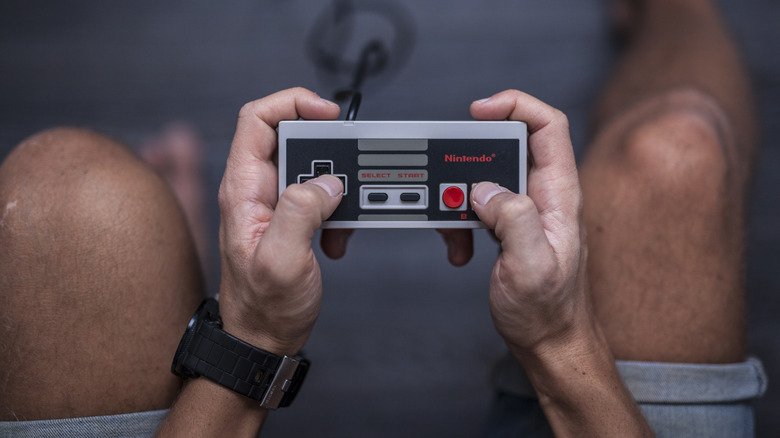
When you're playing a video game, let's say it's "Super Mario Bros." for the sake of argument, there's a span of time between pressing a button on the controller and seeing the character respond to that on-screen. This is known as input latency, and it's an important aspect of video games that doesn't get enough attention compared to things like frame rate or image resolution.
There are many contributors to the total latency in the chain from input to output, but in modern digital flat panels, a significant amount of digital processing must happen from the moment the signal enters the display until you see changes on your TV. This processing is meant to boost picture quality, and usually it's good to have, but not when you're doing something latency-sensitive, like playing video games. This is why modern TVs have game and PC modes, which disable as many of these post-processing effects as possible. This leads to lower picture quality, but also reduces latency.
That said, even the snappiest modern digital displays ain't got nothing on an analog CRT. From signal to display, the latency is so low that in human terms, it might as well be zero. This is why retro games feel so snappy on a CRT, and why you keep missing those tricky jumps on a flat-panel TV.
Native resolution? CRTs don't need one
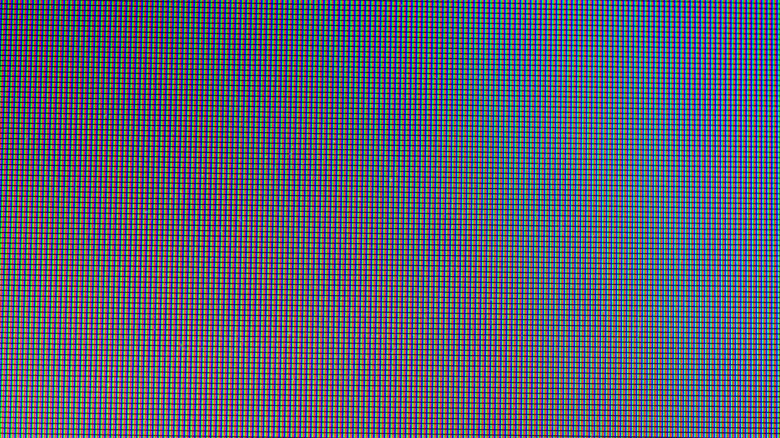
The biggest adjustment going from CRTs to plasma, LCD, or OLED TVs is the concept of native resolution. It's not hard to understand, but we need to briefly unpack some concepts. On a modern flat panel, there's a physical grid of pixels. So a 1080p TV has a grid consisting of 1920x1080 pixels. If you put an image on that screen with exactly that number of pixels in that ratio, you get a perfect recreation of the image.
On Blu-ray, that's what you're getting, but DVD media has a fraction of the pixels. So what now? That's what "upscaling" means on a smart TV. It's a mathematical operation that determines how to handle all those extra pixels when there's no information in the original image to fill the gaps. One form of upscaling is integer scaling. This only works if your lower-resolution image can be divided perfectly into the pixel grid. 1080p scales perfectly into 4K UHD by having four pixels represent one. It's a softer image, but everything else looks right.
That's not what happens when you end up with fractions of pixels, and various methods try to estimate what those fractional pixels should look like. The result is ugly artifacting, though scaling technology has become pretty decent. But, CRTs don't have pixel grids. They draw the image on the back of a glass surface, no scaling required! That makes them ideal for retro video games and video content.
CRT motion clarity is still unmatched
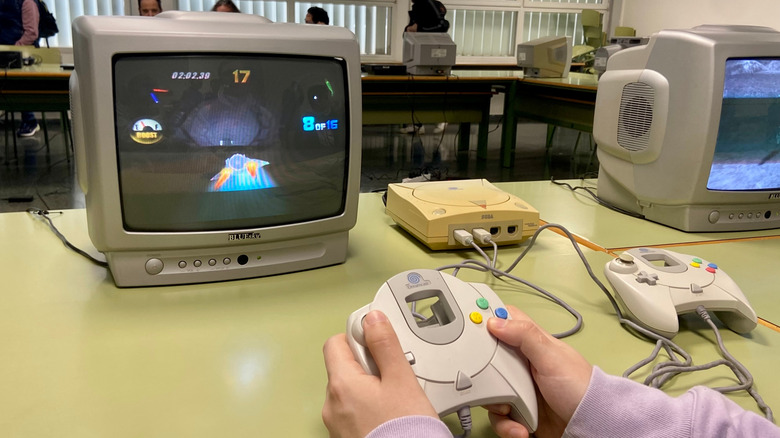
Apart from the tyranny of native resolution, the other shocking downgrade going from CRT TVs and monitors to LCDs was how horribly blurry these new flat panels are. A lot of it was down to ghosting, which happened because the LCD's pixels couldn't change state fast enough to keep up with the image on screen. This led to smeary ghost-like afterimages.
But modern flat panels have pixel response times as low as a single millisecond. They have high refresh rates, too, and yet these displays have blurry, smeary motion. Why? It turns out the problem is really with us and how our eyes and brain work. These modern screens are sample-and-hold displays. This means the screen holds a frame of video perfectly, and then the whole screen snaps to the next frame. This sounds like a good thing, but CRTs have a blanking period between frames as the phosphors decay, and it turns out this prevents us from perceiving movement on-screen as smearing across our retinas.
Flat panel makers have come up with technologies like motion interpolation, black frame insertion, and backlight strobing to try to achieve what CRTs can do naturally. The most expensive TVs and monitors with the latest backlight strobing technology do a pretty good job, but when you can pick up a used CRT for less than $30 and see perfect motion, it's clear why so many people opt for the old tubes instead.
Deep blacks and contrast come naturally to CRTs
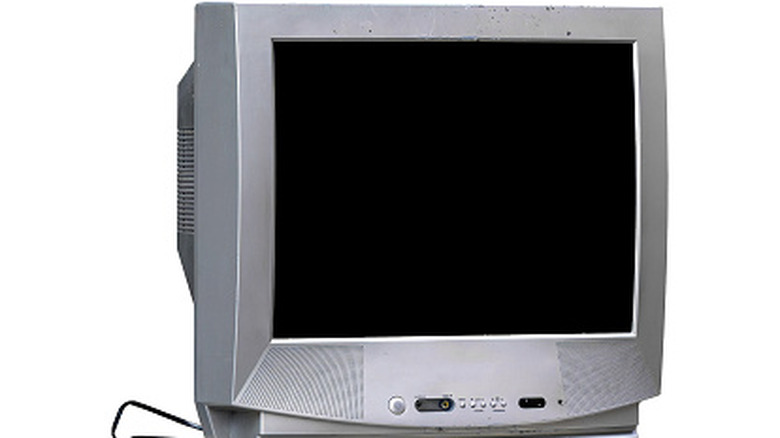
There was yet another thing those who lived through the great flatscreen revolution noticed when sitting down in front of their stylish new thin TVs. For some reason, the image looked so much more washed out than on CRTs. Bright full-frame images looked great, but any scene with darkness in it looked muddy.
This all comes down to emissive versus transmissive displays. A CRT emits its own light. So when something is dark or completely black, that part of the image is simply turned off. In an LCD, the display does not generate its own light. Instead, you need to shine a backlight through it to see anything. A black pixel is one that blocks all light from the backlight. Except, you can never perfectly block a backlight, so instead of black, you get a washed-out grey.
Using emissive screen technology, OLEDs do not have this problem, but they're still more expensive than LCDs. LCD technology has advanced with backlight dimming zones, mini-LEDs, and new micro RGB displays. With these backlight systems, the backlight can be dimmed or turned off selectively, but CRTs are still among the cheapest ways to achieve perfect blacks, if you can find a good one. Some CRTs have a grey cast to the screen when turned off, and so the black isn't quite perfect, but still far better than a typical LCD.
Modern alternatives still struggle to replicate the experience

If CRTs are so much better than LCDs in so many ways, and even better than expensive OLEDs in some cases, why did they fall out of favor? There are a few likely reasons. Convenience is a big one. CRTs are bulky and extremely heavy. Scaling up the screen size also increases the bulk rapidly. The largest CRT TV ever manufactured is the Sony PVM-4300, and it weighs in at a staggering 440 pounds! That's for a 43" screen, which is absolutely pedestrian by modern standards.
HD CRTs existed near the end of their reign, but the higher resolution only made sense at bigger screen sizes. So even with worse color, contrast, and motion, people seemed happy to switch to thin, light, space-saving TVs. The result is that TV engineers have spent literal decades trying to mimic a fraction of the power of CRT technology. We mentioned black frame insertion earlier, and you've surely seen that awful motion smoothing on your smart TV, but as of this writing, emergent technologies like NVIDIA's G-SYNC Pulsar and GPU-powered CRT scanline simulation are the closest anyone has come to matching CRTs with flat-panel displays.
DLSS on an NVIDIA graphics card uses powerful AI hardware to produce satisfying upscaling results that CRTs can achieve with no computation or special effort. If you have the money and access to the latest tech, you can have something almost as good as the TV you picked up for free from the sidewalk!
They've become rare, and that makes them desirable
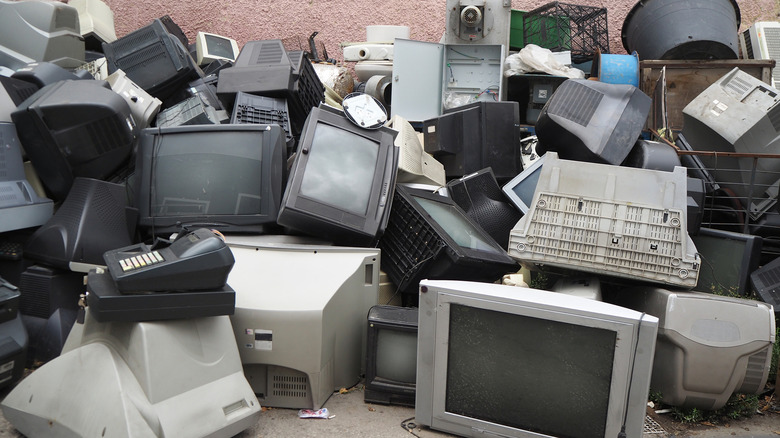
Once the praises of CRTs had been sung, there was no way to unring that bell. People still want them, but there is no new supply of CRTs. Every time one breaks, or two are combined to make one working model, the number of CRTs goes down. It's a resilient technology, and with good maintenance, many will keep working for years to come, but unless by some miracle someone decides to start a new CRT factory, what we have at any given moment is it.
This creates a sort of "Concorde moment" where, knowing that something is going away forever, people want to get it while they can. As a result, used CRT prices have gone up significantly. Resellers are the bane of CRT enthusiast groups on sites like Facebook, where people snap up cheap used CRTs from sellers who don't know about the demand, and then list them immediately with a huge markup. In particular, be wary of listings that say things like "retro gaming TV" or "rare retro TV." That's a sign the seller knows what's up.
At some point, probably in the near future, modern display technology will likely catch up and surpass CRTs in every way. However, even after decades of development, they still haven't quite done it. Which means that CRTs will remain a hot item among a certain subset of authenticity- and performance-obsessed enthusiasts.