

Why Pro Gamers Don't Use OLED Monitors
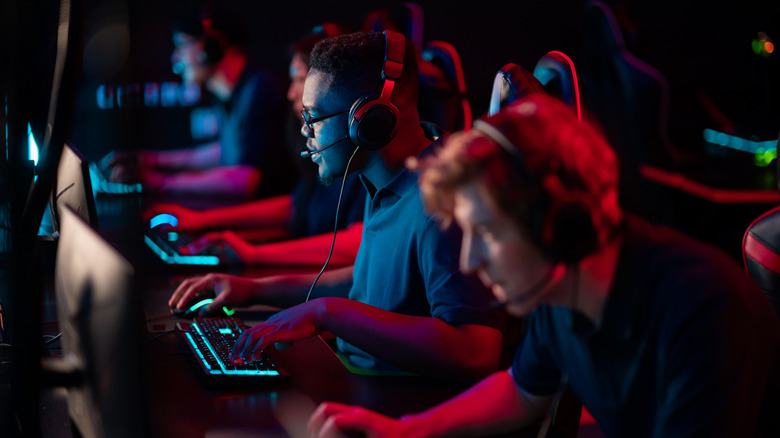
Professional gamers don't use OLED monitors because they use equipment similar to what they use in tournaments or scrims. OLED monitors are usually better but not perfect, but the professional gaming scene traditionally didn't use them because TN and IPS LCD panels were cheaper. Esports became more mainstream in the early 2000s, when "Counter-Strike" and "Unreal Tournament" made their mark through online play in 1999. Later, major leagues began forming in the US, and platforms like YouTube and Twitch helped promote it through influential content creators.
Major esports tournaments didn't happen until later, like in 2011-2013, when the first Dota 2 International and League of Legends World Championship occurred; teams were already well-established for these competitive events, and OLED gaming models didn't become more commercially available until 2022 (early models were too expensive and there were technical issues), when Alienware, a subsidiary of Dell, released its 34-inch AW3423DW QD-OLED monitor. Major e-sports organizations like Team Liquid, FaZe Clan, and Cloud9 were already preparing long before (Team Liquid, one of the oldest, was founded in 2000). Many of these organizations also run (or ran) team housing and training facilities. Hence, they need to ensure they provide appropriate, cost-efficient equipment, including ergonomic furniture and PC setups with monitors, long before these tournaments start.
What do pro gamers look for in monitors?
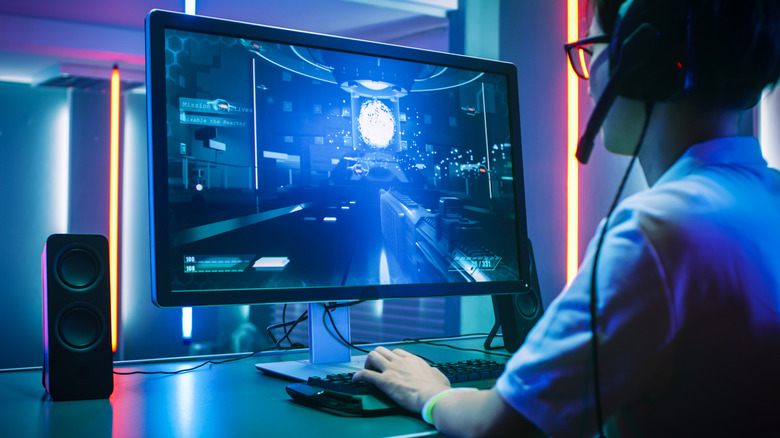
Pro gamers usually already have monitors supplied by their org, and their sponsors usually foot the bill for the used equipment. Typically, these monitors aren't too large, usually fitting between 24 and 27 inches; small enough to keep the HUD within the central field of vision while still being best for tracking and reacting. Resolution also rarely exceeds 1440p; 1080p is common, but you won't see many running games at 4K because it's harder to balance stable high frame rates with higher resolutions. The most important factor is a high refresh rate (240Hz to 600Hz), since it updates images faster and reduces input lag. Many games require pro gamers to have fast responses and reflexes, such as first-person shooters. Fast response times also help prevent ghosting and motion blur in fast-paced games, providing consistent performance in competitive settings.
Zowie, a Taiwanese esports equipment brand, reported that 92% of pro "CounterStrike 2" players and 73% of "Valorant" players use a Zowie model. These monitors—the Zowie XL2566K TN and Zowie XL2586X TN—support only 1080p, come in 24- to 27-inch sizes, and offer refresh rates of 360Hz and 540Hz, respectively, which fit what pro players want in a gaming monitor. Plus, supplying them in tournaments means everyone has access to the same monitors, avoiding any competitive edge.