

5 Major Projector Brands You Might Not Realize Are Owned By Chinese Companies
We may receive a commission on purchases made from links.
Buying a projector used to mean mounting a giant, noisy gray box to your ceiling. Over the past few years, though, projectors have become far more exciting. Between sleek portable cylinders that double as Bluetooth speakers and short-throw consoles that project a 100-inch screen from your coffee table, home theater setups have become super convenient and far more affordable. If you've been shopping for a new projector, you've likely seen options from the major projector brands, like Sony and Epson.
However, there might be other projectors catching your eye that you may not know are, in fact, from China. The country has moved beyond being the hub for parts assembly, with manufacturing hubs like Shenzhen, Chengdu, and Hangzhou becoming places where high-end and more affordable projectors alike are coming from.
When you see many of the top-rated projectors on Amazon and Best Buy with names that sound vaguely international, you can likely trace their ownership right back to Chinese tech firms. A few started as scrappy software shops, others as budget-friendly e-commerce storefronts, and some are multi-billion-dollar electronics empires. If you've been thinking about picking up a new projector, here are five major Chinese projector brands worth learning about.
XGIMI
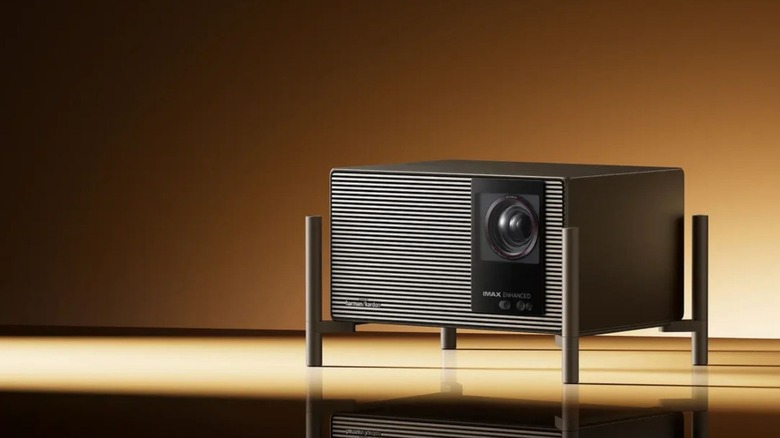
On your shopping journey, if you've seen a portable projector that looks more like a designer bookshelf speaker than a media gadget, chances are it's from XGIMI. Operating out of Chengdu since its founding in 2013, the company has spent some serious time rethinking what everyday projectors should look and act like. Instead of making an unremarkable box and having users fiddle with a slew of settings, XGIMI built some truly gorgeous compact metal and fabric enclosures packed with features like auto-focus sensors and built-in Android TV. It's a design philosophy that's easy to use and looks great on your modern coffee table even when you're not using it.
This focus on plug-and-play convenience helped XGIMI get noticed in Western projector markets. By partnering with Harman Kardon for onboard audio, models like the Halo and Horizon series avoided the tinny, unusable audio that tends to plague lesser projectors. Its automatic screen alignment, which senses obstacles on your wall and resizes the picture around light switches and picture frames, turns a notoriously finicky setup process into one that takes mere seconds so you can actually go enjoy your movie.
In 2021, XGIMI went public on the Shanghai Stock Exchange, and its momentum has only grown since. While older AV enthusiasts might still lean toward more established brands for dedicated blacked-out theater rooms, XGIMI has successfully captured the casual crowd that wants a massive, sharp image in their living room without turning installation into a full weekend construction project.
Hisense
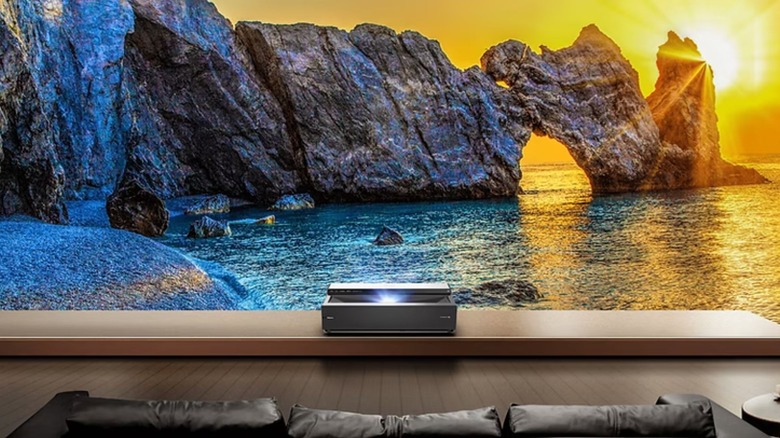
Most shoppers know Hisense from the budget TV aisle at big-box electronics stores. The Qingdao-based manufacturing giant originated in 1969 as a state-owned radio factory. But since then, Hisense has grown into a global brand with plenty of supply chain muscle and some higher-end models. Rather than competing in the ultra-portable projector space, Hisense bet big on ultra-short throw projectors. These units sit just inches away from a wall and bounce bright laser light upward to create images measuring over 100 inches.
Now, Hisense is putting out projectors that look good, even in broad daylight, especially if you pair them with some tricks for making a cheap home projector look better. Since Hisense controls its hardware manufacturing and optical engineering, it's putting complex tri-color laser engines in stores at affordable prices that flat-out undercut many other home theater projector brands. This approach mirrors Hisense's TV strategy: take an expensive display technology, scale the production, but still make it practical and affordable enough for anyone's living room anywhere on the planet.
Vankyo
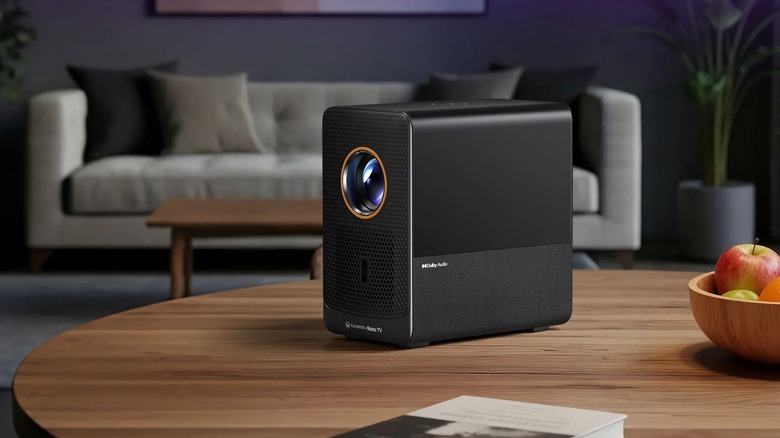
Look for a projector at online stores (especially when there are good deals, like on Black Friday), and the brand Vankyo will almost certainly show up. Founded in 2017 and based in Shenzhen, this brand made the choice to not chase home-theater purists. Instead, Vankyo created a following by putting out basic yet functional projectors; these were priced low enough to easily be impulse buys for users like college students or even for occasional backyard movie nights.
Vankyo can attribute its popularity to its Leisure series. The company kept these projectors affordable by pairing single-panel LCD technology with inexpensive LED lamps, and omitting pricier components like laser light engines or fancy-schmancy audio partnerships. And sure, the image quality for Vankyo's lineup probably won't rival a true 4K theater setup any time soon; it offers up exactly what casual buyers want: an easy and budget-friendly way to project a movie. Vankyo may not win awards for any optical breakthroughs, but it made good-quality projectors available to shoppers who wouldn't normally go near the gadgets since they can potentially cost thousands of dollars.
JMGO
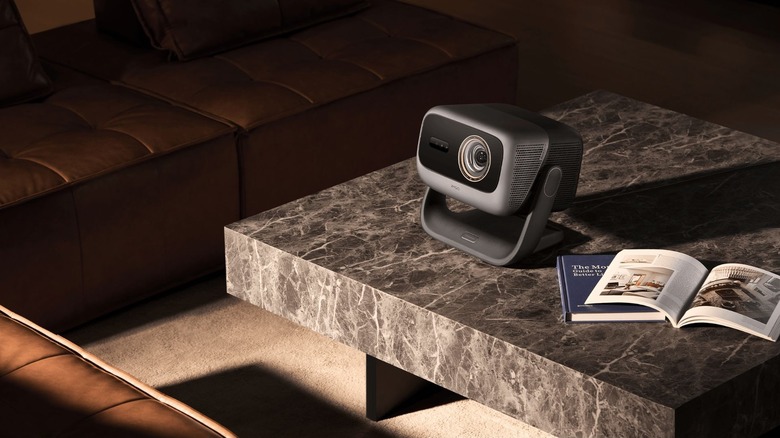
Setting up a portable projector can sometimes involve awkwardly trying to balance books or tripods or whatever else you have lying around to get its lens pointed at just the right spot and angle. But Shenzhen-based JMGO, founded in 2011, finally solved this headache. Instead of sticking you with a boring plastic rectangle that's hard to level, JMGO has experimented with cylindrical and spherical designs, and even with motorized enclosures.
The standout example of this fun design philosophy is the brand's N1 series, which mounts the entire projector inside a two-axis gimbal base. This means that you can smoothly tilt the projector with one hand to point the beam anywhere from the baseboard up to your ceiling, and then its software will automatically handle any needed adjustments, even moving it around light switches for a clear picture. That is the kind of feature that makes it easier for people to make the jump from TV to projector.
And behind the gimbal rests some serious optical tech. JMGO uses proprietary triple-color laser light engines in its projectors, which then give you wide color gamuts and punchy contrast levels usually reserved for commercial-level projectors. By putting quality hardware inside a chic and user-friendly chassis, JMGO has established itself as a go-to Chinese projector manufacturer.
Dangbei
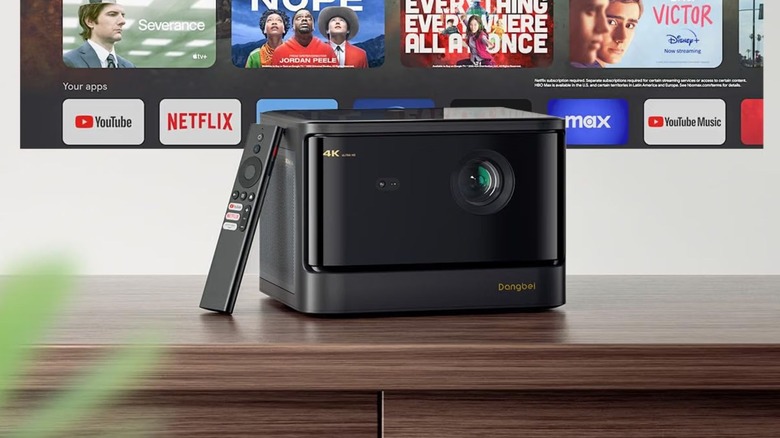
Many great hardware companies struggle when it comes to making software that's just as good. Oftentimes, this can leave users struggling to wade through clunky settings menus and buggy interfaces. But Hangzhou-based Dangbei made sure this isn't the case with its gadgets. It started in 2013 as a software platform developing software for smart TV operating systems. From this, the company was able to get a good understanding of user interfaces and streaming habits long before it ever slapped an optical lens into a projector.
When the company finally stepped into the hardware market, that background gave it an immediate edge. Dangbei's projectors, especially its flagship Mars Pro series, earned praise for pairing high-brightness laser light engines with snappy, clean interfaces that skip the lag and other issues often found on budget projectors. To build up its name outside China, Dangbei has also introduced global sub-brands like Emotn to target budget-conscious international buyers.
There, the combination of great in-house software and access to high-output laser components has made Dangbei an unusually well-rounded competitor. Though hardware tends to outpace software in the realm of projectors, this Hangzhou firm proved that getting the interface right is just as important as the lens in front of it. Regardless of which projector brand you settle on, however, just be sure to pair it with some cool accessories that'll upgrade your home projector setup.