

SpaceX Just Proved Rocket Reuse Works Better Than Anyone Expected
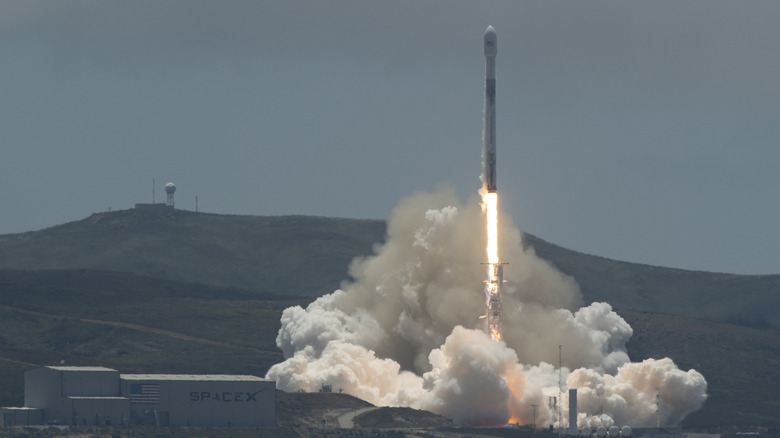
SpaceX first reused a Falcon 9 booster in 2017, putting the spaceflight company on a path to cut the cost of space access to governments and organizations keen to deploy satellites in orbit. The process involves the 135-foot-tall first-stage booster performing an autonomous touchdown minutes after deploying its payload to orbit. The remarkable upright landing takes place near the launch site or on a droneship stationed in the ocean, after which the booster is taken to a SpaceX facility, checked over, refurbished, and flown again.
On August 25, 2026, Booster 1067 (B1067) set a new record for reflight when it lifted off for the 37th time. That's 36 new boosters that SpaceX never had to make, saving it a considerable amount of money. The Falcon 9 rocket lifted off from Cape Canaveral in Florida and deployed 29 Starlink satellites. About eight minutes after launching, the rocket's first stage performed a perfect landing on a droneship off the coast of Florida, setting itself up for a record 38th flight, probably in the coming months.
B1067 first flew way back in June 2021, with its most recent launches prior to its 37th flight taking place in March, June, and July of 2026. The majority of the booster's missions have been for SpaceX's Starlink internet service, but B1067 has also carried astronauts to the International Space Station in the Crew-3 and Crew-4 missions in 2021 and 2022, respectively. While the B1067's performance is highly impressive, it certainly isn't the only Falcon 9 booster to have flown numerous times.
Multiple boosters flying multiple times
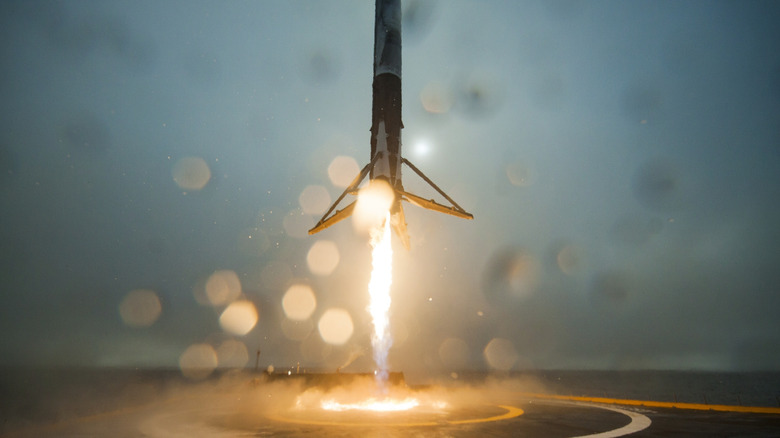
To make the Falcon 9 rocket system cost effective, SpaceX needs to fly multiple boosters multiple times, not just the B1067. And that's exactly what it's been doing. As of September 2026, B1063, for example, has flown 35 times to date, and B1069 32 times, though that particular booster has now been retired. B1077 and B1078 are also both high up the launch leaderboard, with each having lifted off 30 times. The record turnaround time for reflight currently stands at just nine days when SpaceX inspected and refurbished B1088 following its third flight on March 12, 2025, before sending it skyward again on March 21. That's unusually short for SpaceX, but it shows the fast turnaround speed that's possible under certain conditions.
SpaceX's impressive reflight achievement may leave you wondering how many times a Falcon 9 booster can actually fly. The company stated in a filing in 2026 that the Falcon 9 booster has been engineered and demonstrated to handle up to 40 flights, suggesting that some of its longest-serving boosters are approaching the upper end of their demonstrated flight capability. When it's finally retired, the B1067 could end up on public display like the B1035 (the first booster to be reused), which you can see at Space Center Houston in Texas. Alternatively, it could become one of the few Falcon 9 boosters that's expended during a mission due to the launch profile, or simply be stripped for usable components before being scrapped.
From the Falcon 9 to the Starship
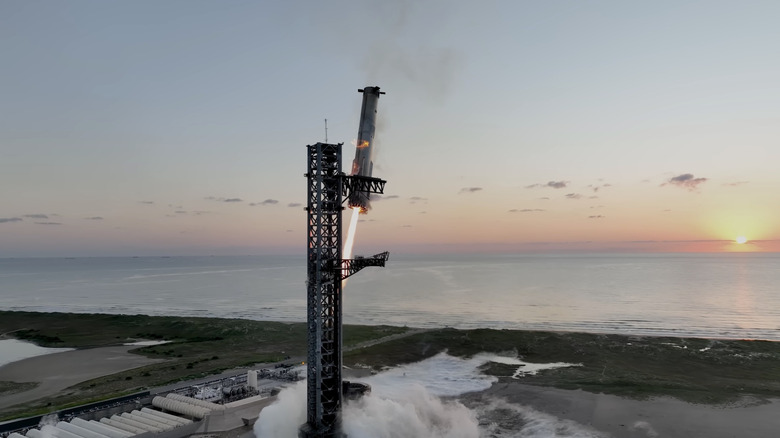
Having mastered the process of landing a booster and then flying it for multiple missions, SpaceX has applied what it's learned to its significantly larger, next-generation Starship rocket. But the system is a little different. For example, whereas the Falcon 9 uses landing legs to touch down, Starship's first-stage booster, called the Super Heavy, never touches the ground. Instead, the booster descends to a few meters above the ground, after which two giant mechanical arms attached to the launch tower "catch" the vehicle in midair. With the booster secured, the three central Raptor engines that guided it during its final stage of descent power down.
As of September 2026, Starship has already reused two different Super Heavy boosters across its 14 test flights. Starship's ninth flight, which took place in May 2025, reused a Super Heavy that first flew in January 2025 on Starship's seventh flight. Additionally, the booster that flew for the first time in Starship's eighth flight in March 2025 flew again on the 11th flight in October of the same year.
During Starship's ongoing testing phase, SpaceX is choosing to land some of its boosters on water rather than bringing them back to base. The team developing Starship — the world's most powerful rocket with 18.1 million pounds of thrust generated at launch — is also planning to reuse Starship's upper stage. Before that it'll need to land it in one piece back at the launch site, a feat that it could attempt for the first time in late 2026. Once Starship is operational, it'll be used for crew and cargo missions to the moon and possibly even Mars.