

5 Sci-Fi Shows From The '80s That Still Hold Up Today
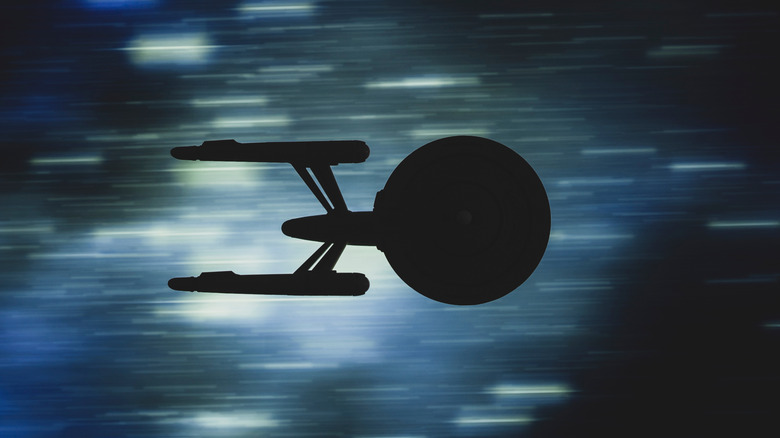
In a general sense, the '80s were a decade with a somewhat youthful image to it. Fluorescent colors popped onto the scene alongside crimped hair, the Walkman, and bright-wheeled Roller Blades. While there were controversial sci-fi movies in the 1970s, and while that decade presented science fiction with a somewhat dark and cautionary feel, the '80s similarly reflected a broader cultural vibe that was prevalent at the time. "Star Wars" proved that sci-fi could be adventurous, fun, and feel more like a comic book, prepping audiences for what would become a more optimistic and interactive era of science fiction.
A lot of obscure sci-fi stories hit the big screen and the small screen in the 1980s, including several '80s movies you've probably never watched. Many of the sci-fi TV shows that made it to air could today be looked at as completely irrelevant, as the optimism, experimental technologies, and creative color palettes that influenced them came across as somewhat cheesy, even at the time. But there are several sci-fi shows from the '80s that still hold up today. Some of them explored technological concepts and realities we live with today, while others proved the viability of franchise refreshes and helped spark the careers of some now-famous and even legendary movie stars.
Star Trek: The Next Generation
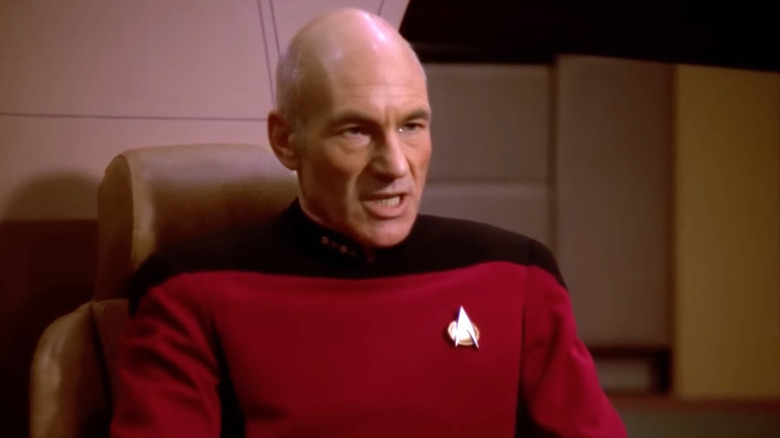
"Star Trek: The Next Generation" picked up roughly a quarter of a century after the original 1960s TV series. It replaced Captain Kirk and his crew with the new captain, Jean-Luc Picard, played by Patrick Stewart. The Enterprise was all new as well, with Picard and his team piloting the USS Enterprise-D through space. The show premiered in 1987 and ran for seven seasons, accumulating 178 episodes along the way. Alongside Patrick Stewart, names like Jonathan Frakes, Brent Spiner, Gates McFadden, LeVar Burton, and Michael Dorn starred.
The first couple of seasons of "Star Trek: The Next Generation" were met with mixed critical reviews and a fanbase that was somewhat skeptical of a "Star Trek" show without the original crew. Even today, the show's first two seasons don't have many highly-rated episodes at IMDb. But the power of the franchise eventually won out as the creators found their footing early in season three. The show's plotlines got more ambitious as each season went on, and by its later seasons, "Star Trek: The Next Generation" was a regular contender during awards season.
It was never going to be easy following in the footsteps of the original "Star Trek" TV series, but "The Next Generation" paved the way for "Star Trek" to become one of the most successful and longest-tenured IPs. The franchise has predicted some scientific breakthroughs and is synonymous with science fiction to many fans. "The Next Generation" showed that fandoms could embrace new faces, sparking further "Star Trek" spinoffs and influencing other IPs to branch out. "Star Trek: The Next Generation" holds an overall 8.7 out of 10 rating on IMDb and reaches new fans today on Paramount+.
Captain Power and the Soldiers of the Future
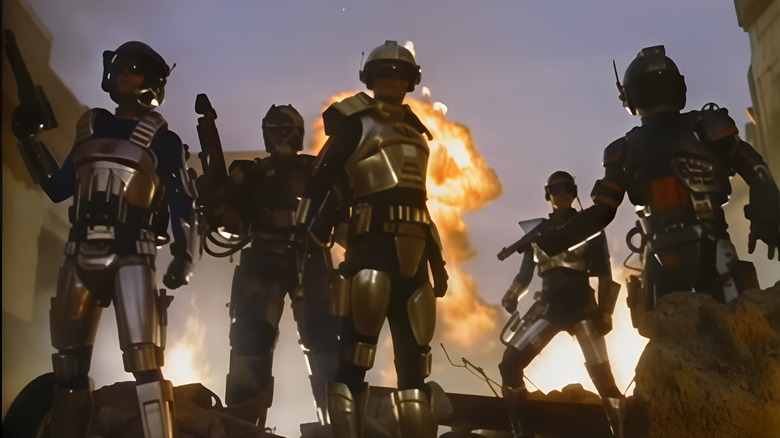
"Captain Power and the Soldiers of the Future" first premiered in September of 1987, and it only received a single-season run and 22 total episodes. One of the show's creators was Gary Goddard, who had previously directed the He-Man feature film "Masters of the Universe." The show follows a war on a future Earth in which man is pitted against machines. Captain Power leads a small resistance team against the robot army, using teleportation gates to move around the country undetected.
But what defined the show was the technology that accommodated it, as it required buying a toy to fully experience Captain Power. A line of interactive toys was made in partnership with Mattel which allowed kids to participate in battles alongside Captain Power. Sensors were built into toy versions of his XT-7 jet. These detected cues embedded directly into the show's footage. Kids could also play with the toys independently of the TV show, with the jets interacting in ways that were similar to laser tag.
The toy technology and its capabilities were similar to the kinds of things video game consoles rolled out in the '80s and through the 1990s. While "Captain Power and the Soldiers of the Future" didn't last long as a television series, it has still managed a 7.4 out of 10 rating at IMDb. It's developed a cult following over the years, and while it received a DVD release in 2011, "Captain Power and the Soldiers of the Future" is available to stream through a service called Night Flight Plus.
Max Headroom
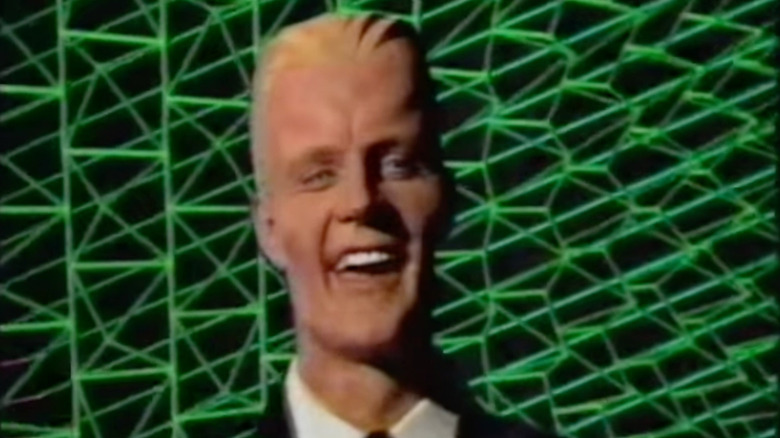
"Max Headroom" was spun off of a 1985 British TV movie. The American version premiered in the spring of 1987 and ran into 1988, reaching a total of 14 episodes. The title character is a computer-generated personality that spawns when the employers of Edison Carter, an investigative reporter for Network 23, attempt to copy his mind into a computer. The show starred Matt Frewer playing the role of both Carter and Headroom, with the cast rounded out by Amanda Pays and Jeffrey Tambor.
The technological and social concepts in "Max Headroom" line up with a lot of the world we live in today. While the show is highly reminiscent of the 1980s stylistically, it was a cyberpunk take on the future. Network 23 viewers were constantly tracked through their television sets to fine-tune programming and advertising. The network also used "blipverts," which were ultra-compressed advertisements designed to be as attention-grabbing as possible.
The show "Max Headroom" only reached 14 total episodes, but the character was a big part of 1980s popular culture. In many ways the show is as relevant as ever, as it depicted a fully synthetic media personality years before such technology or landscape really existed. Today we come across AI-generated influencers regularly, though "Max Headroom" presented the idea in a more bombastic and satirical way. The show is starting to gain some recognition as it's available to stream on multiple platforms and has a 7.3 out of 10 rating on IMDb.
Quantum Leap
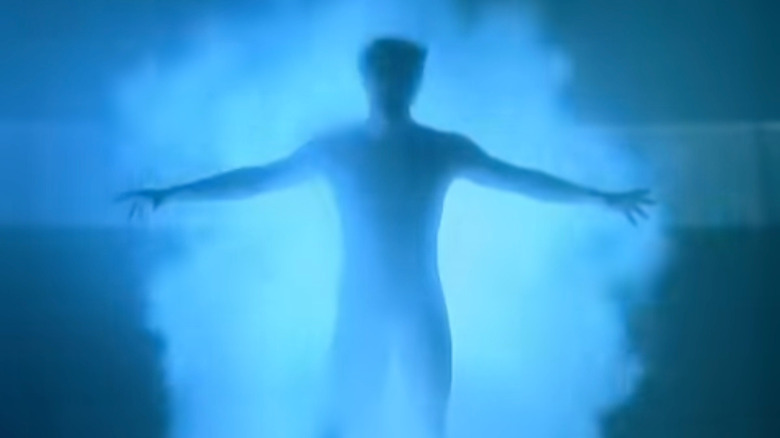
While "Quantum Leap" had the bulk of its success in the early 1990s, it premiered in 1989 and had a more down-to-earth feel than most science fiction shows of the '80s. It centered around Dr. Sam Beckett, played by Scott Bakula, a physicist who builds a time travel device and gets stuck leaping into other people's bodies throughout various points in time. Dean Stockwell played Sam's best friend and a hologram that only Sam and select characters throughout the series were able to see.
"Quantum Leap" reached nearly 100 episodes over five seasons, becoming a mainstay on NBC. In each episode, Sam was faced with a new time period and body to inhabit. Stockwell's character, "Al," provided friendly guidance with the help of a supercomputer called Ziggy. The sci-fi elements are subtle compared to more outright science fiction narratives, with Sam and Al using Ziggy mostly to figure out their historical surroundings and what needs resolving before they can make their next leap.
"Quantum Leap" received some acclaim during its initial run, receiving 32 Emmy nominations and Bakula and Stockwell each winning a Golden Globe along the way. Despite average ratings, the show had a loyal following. In 2022 NBC revived "Quantum Leap" for a sequel series that followed a new cast of leapers. The original series is still revered and has an 8.2 out of 10 rating at IMDb.
The Ray Bradbury Theater
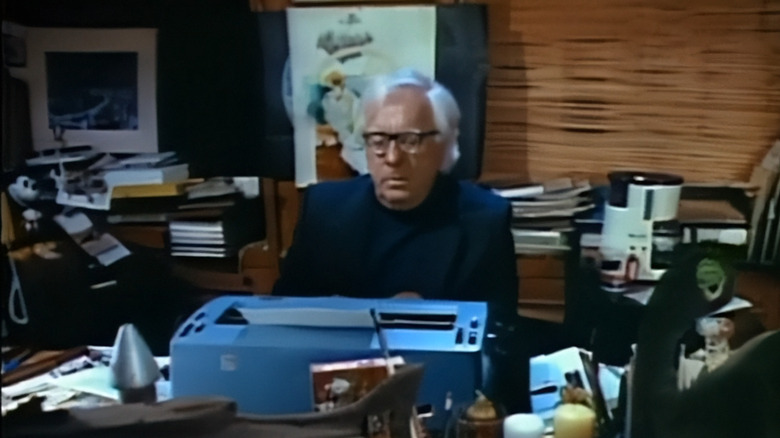
"The Ray Bradbury Theater" was an anthology series created by, hosted by, and written by sci-fi legend Ray Bradbury. He was able to produce 65 episodes across six seasons, with the show airing on HBO from 1985 to 1986 before moving to USA Network in 1988. For each episode, Bradbury adapted one of his own stories into a standalone narrative, which was somewhat reminiscent in format of "The Twilight Zone." The show attracted a number of guest stars, including William Shatner, Leslie Nielsen, Peter O'Toole, Drew Barrymore, and Jeff Goldblum.
The show's success came through leaning on Bradbury's writing, who had already proven his prowess through short stories and novels he wrote over the course of his career. It won several awards and had strong ratings, with much of the success attributed to Bradbury handling all of the adaptation on his own rather than outsourcing the writing. Bradbury was beloved in the science fiction world and highly regarded in literary spaces. With "The Ray Bradbury Theater," fans seemed happy to experience his work through the TV medium.
Bradbury spent much of his career exhibiting a fascination with how people and technology interact. Many of his stories pose questions about the role of technology in our lives. Long before smartphones, smart homes, and distracted minds were everywhere, Bradbury was writing sci-fi stories involving societies, individuals, and leadership being reshaped through emerging tech. Bradbury is still finding new audience members today as "The Ray Bradbury Theater" is available to watch on Amazon Prime.