

Not Just A Toy: Florida Is Using Robotic Animals To Fix Its Python Problem

Alongside battling invasive species such as the Melaleuca quinquenervia paperbark tree, and the Asian needle ant, Florida wildlife officials are also continuing efforts to reduce the number of invasive Burmese pythons in the Everglades, deploying high-tech bunnies to help with the job. Burmese pythons, which can grow up to 20 feet long, are thought to have established a breeding population in the Everglades after pet pythons escaped or were released into the wild in the early 1980s. The snakes have been decimating local mammal populations, eating animals such as rabbits, raccoons, gray foxes, and opossums. There are even recorded cases of the pythons eating the Everglades' most famous and fearsome creature, the alligator.
In a bid to reduce the number of Burmese pythons slithering around the Everglades, officials are now using robotic rabbits. Banish from your mind the image of cyber bunnies hopping around the Everglades, hunting down snakes and taking them out like some kind of elite military robot. Instead, each one is set up in a small clear-walled enclosure several feet from the ground, with the furry robot's appearance, plus simulated odor and body heat, designed to attract the pythons. Rather than hopping, the only movement the rabbit makes is the occasional swivel on a platform inside the box.
Studies of python behavior have found them to be ambush predators, lying in wait for prey to come within striking distance. Helpfully, this patience gives the robotic rabbit time to detect the nearby predator and send an alert to the South Florida Water Management District (SFWMD). A nearby trapper then receives location information on their smartphone, enabling them to catch the snake and euthanize it.
Using tech to stop the python population spreading
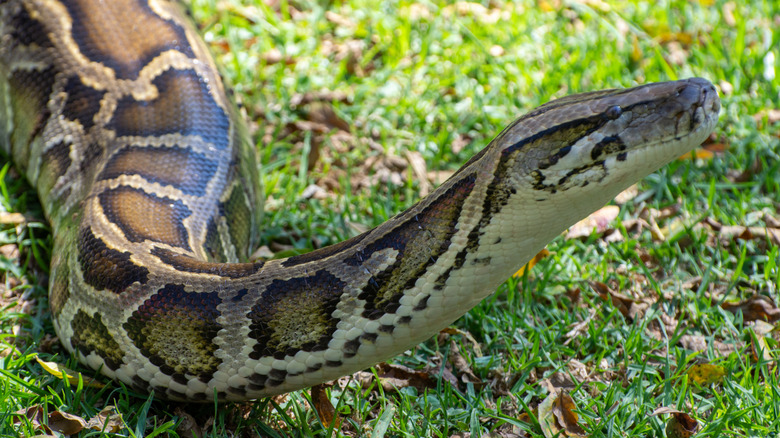
The project involving the robotic rabbits is the result of a collaboration between the University of Florida, SFWMD, and Rewyld, which is helping with the technology powering the robot. With an estimated 300,000 pythons in the Everglades between the counties of Broward, Palm Beach, and Miami-Dade, the project aims to reduce that figure and prevent the python population from spreading.
So good are Burmese pythons at blending into their environment that trappers can spend hours trying to locate even just one. Thankfully, the robotic rabbits can complement such efforts by luring pythons into a monitored area. Despite their initial deployment in the summer of 2025, the fake rabbits remain an experimental technology, and results have yet to be published showing how many pythons they've helped to capture or whether the system can meaningfully reduce python numbers.
Whether these high-tech rabbits become a long-term part of the Everglades' efforts to curb the python population remains to be seen. However, as spotting one can take a considerable amount of time, any technology that gives trappers an advantage is valuable in the ongoing fight against one of the area's most persistent and unwelcome species.
Japan's robotic wolf takes a different approach to wildlife control
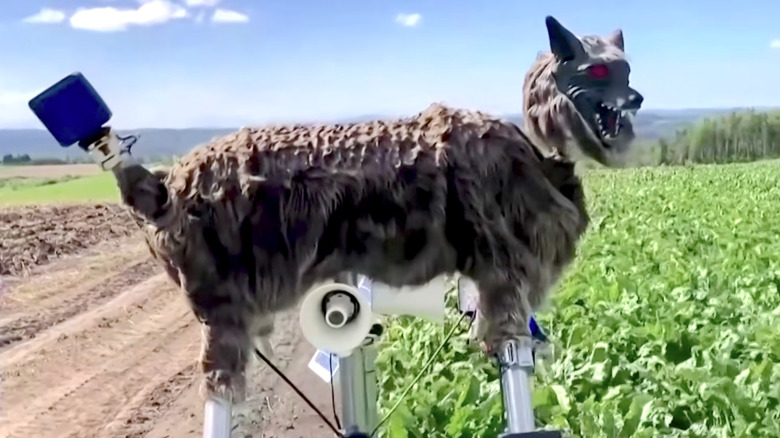
While Florida has been using cute robot rabbits to try to entice predators, Japan has taken the opposite approach, deploying menacing robot wolves to scare off unwanted wildlife. Bear attacks in the country have been on the rise in recent years, with the animal increasingly showing up in residential areas and even entering buildings. Since 2016, some areas of Japan have been placing robotic wolves on the outskirts of their communities to frighten away approaching bears. When the wolf detects one of the creatures coming close, its red eyes light up, its head moves, a speaker plays howling noises and sirens, and LED lights flash around it.
The robot's maker, Ohta Seiki, has been doing brisk business in 2026, having already taken around 50 orders by the spring. The robot has become so popular that there's even a waiting list of several months for the hand-made contraption, which is proving popular among people working outside in rural areas like farmers, as well as golf course operators. The high-tech wolf costs around $4,000, but if it helps to deter bears from potentially fatal attacks, it's surely money well spent.
In a one year period between 2024 and 2025, Japan recorded over 50,000 sightings of Asian black bears, marking a 150% increase on the previous year. During the same period, 238 people were injured in 216 bear attacks, and 13 were killed, a record high. The rise has been attributed to a growing bear population and a poor crop of acorns and other foods that the animal relies on.