

Why Are Nvidia GPUs Made By Different Brands?
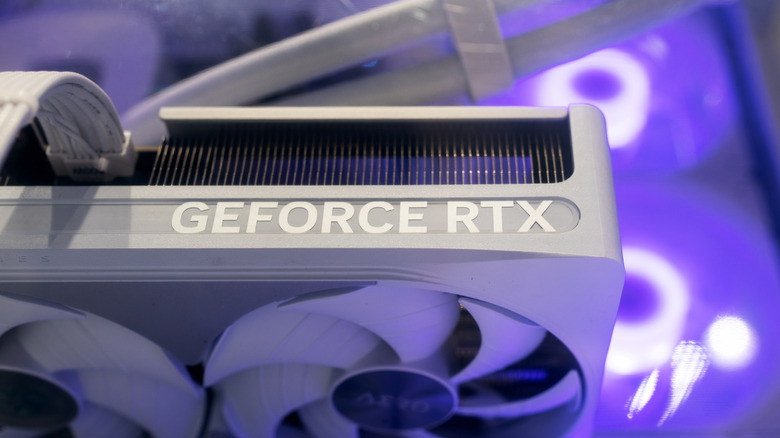
Upgrading a PC is one of the most exciting things a gamer can do, especially if you're finally updating your graphics card. The basic (and oftentimes easiest) choice is picking between an Nvidia and an AMD GPU (the chip itself, like the RX or RTX) — but when you get to different brands of graphics cards themselves, the variety can make your head spin. Why are Nvidia GPUs built by different brands, though?
Well, the easiest way to understand it is to follow the lifecycle of a random Nvidia GPU. First, Nvidia designs the chip and puts together a reference card. Referred to as the Founders Edition card, this is essentially the vanilla version that sets the standard hardware specs and serves as a baseline for other manufacturers to follow. From there, the so-called Add-In Board (AIB) partners, such as MSI and Gigabyte, purchase the chips and the core boards, and make their own designs as an offshoot of Nvidia's specification. The AIB partners may, for instance, add extra coolers, RGB lights, a case, and what have you. These companies can even put out factory overclocked Nvidia GPUs to market the product better and slightly bump up the price.
This may seem like needless complication, but it actually makes sense from a business perspective. Nvidia only works with the best suppliers and manufacturers, which drastically decreases the risk of being involved in all steps of manufacturing. This has gone on for decades, so it's something all gamers have to accept.
Does a differently branded GPU matter?
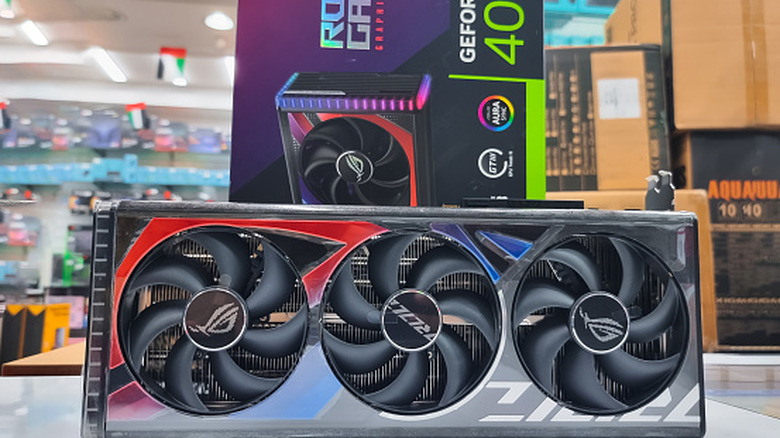
Believe it or not, there's no clear-cut answer as to whether a differently branded Nvidia GPU makes any difference. Technically speaking, you're purchasing an identical GPU, so your performance will be quite consistent. Still, there are slight variations between major graphics card manufacturers that might impact your experience. Remember those tweaks that companies make? Some may bump up the VRAM, and others might add an extra fan or opt for a blower-style cooling system, which may be up your alley if you've got a compact case with subpar airflow. It's more about the overall configuration, as the form factor (whether it can even fit inside the case) matters more than aesthetics.
There's also the question of reliability. Gamers have their own preferences, and some manufacturers like Asus are considered to have slightly better temperature efficiency. When you look around online, you'll quickly find that certain brands are simply held in higher regard than others. One Reddit user laid it out succinctly by calling Asus and EVGA top-tier, identifying Gigabyte and MSI as your mid-range options, and saying that stuff manufactured by Colorful isn't all that desirable in the community. Other Reddit users generally agreed with this sentiment, especially in terms of Asus being the best.
Either way, if you trust the brand and other people aren't complaining about it everywhere you look, you're probably in good hands. Pick the specs you prefer, the right size, and see if the manufacturer's warranty instills some extra trust. And that's pretty much it — no reason to lose sleep over the little stuff.