

What Happened To Amazfit's Popular GTR Smartwatches?
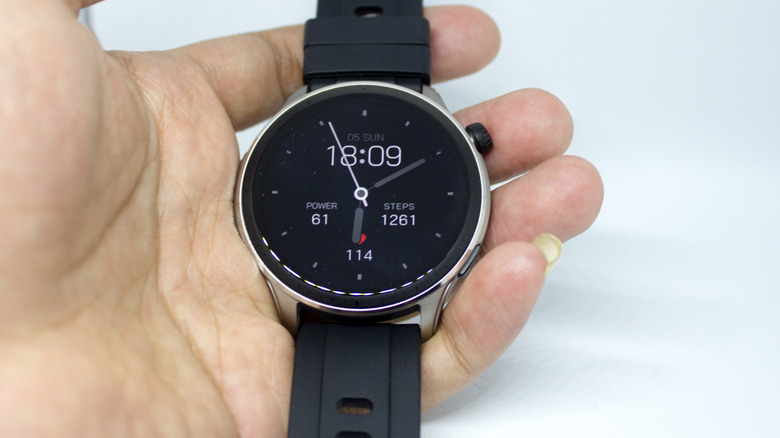
Amazfit is one of those underrated smartwatch brands that's able to compete with giants like Apple. Made by Chinese firm Zepp Health (formerly Huami), the original Amazfit Smartwatch landed in 2016, followed by a range of other models before the company introduced its first GTR smartwatch in 2019. The new watch gained attention for offering a premium-looking design with solid features, as well as impressive battery life of up to 24 days for the larger model. It also had an eye-catching starting price of just $149.99. Zepp Health released the GTR 2 in 2020, followed by the GTR 3 the following year. The Amazfit 4 launched in 2022, but it turned out to be the last model to carry the GTR name. Zepp Health explained the situation a year later when it released its first Amazfit Balance smartwatch, saying that the new device was the successor of the brand's Amazfit GTR family of smartwatches. The GTR's influence is seen clearly in the Balance's design, with its circular watch face, slim bezel, two-button layout and traditional watch-like appearance.
The Amazfit GTR series had become one of Zepp Health's defining smartwatch families, particularly for buyers looking for a traditional watch design that also came with fitness and health tracking. Over the GTR's four generations, the company gradually enhanced the device with refined AMOLED displays and increasingly sophisticated health and sports features. By the time the GTR 4 arrived, however, the smartwatch market had changed considerably, with rivals increasingly adding fitness, health, and smart features to flagship devices. The Balance represented Zepp Health's response to that shift as it sought to take on rivals in what's become a very competitive market.
From GTR 4 to Balance Ultra
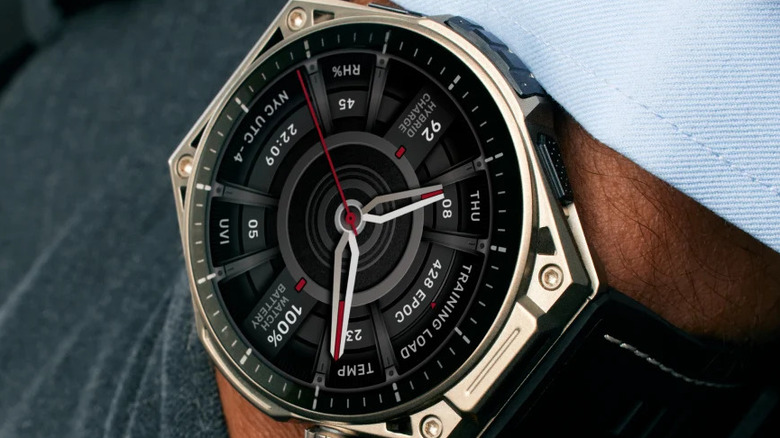
Zepp Health followed the Amazfit Balance with the Balance 2 in 2025. The Balance 3 landed in 2026, alongside the Balance Ultra, a flagship watch that gave the clearest indication yet of Zepp Health's ambition to take on giants like Apple in the smartwatch space. Apple unveiled the Ultra 4 in September 2026, so let's look at how the two Ultra devices compare. With their rugged designs, both watches target people who want a more durable device for outdoor and fitness activities, as well as those who spend time in extreme environments. But the two designs take very different forms, with the Balance Ultra going with a traditional circular style, and Apple's watch sticking with its distinctive square display.
Looking at the specs, the Balance Ultra's battery life stands out, claiming up to 30 days (720 hours) with typical use, compared to 50 hours for the Apple Watch Ultra 4. Size-wise, the Balance Ultra has the larger case, measuring 51.8 millimeters across compared with 49 millimeters for the Apple Watch Ultra, but Apple's device actually has a slightly larger display. The Balance is also notable for its focus on fitness and endurance, with more than 180 workout modes, dual-band GPS, and a range of training tools. Apple's Ultra 4, meanwhile, includes deeper health features such as ECG and sleep apnea notifications. And unlike the Balance Ultra, Apple's device comes with cellular and satellite connectivity. As for pricing, Zepp Health's device costs $599.99, while Apple's is priced at $799.
The GTR range may be no more, but elements of it clearly live on in the Balance lineup that replaced it. The Ultra, for example, retains the GTR's traditional watch design and long battery life while adding more sophisticated smarts to the overall package.