

Buying A HomePod? Here Are 5 Smart Speakers To Try Instead
We may receive a commission on purchases made from links.
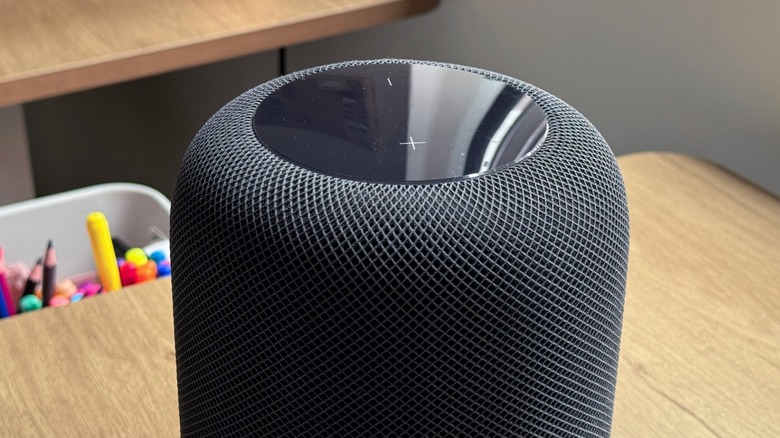
If you're an Apple user with an iPhone, iPad, Mac, Apple Watch, and/or Apple TV, it's only natural that if you're looking for a smart speaker, your first thought is the HomePod. Available in mini and regular sizes, Apple has been mainly praised for the bigger model when it was updated in 2023. Still, since the original HomePod mini hasn't been updated in six years — rumors suggest a new version is coming soon — these models now feel outdated compared to other more recent smart speakers, such as the Sonos Play, Amazon Echo Dot, and Google Home Speaker.
After all, the current HomePod models still feature an older version of Siri, which is nowhere near the new Siri AI introduced with iOS 27, and with something even worse: Apple raised prices for these smart speakers, even though they do not offer any new features. With the HomePod mini now costing $129 and the HomePod 2 costing $349, Apple offers pricey speakers that are not as smart as one would hope, and the sound only truly shines when you have a pair, which would make you spend $260 for the mini speakers without proper bass and almost $700 for great speakers but without proper smart capabilities.
The speakers below were selected based on BGR testing, customer reviews, and also because they have been recently released, making them interesting alternatives to Apple's HomePods in both features, price, and style. Here's what you need to know about them.
Sonos Play
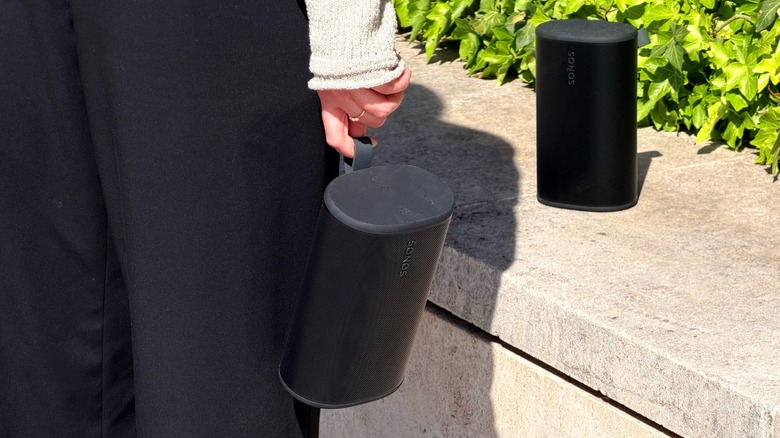
Sonos released its newest smart speaker, the Sonos Play, in early 2026. In a new era for the company, which has been struggling to make its app right, the Sonos Play is one of the most interesting products out there. It has portability in mind, big sound, and at a $299 price point, it can offer both indoor and outdoor fun. Praised by BGR in our review, the Sonos Play is powered by a high-excursion mid-woofer paired with a custom-engineered tweeter array that allows this product to deliver deep bass response and crisp sound in mids and highs. It also uses Sonos' signature Trueplay tuning tech to recalibrate its EQ curve automatically according to room layout.
What makes the Sonos Play genuinely smart is the hybrid processing architecture by running Sonos Voice Control, alongside Amazon Alexa support, bringing offline local voice commands for media playback. Users can also intelligently sync playback across groups of speakers; it automatically changes wireless frequency channels to reduce latency and acts as a rear surround channel when paired into home theater systems.
Compared to the HomePod, the Sonos Play can offer a superior ecosystem experience for cross-platform households, as the HomePod restricts users to AirPlay and Apple Music; Sonos supports over 100 direct streaming services out of the box through the Sonos app, while also offering Bluetooth 5.3, a physical line-in auxiliary input, and up to 24 hours of battery life in a single charge. Sonos Play is one of the most interesting offerings customers can choose now.
Amazon Echo Dot Max
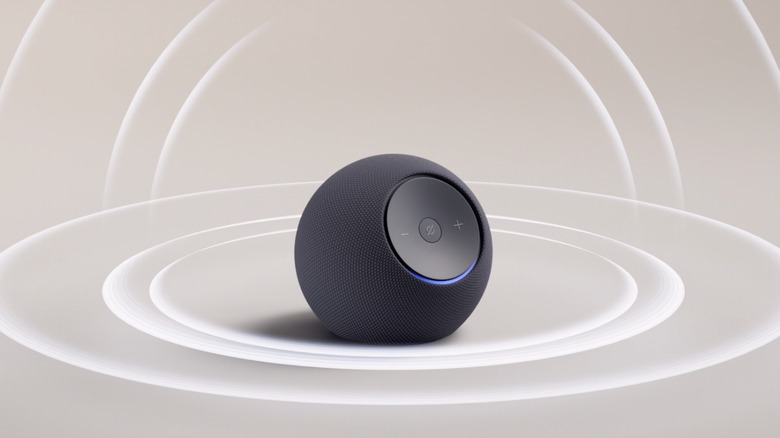
Released in late 2025 and priced at $119.99, this smart speaker is one of the top Echo products users should buy in 2026. Known as the primary speaker in the Echo smart lineup, it moves beyond traditional entry-level designs by offering an upgraded acoustic housing packed with a dedicated 0.8-inch tweeter and a custom 2.5-inch long-throw woofer, delivering up to three times the bass extension of previous compact Echo models. The chassis also features ultrasound motion sensors, ambient temperature hardware, and light sensors directly into its fabric frame.
If the "smart" adjective means much for your next speaker purchase, then Amazon Echo Dot Max might be the one for you, as it uses Alexa+, Amazon's generative AI assistant model. It enables contextual multi-turn conversations, natural mid-sentence corrections, and complex decision-making without requiring strict wake words. Besides that, this device works as a comprehensive smart home hub with built-in support for Matter, Thread, and Zigbee protocols. Its integrated sensor array allows users to autonomously trigger local routines, like adjusting room thermostats or toggling lights, based on whether people are in the room or if the temperature changes without the user doing anything.
Compared to the HomePod mini, the Echo Dot Max is cheaper, usually gets discounts, has better sound quality thanks to its dedicated tweeter-woofer pairing, and features a proper smart personal assistant that can help you with everything from your Amazon purchases to world knowledge and everyday automations.
Google Home Speaker
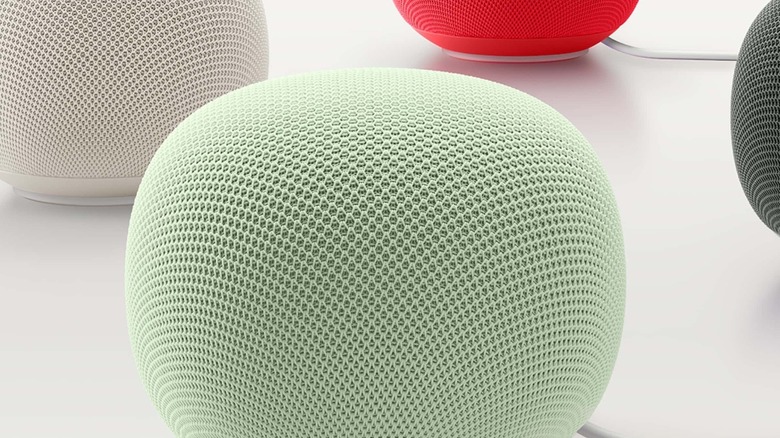
Released in mid 2026, Google's Home Speaker is the successor to the Nest lineup, and it's priced at $99.99 — also a better deal than Apple's HomePod mini. Made to be Google's centerpiece smart hub, this device uses an eco-friendly recycled fabric casing on the outside, and on the inside it features a multi-driver acoustic array that splits frequencies between a wide-dispersion tweeter and a front-firing woofer. The top part has an interactive 360-degree LED light ring that displays visual feedback during voice interactions, status notifications, and volume adjustments.
The smart part of the Google Home Speaker uses Gemini for Home. This generative AI model understands natural language, retains long-term contextual memory, and can execute complex commands with ease — even though it can take longer than its Amazon counterpart. Some of the examples include "Turn off the living room lights when I leave, but only if the TV is off," which ensures that the assistant understands the assignment and the different outcomes. Working as a smart home hub, it supports Matter and Thread, so you can connect several devices and manage them across one app or voice commands using local Wi-Fi.
When compared to Apple's HomePod, it's not just a cheaper offering, but also a voice engine that completely outperforms Siri in any task. Siri (especially the one in Apple's HomePods) struggles with multi-part questions, general knowledge questions, or complex smart home commands, often asking users to use the iPhone instead. Google Gemini integration, on the other hand, delivers genuinely helpful reasoning, better multi-user voice recognition, and hands-free control.
Amazon Echo Studio 2
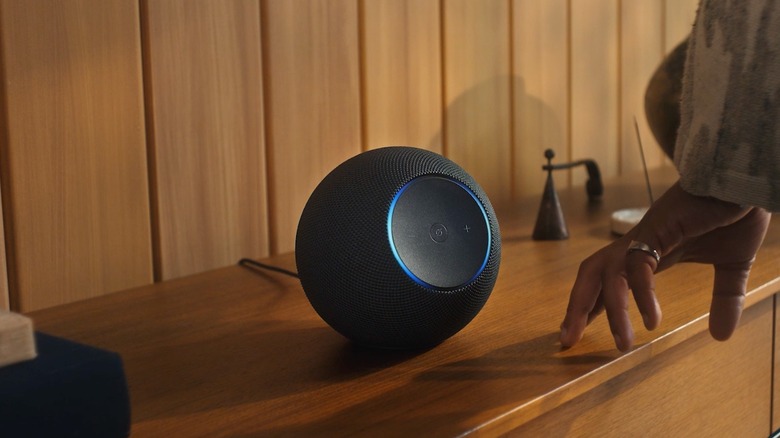
Released in late 2025, the Amazon Echo Studio 2 is a compelling update for anyone looking for a HomePod 2-like competitor. Priced at $219.99, but often available at a discount, this is a top-tier high-fidelity smart speaker with a slim design, as it's 40% smaller than the previous generation. Its acoustic layout includes five directional drivers: a 5.25-inch downward-firing woofer, three two-inch mid-range speakers, and a one-inch directional tweeter housed in an acoustically optimized enclosure. This speaker supports spatial audio with full Dolby Atmos and Sony 360 Reality Audio over Wi-Fi (with support for up to Wi-Fi 6E).
Like the other Amazon speaker highlighted in this article, the Echo Studio 2 is driven by Alexa+. Internal microphones keep monitoring ambient acoustics to automatically recalibrate frequency distribution and spatial imaging based on surrounding walls and furniture. Beyond audio processing, it serves as a smart home hub with Zigbee, Matter, and Thread support alongside Wi-Fi radar sensing for advanced occupancy detection.
Against Apple's HomePod 2, the Echo Studio 2 provides a slimmer device with high-end sound, a much cheaper price point (the price of two Echo Studio 2 can be just the same or slightly more than one HomePod 2), while delivering noticeably punchier bass and wider physical audio dispersion. It also features physical line-in connections, such as 3.5mm mini optical and analog, broad ecosystem support across all major streaming services, and multi-protocol hub capabilities that go beyond Apple's strict home automation constraints.
JBL Authentics 500
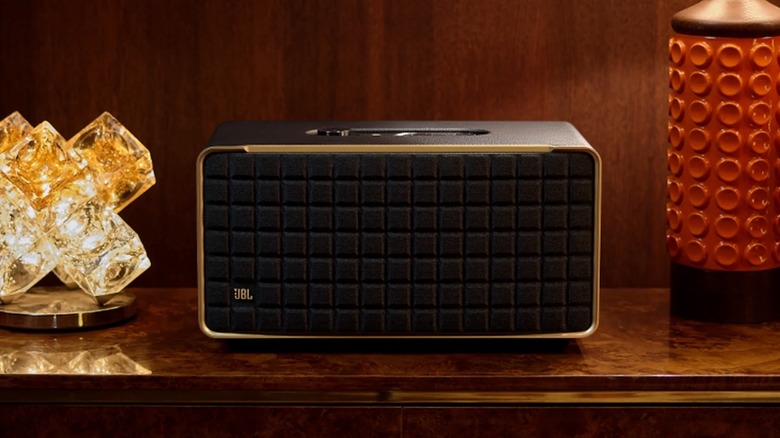
Last but not least, another option to consider before purchasing a HomePod is the JBL Authentics 500. The oldest smart speaker on the list – released in late 2023 – it's also the priciest. Currently listed for $749.99, customers can find it at Amazon for around $449. Even though it's a few years old, this speaker remains a flagship acoustic benchmark. It features a physical enclosure that blends a retro 1970s Qadrex foam grille, leatherette trim, and an aluminum frame with modern acoustic engineering. Internally, it has a massive 270-watt amp system powering three one-inch silk dome tweeters, three 2.75-inch mid-range drivers, and a massive downward-firing 6.5-inch subwoofer paired with a slipstream bass port.
What makes this JBL a great option between smart speakers is its industry-first dual-assistant tech, which allows users to take advantage of both Amazon Alexa and Google Assistant on the same speaker. The internal software can process both voice engines independently without requiring manual switching, which means each family member can summon their preferred assistant whenever they want. This speaker also features automatic room self-tuning when it's powered on, while continuing to optimize the sound profile based on physical surroundings through its calibration mics.
The JBL Authentics 500 surpasses the HomePod 2 in volume, bass impact, spatial presence, and ecosystem freedom. After all, customers can choose between their favorite personal assistant, still use AirPlay 2, Google Cast, Spotify Connect, and more, while also enjoying high-bitrate Bluetooth playback alongside an Ethernet port.
How did we choose these speakers
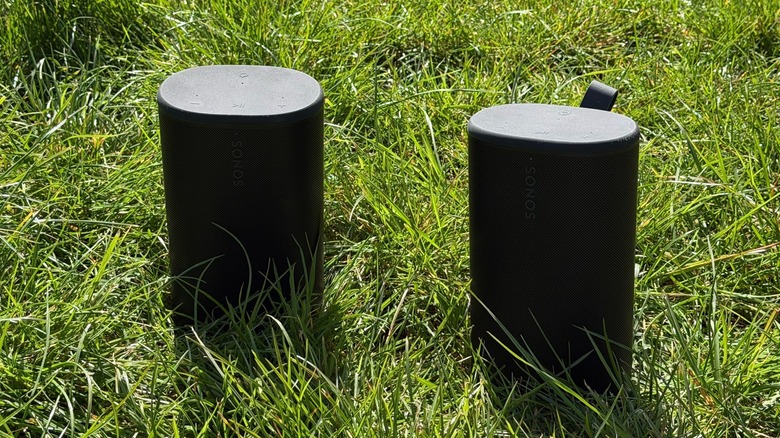
BGR selected these speakers based on a few important criteria: Release date, price, smart features, and how they compared with both HomePod 2 and HomePod mini. While customers can still get a pleasant experience with Apple's options — I still have a pair of HomePod mini in my bedroom and a pair of HomePod 2 in my living room, and the only thing I miss is a smarter personal assistant — the models listed above can excel over Apple on price, smart capabilities, and offering more options for voice assistants, music streaming services, and shapes.
For example, the Sonos Play speakers have become one of my favorite speakers of the year, especially because I can easily switch between using them at home or taking them to a party or a weekend trip. While I can do that with other speakers, such as the highly praised Beats Pill or Marshall's Emberton products, none of them are smart, which means they have a slightly different focus.
BGR also focused on a wide price range, as customers can see that they can get better options than the HomePod without necessarily spending a lot of money, but also offering them this possibility if they choose. After all, the market for smart speakers is so big that it depends on whether users are focused on the audio capabilities, the smart home hub offerings, or a bit of everything. Fortunately, with these options, they can find it all.