

The Pros And Cons Of Smart Home Heaters (And How To Choose One)
We may receive a commission on purchases made from links.
As we head into the coldest months of the year, it pays to start thinking about how you're going to heat your home. One option is a smart home heater, which may be all the more enticing for older residences without modern HVAC systems. As its name would imply, a smart heater connects to your Wi-Fi network to allow you to remotely adjust the heat level for a specific room or entire floor (depending on how large the unit is). One of the major pros of owning a smart heater is energy management, especially if your home is packed to the brim with heavy-duty appliances and electronics.
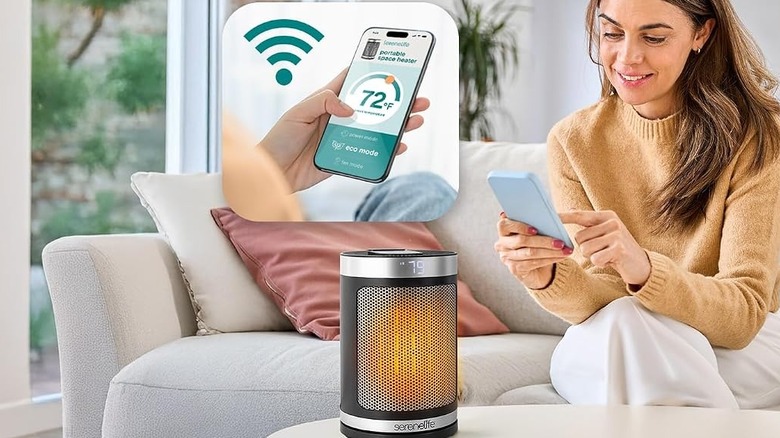
Constantly running a space heater is a surefire way to rack up a hefty utility bill. Fortunately, many smart heaters offer a companion app that will let you create a custom schedule for the appliance. Instead of running it for hours on end, you could create a workweek schedule that routinely powers and runs the heater for just a couple of hours, then turns it off. This SereneLife Smart Space Heater comes with a remote control, but you can also download the SereneLife app to access features like scheduling, timers, and even mode switching.
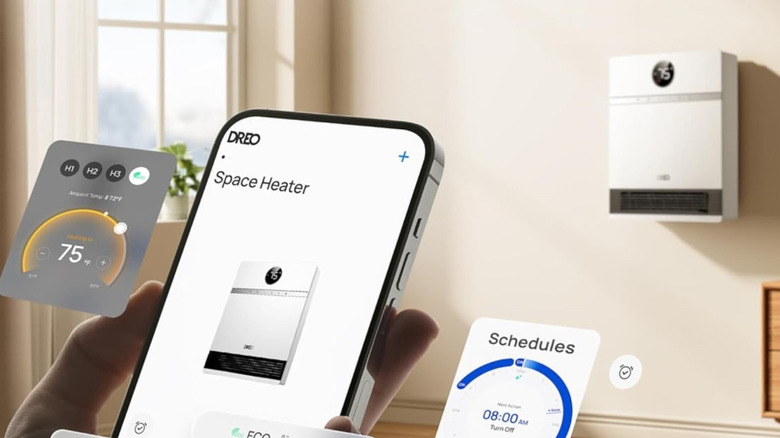
Another pro is being able to control your smart heater with voice commands. This wall-mounted Dreo smart heater is compatible with both Alexa and Google Home, which means you can use a smart speaker or display for voice commands, or make adjustments through the Alexa or Google Home app. This is particularly convenient if your heater is on one side of a larger room and you want to make a temperature adjustment without using manual controls.
Smart heating comes with a few caveats worth learning about
Not all smart heaters are smart ecosystem-friendly (e.g., Alexa, Google Home, Apple HomeKit), but some units actually offer offline voice controls; the appliance itself processes your voice prompts instead of an assistant tool like Alexa. Unfortunately, we have to vet both the pros and cons, and there are definitely a few drawbacks to using a smart heater. For starters, many of these units are more expensive than a traditional space heater. While it may not be a huge price difference, you might be parting ways with an extra $10-20 in upfront cost.
Another drawback to consider is internet connectivity. Once you've added a smart heater to your Wi-Fi network, you've essentially opened a potential door for hackers and digital delinquents to wreak havoc. We're not saying that a smart heater is a common point of entry for identity thieves, but your personal data and privacy are far more important than raising the temperature 1 degree via a smart speaker. It's also worth mentioning that an internet-connected heater may occasionally require software updates.
If automatic updates aren't available, it's fully on you to ensure your smart appliance is running the most up-to-date software (doing so is also a great way to ensure you're getting the best device security). And should your network go down, a smart heater may still operate with manual controls, but you won't be able to use apps or voice commands to adjust the temperature until the internet is restored.