

5 Of The Best Nokia Phones Of All Time, According To Users
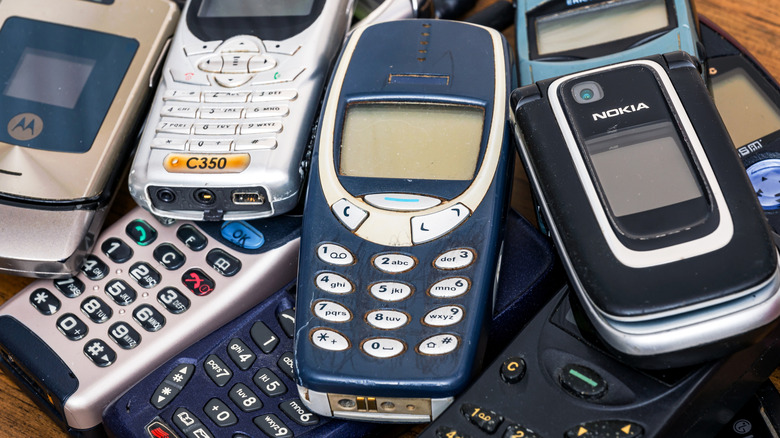
The best Nokia phones dominated a very different era from the one we live in today with smartphones. In the past, choosing a phone meant giving its design a lot of consideration, since there were compact devices, physical keyboards, different appearances, and ambitious cameras. It was in this market that the Finnish manufacturer earned the respect of many users, delivering phones that, to this day, still bring a warm feeling of nostalgia to an entire generation of people.
Later, the rise of iOS and Android exposed Nokia's difficulties in keeping up with the evolution of the mobile phone market. The company's bet on Windows Phone also failed to restore it to its former glory, leading the company to sell its mobile phone division to Microsoft in 2014. Later, HMD licensed the brand and launched devices to compete with other affordable phone brands, in an operation that included some former Nokia leadership, but was separate from the original manufacturer.
Even though Nokia is no longer a major player in the mobile phone space, many of its devices are still remembered fondly by those who used them. For that reason, we've selected the company's five best phones, based mainly on the opinions of users who had experience with the brand's devices across different generations.
Nokia 3310
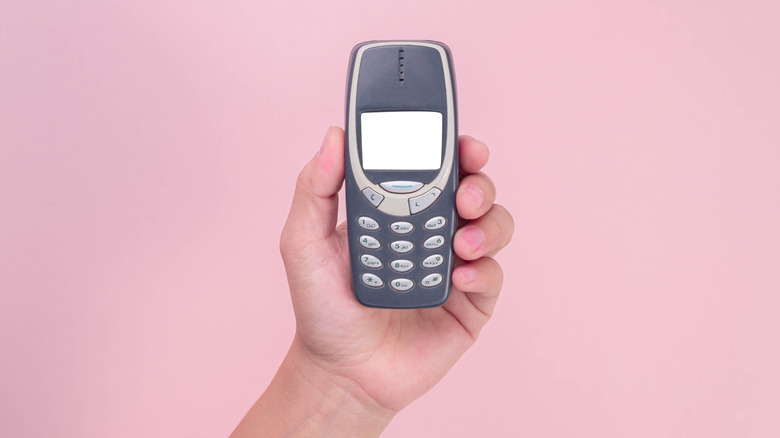
Few phones marked a generation as much as the Nokia 3310, which many consider to be the brand's most iconic phone. However, in the United States, this experience was tied to the 3390, which is its American variant. The design of both phones was similar, but the frequencies changed, since the 3310 operated on GSM 900 and 1,800 MHz, while the 3390 used 1,900 MHz to support local networks.
According to users, one of the phone's most memorable qualities was its durability, which was even one of the reasons to keep using it after more sophisticated devices arrived. For many, the phone would keep working even after several drops directly onto concrete — something unlikely with current models. In addition, even if the casing came apart, you only had to put it back together for the phone to work normally again.
These experiences contributed to the Nokia 3310's reputation for being indestructible, but aside from its durability, the device also offered interchangeable covers and games such as "Snake II" and "Space Impact." Features like these seem simple today, but at the time, they were an incredible novelty — and even though the relationship between Nokia and HMD changed the production of the devices, this Nokia line is still remembered fondly.
Nokia N95
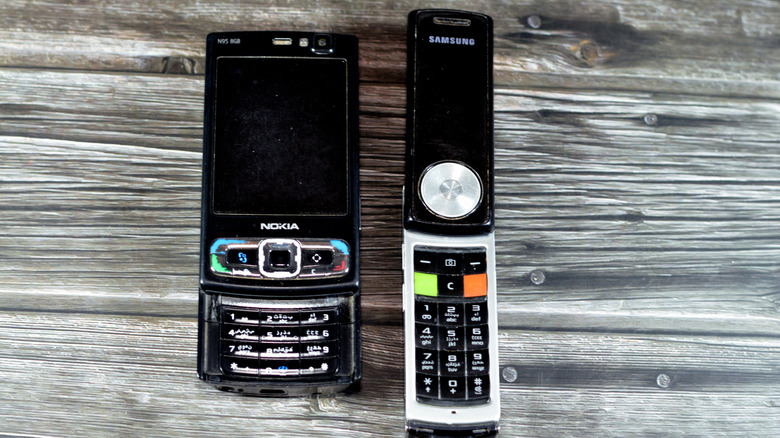
Launched in 2007, the Nokia N95 8 GB showed at the time how a phone could combine the functions of several devices into a single product. At the time, it had a 5-megapixel camera with Carl Zeiss optics, built-in GPS, Wi-Fi, and 8 GB of storage. A 2.8-inch screen complemented the phone's internals, and the overall design focused on letting users take photos, listen to music, or even check the map while traveling.
Another memorable feature of this phone was its two-way sliding mechanism. On one side, you had the numeric keypad, while on the other, the media playback controls. The device also had a 3.5 mm headphone jack, which is a feature many smartphones have abandoned today. This combination made the N95 an interesting phone for anyone who had otherwise been eyeing a dedicated MP3 player at the time.
Some users describe the N95 as a Swiss Army knife, since it did almost everything related to media. But it was also a favorite among many other users — the device brought together a very interesting set of tools in a format that fit in your pocket. This is something that seems common with today's smartphones, but at the time, few mobile phones were so capable.
Nokia E71
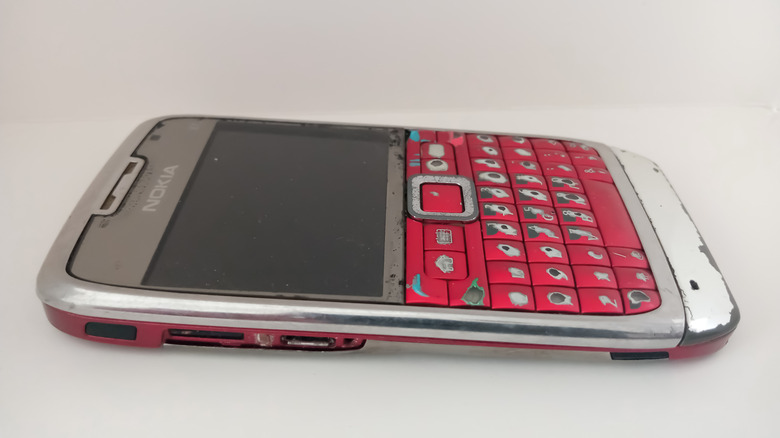
One of the Nokia E71's biggest bets was the use of a full QWERTY keyboard to make typing messages or writing emails easier. Although they are rarer, there are still some devices you can buy that come with a physical keyboard. In addition, the stainless steel finish on the backplate gave the device an elegant appearance, while its narrow shape still allowed you to use it with one or two hands.
This was a combination that appealed to people who were starting to use their mobile devices for work, with many owners praising how easy it was to type on. The focus on productivity also appeared in email access through Microsoft Exchange, calendar and contact synchronization, and the ability to switch between home screens for work and personal use. The Nokia E71 also included features such as Wi-Fi, 3G connectivity, GPS, and a 3.2-megapixel camera with autofocus. This way, the device worked both as a work tool and for entertainment.
Nokia N8
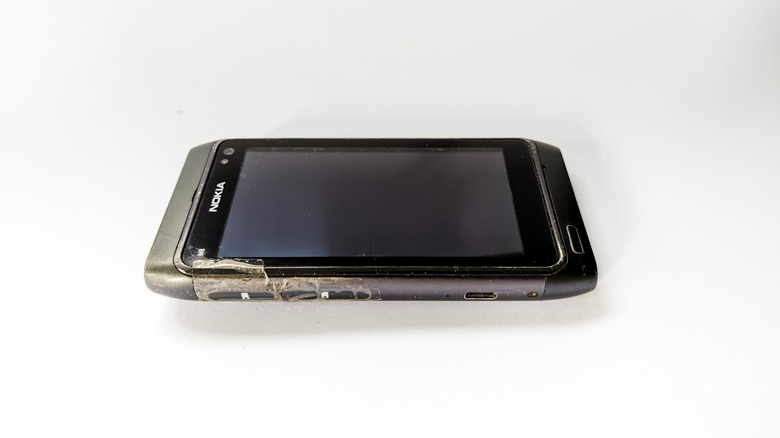
One of the biggest highlights of the Nokia N8 was its camera, which had a 12-megapixel resolution paired with Carl Zeiss optics, a large sensor for the time, and a xenon flash. For comparison, the iPhone 4, which was one of its main competitors, only had a 5-megapixel camera and an LED flash. In fact, because of the more powerful flash, Nokia's phone had an even greater advantage in low-light environments.
The photography experience also included a dedicated camera button, which allowed you to activate focus and capture the image without relying only on the screen. The anodized aluminum body, available in different colors, was paired with a 3.5-inch AMOLED screen, and the 16 GB of internal storage (expandable with a microSD card) helped users view and store their photos.
Besides photos, the N8 recorded HD videos, although the Samsung Galaxy S II, launched around the same time, already offered 1080p recording. Even so, the phone allowed you to edit videos directly on the device and also came with an HDMI connection to display images on the TV.
Nokia Lumia 1020
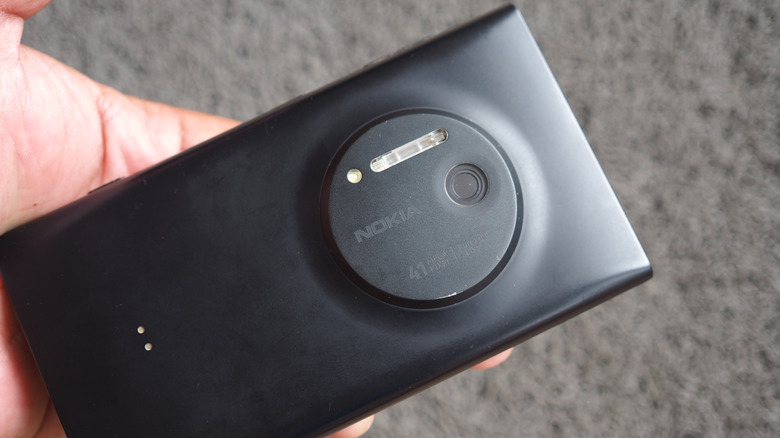
Another phone that came with a good camera for its time was the Lumia 1020. The device, launched in 2013, combined a then-massive 41-megapixel sensor with Zeiss optics, optical image stabilization (a rarity at the time), and a xenon flash. Its PureView technology also took advantage of this resolution to generate 5-megapixel photos with more detail and less noise, while also allowing you to crop and reframe the image after capture. This way, you could adjust its composition without needing to take the photo again or rely on digital zoom.
This Nokia model also came with an app that reinforced this focus on photography, since it allowed you to control ISO, white balance, and shutter speed, giving users ways to adjust their photos manually. In addition, the overall package also included a 4.5-inch AMOLED screen, 32 GB of storage, and the Windows Phone operating system. For many users, the camera was the most legendary aspect of the Lumia 1020 in retrospect, although the delay between capturing one photo and another made it less than ideal for action scenes.