

Arkansas Is Trying To Solve One Of Solar's Biggest Problems Using A Local Rice Farm
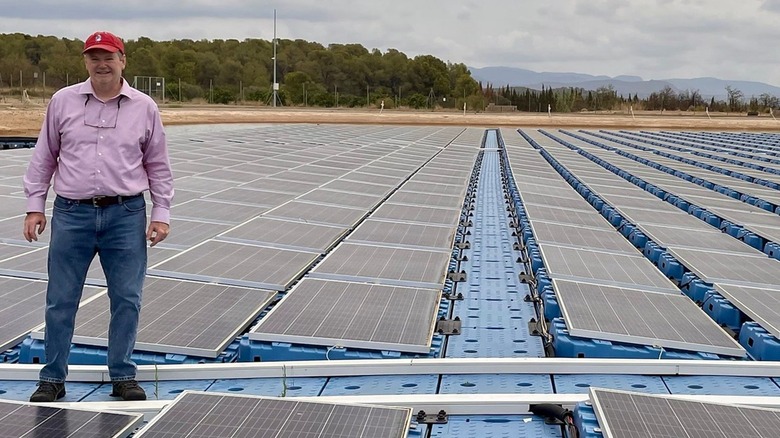
It's probably not surprising that California and Texas are two of the states with the most solar panels, since they have a lot of land mass and plenty of sunshine throughout the year. With a new research project occurring in Arkansas, though, maybe the Diamond State will become well known for enhanced solar energy production. The Arkansas research project could help with the problem that some people have with the idea of converting farmland to solar production.
The project is occurring through the University of Arkansas Division of Agriculture. It involves floating 96 solar panels on a tiny segment of a 40-acre rice reservoir near Stuttgart, which is in east-central Arkansas. The experiment is occurring at the Rice Research and Extension Center, which is a research area for helping Arkansas farmers with rice production. By placing the panels over a body of water, the researchers hope to show they can generate electricity with solar panels without taking farmland out of production and alleviate some of the concerns over installing solar farms.
A solar panel installation of this size should generate about 70 kilowatts of energy, meaning this layout is small. The research team planned to install the panels in May, but Professor Michael Popp, who is leading the research, told BGR that the timeline now calls for installing the panels by the end of 2026. The research remains focused on determining the best operational and maintenance techniques to use for floating solar panels in Arkansas' climate and weather.
How floating solar panels could help concerns over farmland
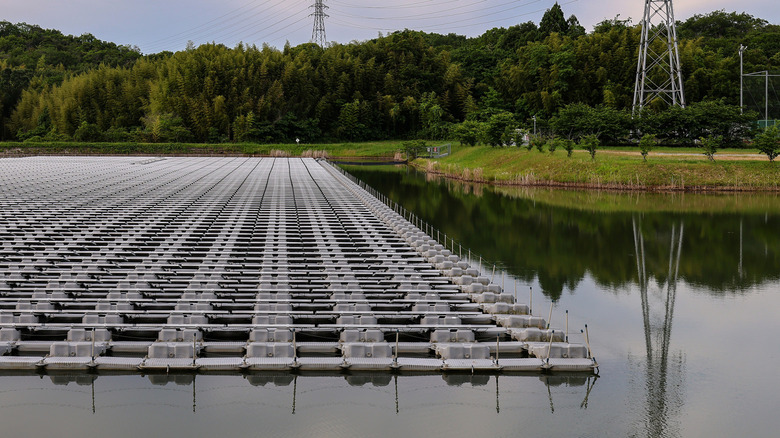
Solar farms are quickly being installed across the United States, and second quarter 2026 installations outpaced second quarter 2025 installations by 45%, according to the Solar Energy Industries Association. However, these installations are sparking controversy about replacing farmland with solar farms. Floating solar farms represent one option for conserving farmland.
The idea of using floating solar farms, called floatovoltaics, is not new. Several hundred such projects are already installed around the world. One floating solar farm in the Netherlands is positively affecting underwater habitats, for example. A research team from Oregon State University and the U.S. Geological Survey studied 11 solar panel installations on reservoirs in six different states, learning that the effects of the projects on the surrounding environment and the bodies of water varied based on location. Popp told BGR that the team will be reviewing the Oregon State study as they get closer to the actual panel installation date.
In addition to showing the viability of using floating solar panels instead of putting them on farmland, Arkansas' researchers will be measuring how much the solar panels can reduce water evaporation by partially covering the surface of the reservoirs. The researchers will also measure whether the panels can reduce algal growth on the water by preventing sunlight from directly reaching the water surface.
How the Arkansas floatovoltaics research project will work
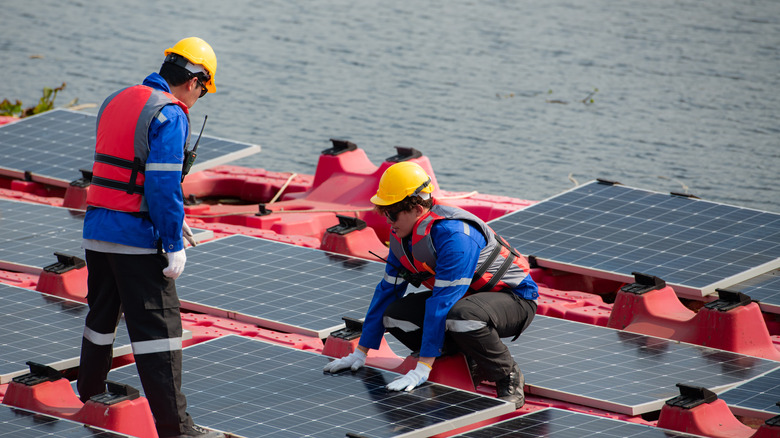
The 96 floating solar panels at the Rice Research and Extension Center will only occupy about 0.1 acre on a 40-acre reservoir. Researchers plan to place anchors in the reservoir bed to hold buoys in place that will support the panels when installation occurs. The plan calls for researchers to place another 24 panels on the embankment of the reservoir.
After installation, Popp said the panels should have a useful lifespan of 30 years. He said the team hopes to have some initial research data in hand by the middle of 2027. Because the research area is located in the Mississippi Flyway, researchers will also measure whether the floating panels affect migratory birds who use the reservoirs. Geese and ducks tend to winter in Arkansas and begin flying north again in February and March. "We are not installing a very large system but plan on making observations about wildlife interactions," Popp said to BGR.
A solar energy research project like this is appropriate for Arkansas, which is no stranger to solar panel installations. A new solar farm in northeast Arkansas will serve a Google data center in the state, generating almost 2.5 gigawatts of direct current upon completion in 2029. At the time of this writing, Arkansas had 73 solar farms in operation with a total operating capacity of almost 2.8 gigawatts. Another 103 planned solar farms have been announced with an expected capacity of more than 21 gigawatts.