

AMD To Increase Supply Of GPU And CPU Chips - But Don't Celebrate Yet
AI data centers have essentially ruined gaming and the tech industry as a whole. The people who run these locations have purchased so many RAM sticks and GPUs that the prices of certain individual components eclipse the cost of game consoles several times over. The issue is so bad that some manufacturers are producing older RAM models to try and keep up with demand. Unfortunately, whenever someone thinks up a solution, it often favors AI companies.
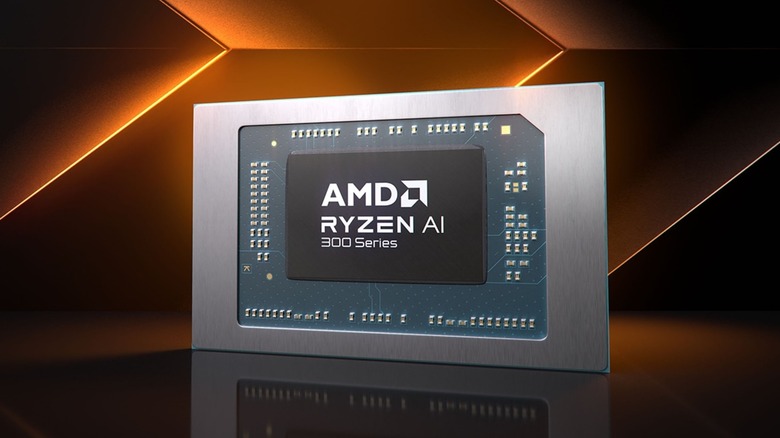
Recently, reports surfaced that AMD is planning to double down on GPU and CPU production. However, these aren't the chips you can use in your average computer. Instead, AMD will focus on the GPUs and CPUs that power AI data centers. According to outlets such as Yahoo! Finance, AMD's Chief Executive Lisa Su recently met with representatives at numerous companies to discuss supply chain business and help AMD meet the demand of AI organizations. These included Foxconn and TSMC in Taiwan, and Samsung and SK Hynix in South Korea.
While AMD spokespeople haven't stated the company will stop producing GPUs and CPUs for the average customer, they also haven't offered any reassurances to the contrary. This deafening silence has many audiences worried, as AMD's plans might only exacerbate the damage AI centers have caused to the computer component market. You can currently build a budget gaming PC for under $1,000, but for how much longer if companies like AMD prioritize AI data centers?
Just because A = B, doesn't mean B = A

If you've read the marketing for Nvidia GeForce RTX 50 Series and AMD Radeon RX graphics cards, you've probably noticed that both companies have been focusing on AI. Sure, most people buy RTX GPUs (and Radeon RX GPUs) for ray tracing, but these chips can still power agentic AI models. Yet AMD isn't focusing on these particular components because they aren't enough for AI data centers.
While GPUs (and, to a lesser extent, CPUs) can run AI models, that is little more than an unintentional use of their capabilities. To translate data into visual information, components must perform countless calculations. GPUs are best suited to this task because they specialize in parallel processing, splitting tasks across numerous processors simultaneously to speed up the process. AI models require parallel processing to function, which is why many data centers use tons of GPUs. But they also need CPUs to administrate these tasks.
That said, the GPUs and CPUs in AI data centers are more advanced than those in an average computer because the more power an AI model can access, the more powerful it becomes. Manufacturers can't build these superchips without using the same components and manufacturing lines reserved for consumer-grade GPUs and CPUs, and companies will ultimately choose whatever strategy makes them the most money. It's unfortunate for consumers, but it's just how things are right now.