

4 Popular Phones With The Worst Repairability
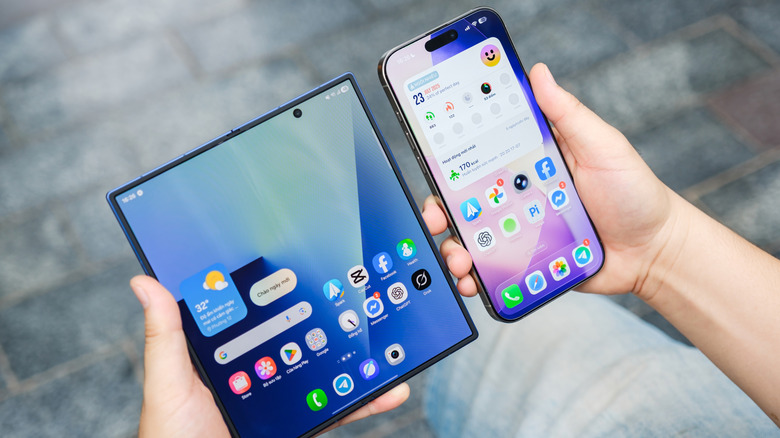
In the current state of tech, with memory shortages, high prices, and reduced RAM, phones with high repairability scores provide a big incentive: longevity. They can be easily repaired in case of accidents and, as a result, last longer than the average smartphone. This eases the burden on your wallet, since premium flagship prices are at an all-time high, and replacing a phone could set you back more than $1,000.
However, these sustainable phones are scarce in the market, and even though they provide long-term benefits, user adoption remains low. Instead, phones that dominate the market are the exact opposite. They have components glued together with aggressive adhesives, software locks to prevent third-party parts, and complex internal layouts that make them hard to break down. Prioritizing aesthetics, slim designs, and high IP ratings, companies like Apple and Samsung are consistently producing such products that offer poor repairability.
A recent report by the Public Interest Research Group (PDF warning) put certain Apple devices at the bottom of the barrel in terms of repairability, giving them the worst possible score: D-minus. Offerings from Samsung and Google followed with a D and C-minus, respectively, revealing that top brands are not immune from repairability issues. To put the problem into perspective, we've curated a list of the least repairable phones from these brands. From foldables to best-selling flagships, these devices are a nightmare to fix. Here's how much the repairs set you back, and what kind of process they require.
Apple iPhone 14
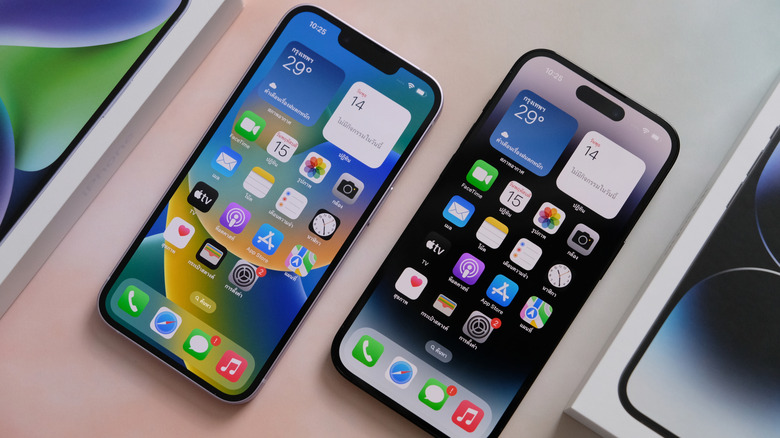
Apple receiving the lowest repairability score from the Public Interest Research Group might sound a bit harsh, but its software-locking practices provide a bit more context. iPhones and iPads have long been subjected to parts pairing, a process that pairs the device's critical components to its logic board. This creates a barrier to installing used or third-party parts. In turn, you have to rely on Apple to repair certain iPhones or iPads.
Even though the parts pairing problem has been partially solved with the iPhone 15 and newer models, it's still present in older devices, specifically the iPhone 14. The phone itself isn't hard to fix. In fact, physically, it's one of Apple's easier devices to disassemble due to its removable rear glass. However, once you finish the repair, the software locks the functionality of your repaired part, even if you use an official one from Apple. You'll see an "unknown part" warning on your iPhone, and features like battery health, True Tone, or Face ID will be disabled, depending on which part you replaced.
If you want all functionality, you'll need to get it officially serviced from Apple — and without an insurance plan like AppleCare+, be ready to spend a couple of hundred dollars. A screen replacement will set you back $279 for the base iPhone 14 and upward of $300 for the Pro and Pro Max models. In case you damage the back glass of your iPhone 14 Pro Max, Apple will charge you $609 to repair it. In today's market, that's more than the value of the phone. The cheapest official repair by Apple is the battery, priced at $99. This makes the iPhone 14 series a repair nightmare, all because of a simple software lock.
Samsung Galaxy Z Fold 7
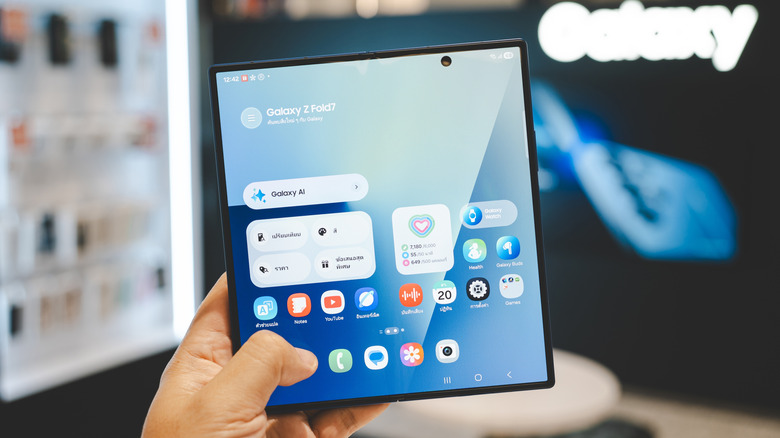
While foldable phones are a leap in terms of innovation, they're a step back in repairability. The Samsung Galaxy Z Fold 7 is a prime example. Featuring one of the thinnest designs for a foldable, it is a great product for tech enthusiasts, but perhaps not for everyday users. To achieve the sleek design of the Galaxy Z Fold 7, Samsung used industrial-grade adhesives to keep its components in place, reducing its repairability.
Powering the phone are two lithium-ion batteries, which will eventually degrade and require replacement. However, reaching the batteries isn't easy. To access them, you have to remove the back panel, multiple screws, cables, and other components. Once you reach them, removing them becomes the next challenge, as they're glued in place with strong adhesives. The pull tabs aren't effective either and often rip apart when pulled strongly. To remove them, strong force, isopropyl alcohol, and prying tools are often required, which increase the risk of damaging other components.
The battery, however, isn't the hardest component to repair on the Galaxy Z Fold 7. That title goes to the inner display. To access it, the plastic bezel around the screen needs to be removed, which is glued in. There's little margin for error, and the process can easily damage the flexible OLED screen underneath. Since the inner display panel is part of the phone's structure, it can't be replaced in isolation. Instead, the entire screen and chassis module needs to be replaced, which officially costs $589. These traits, along with Samsung not offering spare parts, make the Galaxy Z Fold 7 a foldable disaster in terms of repairability.
Nothing Phone 3
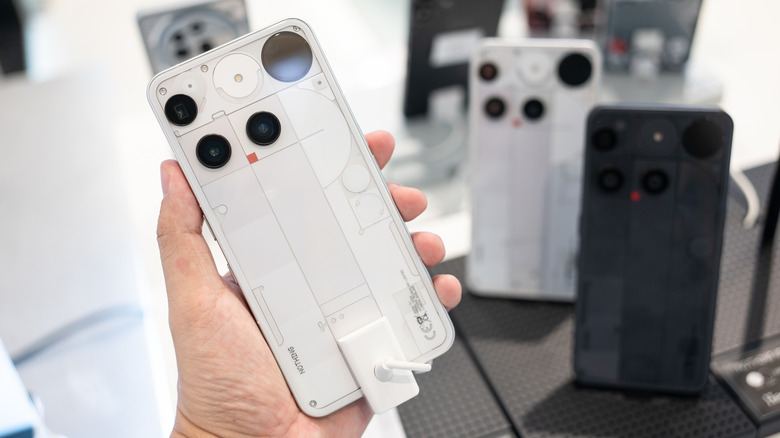
Similar to the Samsung Galaxy Z Fold 7, the Nothing Phone 3 earns a 3 out of 10 repairability score from iFixit, but for different reasons. While the phone offers a transparent back for aesthetics and a micro-LED display on the rear, it does so by trading off serviceability. The see-through back gives the illusion that the visible screws can be easily accessed, but actually reaching them requires removing the glass panel glued to the back.
Once you reach the screws and remove them, the back still doesn't come off. It's held together by additional hidden screws, which can be found under decorative stickers. These stickers preserve the aesthetics of the Nothing Phone 3's transparent back panel by covering the screws. Getting them off is one challenge; however, once they're off, putting them back is even more difficult. They can be damaged in the process, and if so, the aesthetic of the phone is ruined.
Once you reach the battery by navigating through these hidden screws, a problem similar to what's seen in the Samsung Galaxy Z Fold 7 arises. The pull tabs are ineffective, and prying tools are needed to remove the heavily glued battery. Replacing the display requires the same effort, as it is stuck to the module with strong adhesives. As a result, removing it can damage the frame or the rear glass. Additionally, unlike Samsung and Apple, Nothing doesn't offer repair manuals, making the job harder on technicians. Repair costs, as well as spare parts, are not officially available, and you need to ship the device to the company to get a service quote.
Google Pixel Fold
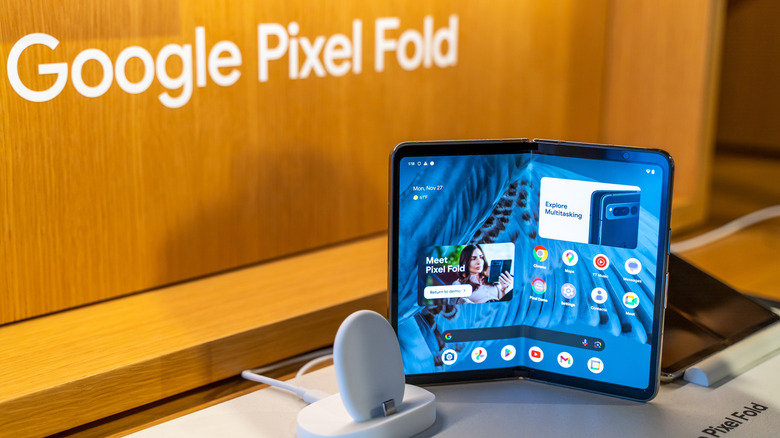
The original Google Pixel Fold is another example of a phone that requires extreme time and effort to repair. Even though Google partnered with iFixit to offer official parts like batteries and screens, the service process can be tedious. According to iFixit, the inner screen replacement can take three to four hours, while a simple battery replacement requires one to two hours. This time can increase or decrease based on your level of expertise, but the tightly packed nature of the phone will make it a tricky process regardless.
Similar to other flagship smartphones, Google uses adhesives to lock its components into place. While this glue is relatively lighter than that of the Samsung Galaxy Z Fold 7, it makes extracting the components difficult. Some of the components are also integrated into one another, like the USB-C port being part of the motherboard, which means you'll need to replace the entire board in case of damage.
Cost doesn't favor the user either, as an inner screen replacement can set you back $899. While Google doesn't lock the user out with software, you're better off getting your Pixel Fold repaired by a professional rather than doing it yourself. The phone's design requires digging through meticulously placed ribbons and prying through components, and there's little to no margin for error. A small mistake could end up ruining your OLED panel or puncturing the battery, and you might end up further damaging your device. Overall, the Google Pixel Fold's construction makes it extremely tough to navigate, earning it a well-deserved 3 out of 10 from iFixit.
Modular smartphone brands offer the easiest DIY repairs
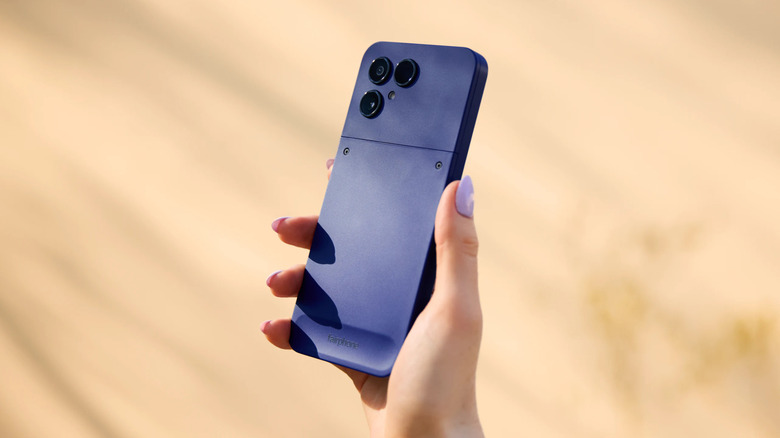
While top companies continue to trade off repairability for better, more aesthetically pleasing designs, others have shifted their brand focus to building highly serviceable phones. One of them is Fairphone. As the name suggests, the company's goal is to change the landscape of electronics and build devices that are more ethical in nature. In turn, its latest flagship, the Fairphone 6, features a highly repairable design, a five-year warranty, seven years of software updates, and eight years of security updates.
The phone itself is made for one main purpose: durability. Built with modular components throughout, the Fairphone 6 can be easily repaired at home, with minimal tools. In fact, the entire phone can be disassembled with the help of a Torx T5 screwdriver and a guitar pick as a prying tool. Extracting the parts is as easy as removing a few screws, and with spare parts and repair manuals available, the process becomes relatively straightforward.
Though the phone isn't premium flagship tier and faces a few cutbacks to reduce costs, it's a step in the right direction. It's proof that companies can make durable phones that last longer and create a more sustainable landscape. In current conditions, where memory prices are high, RAM is scarce, and new phones cost over $1,000, longevity is something that needs to be prioritized more than ever.