

5 Common Issues With OnePlus Watches, According To Users
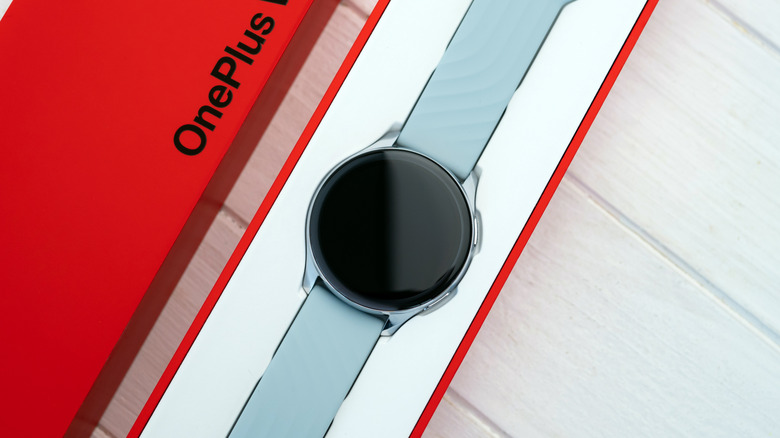
Despite starting out as a flagship-killer smartphone brand, OnePlus produces many gadgets today that are worth buying, and its smartwatches occupy and compete in the same space as wearables from tech giants, such as Samsung's Galaxy Watch and Google's Pixel Watch series. OnePlus smartwatches offer similarly robust builds, extensive health monitoring capabilities, and smooth processing that you would expect from Samsung and Google, but often at cheaper prices.
These features make them an excellent alternative to a Samsung Galaxy Watch, but getting a OnePlus watch also comes with some disadvantages. Take OnePlus Watch 3's case, for instance, which initially only launched in a single 47mm size — one that many users considered bulky for a smartwatch. The company later released a more compact version down the line, but it compromised on the battery front, which was a major selling point for the original watch. Unfortunately, there are other issues with OnePlus smartwatches that aren't purely aesthetic or easily fixable, including compatibility issues with certain smartphones, inaccurate measurements for specific health metrics, and a lack of features you'll find in watches from other manufacturers.
1. Device compatibility issues and no cellular support
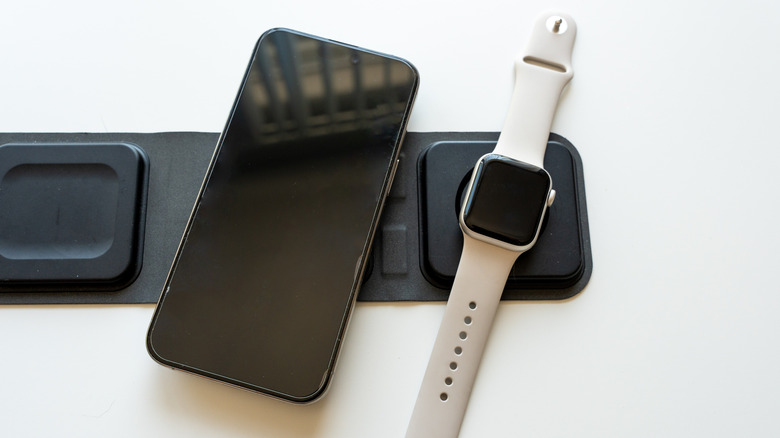
At their simplest, smartwatches are companion devices that act as extensions of your phone. Health tracking aside, the most common uses of a smartwatch include viewing notifications from your phone and controlling media playback. There are certainly watches that function reliably on their own; for example, you can do many things with a Galaxy Watch without a paired smartphone. However, for a watch that doesn't come with cellular support, as is the case with OnePlus watches in the U.S., you need a connected phone to access your wearable's full suite of features.
OnePlus watches run Wear OS. This locks them to the Android ecosystem, as devices running Wear OS aren't compatible with Apple phones powered by iOS. This isn't an issue exclusive to OnePlus; many of the best smartwatches you can buy today include Wear OS and thus are also restricted to Android. However, third-party watches, such as those from Garmin, offer support for both Android and iOS.
The compatibility issues go beyond platform restrictions. A global version of a OnePlus smartwatch might not pair with phones made for the Chinese market — if you're using an imported phone that isn't made for the U.S., such as one from Vivo or Xiaomi, your OnePlus Watch might refuse to connect to the device. There are also cases where Android phones that aren't region-locked refuse to connect for no real reason. These include devices from brands like Samsung, Google, and even Oppo, which is a sister brand to OnePlus. Some OnePlus Watch owners find that this is occasionally fixed by clearing the cache, but the fix might not work for everyone.
2. Inaccurate swim tracking

One of the highlights of a OnePlus Watch is its extensive fitness and sports tracking that encompasses detailed overviews for a variety of activities. This includes running, cycling, badminton, tennis, skiing, and, thanks to its IP68 water resistance rating on many models, even swimming.
Unfortunately, the swimming tracking on OnePlus Watches is subpar at best, often providing incorrect indoor swimming measurements. This differs depending on which generation of the watch you have, but many users online show discrepancies between the results measured by other smartwatches and those shown on a OnePlus watch.
This issue has existed with OnePlus watches for a good few years now, with users reporting the Watch 2 from 2024 consistently being off by a couple hundred feet. The issue remains unsolved even with newer devices, as users on Reddit report the Watch 3 being similarly inaccurate in measuring swimming distance. With there being no options to manually edit the distance afterward and ongoing water damage concerns with newer models, OnePlus watches aren't the best option for avid swimmers.
3. Water resistance issues
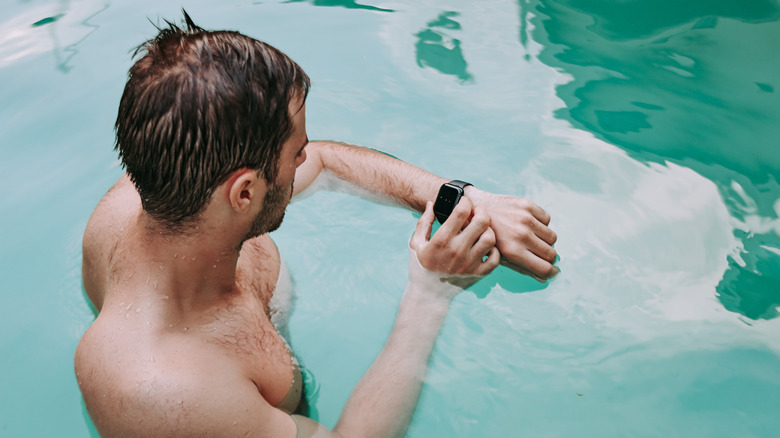
Most newer OnePlus smartwatches carry an IP68 water and dust resistance rating. This is important for swimming tracking, but also as a safety net against water damage while wearing your OnePlus Watch in the shower or under rainfall. This should keep your smartwatch safe in up to 4.9 feet of freshwater for up to 30 minutes, but a number of users report that this isn't always the case, and even much less water exposure can render the wearable unusable.
A Reddit user reported that their OnePlus Watch 3 stopped working just a month after purchase. After sending it to OnePlus for repair, the company claimed that the device suffered water damage and thus could not be repaired. The user added that they never wore the watch while swimming or in the shower — though either way, the IP68 rating should have protected it. The same issue was reported by another user on the OnePlus forum, and many commenters in the thread shared similar experiences.
This downside appears to be exclusive to the OnePlus Watch 3. A user who claimed to be a former Nokia technician on the OnePlus forum noted that this is likely due to the company downgrading from a double-gasket design to one that uses a single gasket. The technician also said that water likely enters through the speaker, which is how internal components get damaged.
4. Lack of ECG in certain regions

One of the biggest advantages of getting a smartwatch is health monitoring. This used to include only basic features like heart rate measurements, step counts, and sleep tracking, but modern smartwatches come with advanced sensors that can do much more. Most watches today feature in-depth sleep tracking, the ability to measure skin temperature, and stress monitoring.
OnePlus watches also track these, but there's one health metric that they don't show: an electrocardiogram (ECG), which measures electrical activity in the heart. Watches that track ECG aren't medical-grade but can still flag heart conditions such as irregular rhythm, issues with blood flow, and signs of a heart attack. If you're a health-conscious user who wants this feature, a Pixel or Galaxy Watch will serve you better, at least in the U.S.
Hardware isn't always the issue; the OnePlus Watch 3 features the same sensors that competitors use to track ECG. However, the feature is region-locked. OnePlus Watch 3 models bought in the United Kingdom, France, Germany, and other European countries come with ECG tracking, but as OnePlus has not received regulatory clearance from the FDA, the feature remains locked for users in the U.S. and Canada.
5. Poor customer service

A brand-new device failing isn't always your fault. Sometimes customers receive defective products, and it's the manufacturer's job to provide a satisfactory resolution when that happens. Not all companies are equally helpful at times like these, and the general user sentiment is that OnePlus' customer service leaves much to be desired.
The experience differs depending on the region and the specific support representative you get connected to, but many users report unsatisfactory experiences when trying to return a defective OnePlus Watch. One Reddit user reported that OnePlus refused to offer a replacement for a watch that stopped functioning after a month. The user also claims that the company ignored their request to send the item back for them to re-inspect, essentially keeping it hostage — though the latter part is an exceedingly rare occurrence.
Another user dissatisfied with OnePlus support escalated the matter to the European Consumer Center (ECC), at which point the company was forced to offer a replacement. Both of these responses from OnePlus are regarding watches that suffered water damage, but users report similar experiences with OnePlus phones, charging bricks, cables, and other peripherals.