

These Rival Aerospace Companies Are Competing With SpaceX
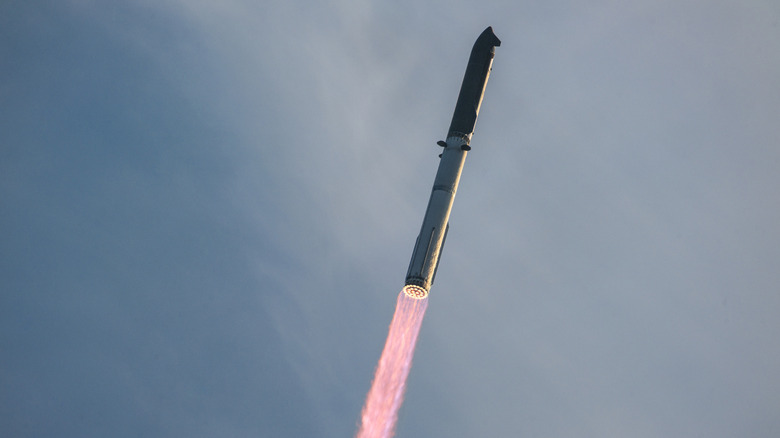
For a company that only completed its first successful rocket launch in 2008, SpaceX has made remarkable strides in the spaceflight industry. Set up by the flamboyant tech entrepreneur Elon Musk six years before that launch, SpaceX has become an integral part of the American spaceflight industry, launching satellites for governments and organizations globally, transporting astronauts to and from the International Space Station, and developing the next-generation Starship, the world's most powerful rocket that could one day take crew and cargo to the moon, Mars, and possibly beyond. Its success has been propelled in part by its ability to cut costs by reusing the first stage of its trusty Falcon 9 booster, as well as other parts of its spaceflight system such as the Crew Dragon spacecraft and rocket fairing.
But SpaceX isn't the only company seeking to make its mark in the spaceflight industry, with several rivals, Blue Origin among them, looking to challenge its growing dominance. As SpaceX knows well, for those that succeed, the rewards could be substantial — with everything from lucrative government contracts and commercial launch deals to satellite constellation deployments and deep-space missions with NASA, all offering a potential route to a larger share of the burgeoning space economy. So let's take a closer look at three of the big spaceflight rivals working to take on SpaceX.
Blue Origin
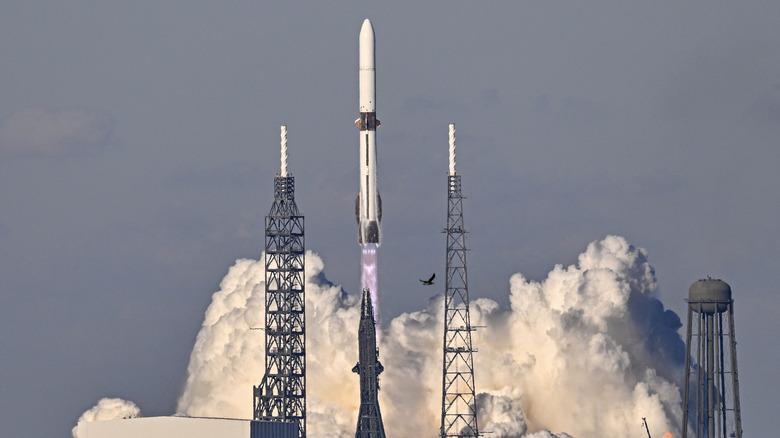
Founded by Amazon's Jeff Bezos in 2000, Blue Origin is perhaps the most significant challenger to SpaceX, with activities spanning reusable rockets, satellite launches, and space tourism running alongside ambitions in lunar exploration. While its pace of development has been slower than SpaceX's, Blue Origin has, in recent years, been making notable strides in launch technology. In January 2025, for example, it conducted the maiden launch of its first orbital rocket, the New Glenn. The rocket has now flown three times, with its second flight launching NASA's ESCAPADE Mars mission in November 2025. In the same mission, it achieved its first landing of a first-stage orbital booster — the same booster that it used in the third mission, proving its ability to reuse a rocket. But the New Glenn's fourth flight has been delayed after the rocket exploded on the launchpad during a ground-based test in May 2026. Blue Origin has also been conducting tourism flights to the edge of space using its suborbital New Shepard, a more basic rocket that it's also been able to land and reuse.
Blue Origin is taking on SpaceX by competing for some of the same contracts for satellite launches and government programs. It's also developed a powerful BE-4 rocket engine, which it supplies to other companies to power their own launch vehicles. This gives Blue Origin a separate commercial presence in the launch market, strengthening its position in the American space industry.
Like SpaceX, Blue Origin is also developing a lunar lander for NASA's Artemis program. In 2023, it was awarded a $3.4 billion contract to develop the Blue Moon lander for Artemis V, currently set for late 2028, which will follow SpaceX's Artemis IV lunar landing targeted for early 2028. Both missions aim to put humans on the lunar surface.
Rocket Lab and United Launch Alliance (ULA)
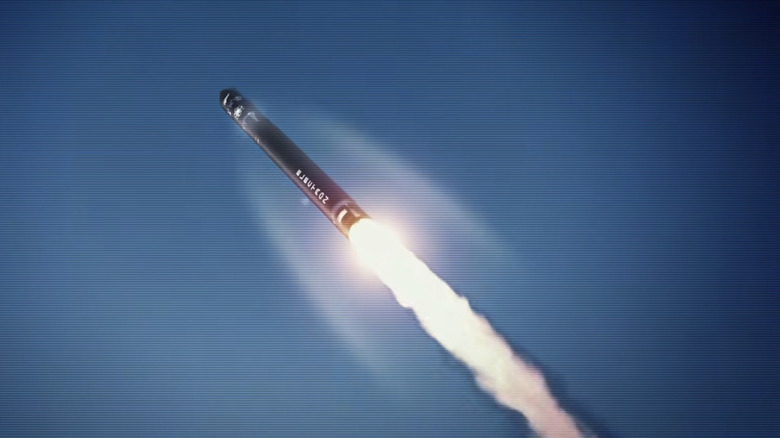
Rocket Lab was founded in 2006 by Peter Beck. While most of its rockets continue to launch from New Zealand, it's also utilizing a launch site in Virginia and has its headquarters in California. Rocket Lab made its name with the Electron, a two-stage orbital rocket that debuted in 2017 and reached orbit the following year.
Rocket Lab is developing a rocket much larger than the Electron designed to carry bigger payloads to space. The Neutron is designed so that the first stage can be reused. The company is also developing spacecraft and satellite components, while providing launch services and infrastructure for hypersonic technology development with its HASTE rocket. This allows customers to test experimental vehicles and systems at hypersonic speeds.
Elsewhere, United Launch Alliance (ULA) is a joint venture between Boeing and Lockheed Martin. Formed in 2006, ULA historically relied on Atlas V and Delta IV rockets, but is now transitioning to the Vulcan Centaur, a rocket that completed its maiden flight in January 2024. ULA competes with SpaceX for government contracts, including launches for the U.S. Space Force. In April 2025, the Colorado-headquartered company was awarded 40% of the missions shared between ULA and SpaceX under a new national security launch procurement. NASA is planning to use ULA's Centaur V upper stage on future missions of its Space Launch System (SLS) moon rocket.
Unlike SpaceX, which has built its business around frequent launches and reusable Falcon 9 boosters, ULA focuses on high-value government and commercial missions. Its new Vulcan rocket is intended to strengthen its position in this market, although the vehicle's first stage is not currently designed for reuse. Rather than trying to replicate SpaceX's entire business, ULA is instead competing for a valuable segment of the market.