

Which Android Phone Is Equivalent To The iPhone Air?
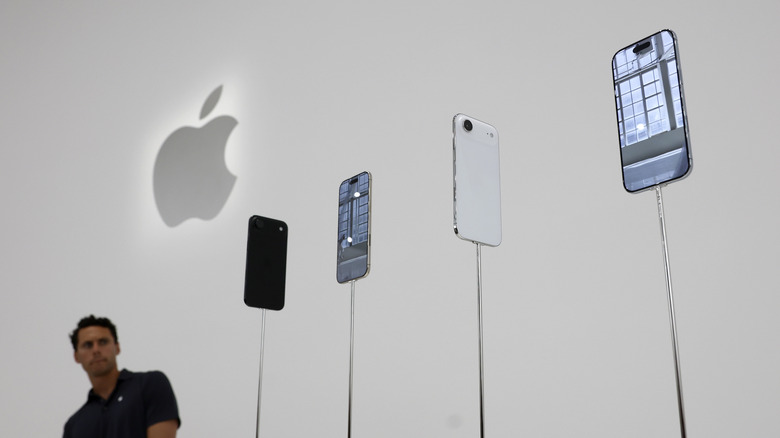
Apple surprised fans in September 2025 with the introduction of the ultra-slim iPhone Air, a handset that's just 5.64 mm thick and weighs 165 grams. Then again, longtime iPhone users who followed the rumor mill preceding the iPhone 17 event were well aware that a thin iPhone would be included in last year's lineup. Rivals must have also seen the leaks, as several companies released iPhone Air alternatives around Apple's launch event. Devices like the Galaxy S25 Edge, the Honor Magic 8 Pro Air, the Motorola Edge 70, the Tecno Spark Slim, and the Infinix Hot 60 Pro Plus were unveiled between May 2025 and January 2026. The handsets are slightly thicker than the iPhone Air, measuring between 5.80 mm and 6.10 mm, and weighed about the same (155 grams to 165 grams).
There isn't a perfect Android equivalent to the iPhone Air, as Apple rivals didn't create identical devices. Instead, each Android vendor came up with their own design while prioritizing thinness. The list of phones above includes flagship devices that can go head-to-head against the iPhone Air in performance, such as the Galaxy S25 Edge and the Honor Magic 8 Pro Air, while others are more entry-level to mid-range devices. The Edge and Pro Air are, therefore, the best iPhone Air rivals.
The Galaxy S25 Edge deserves special consideration in any discussion about Apple's thin phone, as it's an important mainstream Android equivalent to launch before the iPhone Air. Samsung released the handset in May after teasing it in early 2025. The Honor phone is available in China.
The thin Android flagships
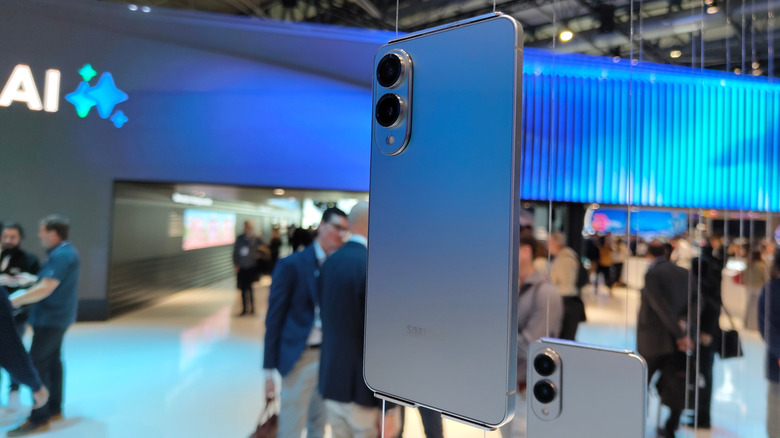
The iPhone Air wasn't as popular as the iPhone 17 models. BGR checked Apple's inventory from September to December 2025, finding that the iPhone Air was routinely available in stores, while the other variants were sold out. Apple didn't release a successor a year later. Samsung's Galaxy S25 Edge also saw weaker demand. The company didn't include an Edge model in the Galaxy S26 series launched in early 2026.
However, the Galaxy S25 Edge (5.80 mm and 163 grams) is a premium device, just like the iPhone Air. The Samsung phone features a 6.7-inch OLED panel with 3,120 by 1,440 resolution and dynamic 120 Hz refresh rate, the Snapdragon 8 Elite chip, 12 GB of RAM, 256 GB or 512 GB of storage, a 200-megapixel wide camera, a 12-megapixel ultra-wide camera, and a 3,900 mAh battery. The iPhone Air comes with a 6.5-inch OLED panel (2,736 by 1,260 resolution, adaptive 120 Hz refresh rate), the A19 Pro chip, 12 GB of RAM, 256 GB to 1 TB of storage, a 48-megapixel wide camera, and a 3,149 mAh battery. Performance is similar in Geekbench 6 tests, with the iPhone Air scoring 3,776 (single-core) and 9,628 (multi-core) points compared to 3,111 and 9,678 for the Edge.
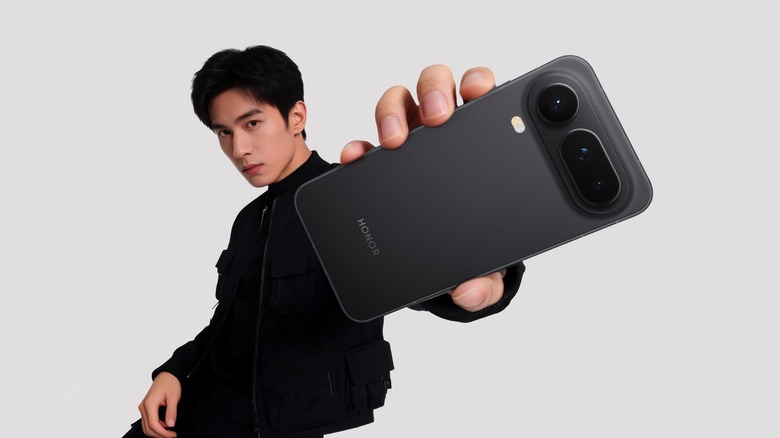
The Honor Magic 8 Pro Air outperforms the Galaxy handset in these benchmarks, hitting 3,373 and 10,089 points, respectively. At 6.10 mm, the phone is slightly thicker, but it's also lighter (155 grams). The smartphone offers a 6.31-inch OLED panel with 2,640 by 1,216 resolution and 120 Hz refresh rate, the Dimensity 9500 chip, 12 GB or 16 GB of RAM, 256 GB to 1 TB of storage, and a 5,500 mAh battery. The handset has three cameras: 50-megapixel wide and ultrawide cameras and a 64-megapixel camera.
Should you consider more affordable alternatives?
The iPhone Air offers a large display in a much smaller package. While that can be appealing, it comes with drawbacks. The phone has only a single camera on the back and doesn't support physical SIM cards. It has a single speaker and a smaller battery than the iPhone 17 models. But the iPhone Air has solid build quality, featuring a durable display and a titanium frame. The handset is expensive too, starting at $1,099. The Galaxy S25 Edge costs $1,099.99, while the Honor handset starts at 4,999 yuan ($747).
Those are pricey indeed, but buyers who want an ultra-thin phone in 2026 may be better served by more expensive devices, as these phones offer high-end components, durable designs, and flagship performance. However, Motorola Edge 70 (5.99 mm and 159 grams) is also pricy, starting at €799 ($894) in Europe, but the handset actually won't offer similar performance to the other iPhone Air alternatives mentioned previously. It scores 1,324 and 4,035 in Geekbench 6 tests. The phone has a 6.7-inch OLED screen, the Snapdragon 7 Gen 4 chip, 8 GB or 12 GB of RAM, 512 GB of storage, two 50-megapixel cameras on the back, and a 4,800 mAh battery.
The Tecno Spark Slim (5.93 mm and 156 grams) and the Infinix Hot 60 Pro Plus (5.95 mm and 155 grams) are entry-level models priced at about €180 ($201) and $150. They feature similar specs: 6.78-inch OLED displays with 144 Hz refresh rate, the Helio G200 chip, up to 8 GB of memory and up to 256 GB of storage, 50-megapixel cameras on the back, and 5,160 mAh batteries. Performance is significantly lower than the iPhone Air. Geekbench 6 scores are around 700 and 2,000 for the two handsets.