

Your Phone Can Help You Spot Hidden Cameras - Here's How
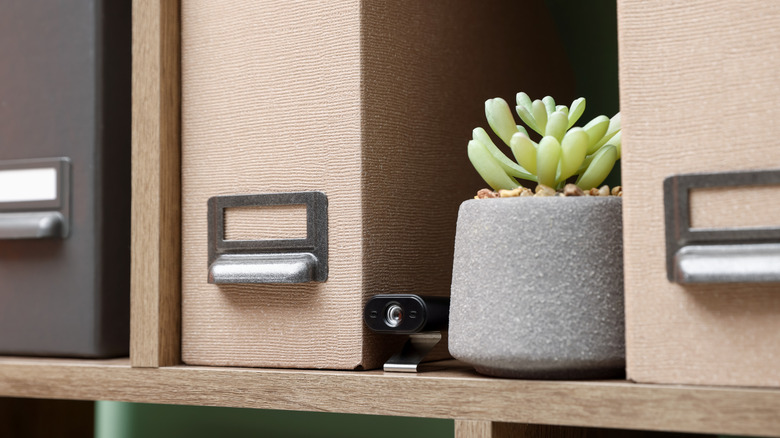
Travelers should be aware of a potential privacy threat that may ruin their vacation: the presence of hidden cameras in some hotel rooms and rental properties. While well-known hotel chains may be less likely to contain spy cameras, short-term rentals booked via travel websites such as Airbnb may feature such unwanted surprises. Camera technology has advanced significantly in the last few decades, allowing manufacturers to create spy cameras that can be placed in common household items like USB chargers and smoke detectors.
These devices are harder to spot with the naked eye, but there is one tool you can use to help identify some of them: your iPhone or Android smartphone. The first thing to do when you arrive is to make a visual inspection of the lodging. Check for any suspicious items with small holes in specific rooms, such as bathrooms, bedrooms, and walk-in closets. You can use your phone's magnifier apps or the camera zoom to inspect these openings before you move to the next step. Take pictures if necessary so you can zoom in further.
After that, turn off all the lights in the room and draw the curtains. Turn on your phone's flashlight, and hold it close to all the suspicious device openings you've identified previously. If a spy camera is present, the lens may reflect light. Move the phone slowly over these openings, and notice any reflections. Next, redo the checks, but with the camera app open and the flashlight turned off. Some smartphones can detect infrared light that some hidden cameras may emit. You'll want to find bright points that appear on your phone's display but aren't visible to your naked eye.
How to use the phone's software to find hidden cameras
Every camera needs power to work. If you find a convenient USB charger in your room and notice it has an opening, you can unplug and report it immediately. Unfortunately, if the hidden cam is placed on the ceiling inside a smoke detector, it might not be possible to remove it. After using the phone's hardware to check for signs of concealed cameras, you can use some software. Many hidden cameras need a connection to the internet, so the footage can be uploaded to the cloud. (Be aware that some cameras may record to local storage to avoid a wireless connection.)
You can install an application like Fing to scan your rental's Wi-Fi network for devices that shouldn't be there. Smart TVs, wireless printers, and speakers may show up as connected to Wi-Fi. Similarly, all your connected devices, including phones, tablets, and computers, may appear on the network. But you should pay attention to any sightings of unusual devices, including gadgets with the word "camera" in the name. The Fing app supports iPhone, Android, macOS, and Windows, and offers up to three free manual scans a day. A hidden camera detector feature is available on the premium version.
Some hidden cameras may create their own Wi-Fi hotspots, so you can use your phone's Settings app to see if any Wi-Fi hotspots appear near suspicious household items. Some cameras may use Bluetooth to connect to other devices. An app like nRF Connect for Mobile can help you identify nearby Bluetooth signals, but it may not detect spy cams.
How often do people find spy cameras in hotels?
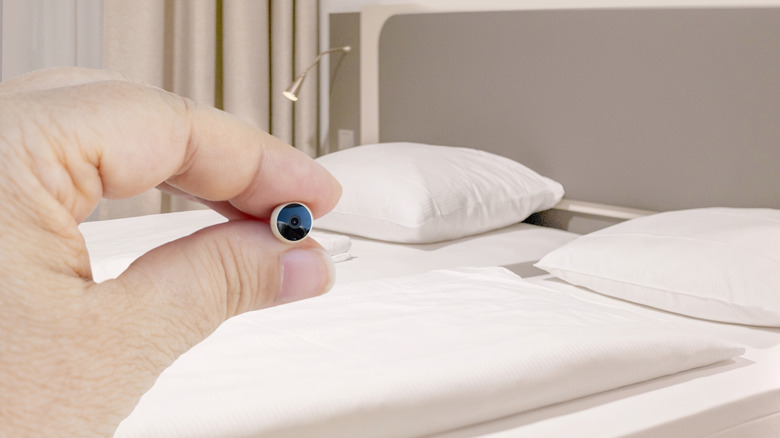
Airbnb has banned all indoor cameras since March 2024, including security cameras in common areas. That's a policy to look for when booking a vacation stay with other competing services, but rental owners may still hide cameras inside their properties. Several surveys and investigations have shown in recent years that spy camera use is on the rise. An IPX1031 study from 2025 revealed that 47% of respondents discovered a camera in an Airbnb vacation rental, compared with 25% in a similar 2023 survey. The 2025 study also found that 55% of Airbnb hosts still used indoor cameras despite the ban.
In 2024, a CNN investigation found that Airbnb received over 35,000 support tickets concerning surveillance equipment over about a decade. While these figures may include visible security cameras placed outdoors rather than concealed cameras disguised as common products, these findings suggest the risk of finding a spy camera is real. It's not just Airbnb-type rentals either. The BBC detailed a spying operation involving hotel rooms in China. Footage from hidden cameras was available on social media.
Using your smartphone to inspect a hotel room or short-term rental should become a habit. The handset will also help you document the process, as you can take photos and videos of your findings. However, you should keep in mind that the smartphone isn't a perfect tool. It may fail to produce reflections or detect infrared light. The software can also fail. An apartment building will show a large number of Wi-Fi networks, but spy cameras may be connected to a separate network to avoid detection.