

What Do AMD GPU Names And Numbers Actually Mean?
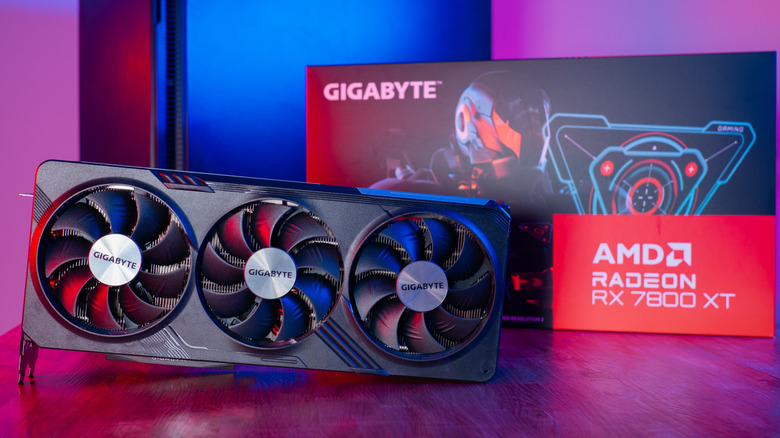
We may receive a commission on purchases made from links.
AMD, owned by multiple individual and institutional investors, makes processors and graphics cards, which may not be immediately clear from their product names. Their graphics cards, for example, are dubbed the Radeon line.
The "RX" prefix is strictly for their gaming-focused GPUs, while "Ryzen" is the namesake of their processor lineup. Nvidia uses "RTX" on its graphics cards, but that extra "T" doesn't necessarily mean they're better than "RX," which simply represents AMD's Radeon line. "RTX" (previously "GTX") is the prefix of Nvidia GPUs with ray tracing support.
AMD has used other naming conventions previously, like the older three-digit graphics cards like the RX 500 series. There was also the FirePro lineup designed specifically for professional workstations, which were a far cry away from what gamers put in their rigs today. In fact, they weren't focused on gaming at all, much like the current Radeon Pro line that's focused on computer aided design (CAD), 3D rendering and high-performance computing like AI modeling and large data sets. Modern Radeon RX models run off the four-digit namesake, and for good reason. Understanding what these numbers actually mean is a simple way to make sure consumers are getting the performance they're paying for.
The 4-digit generation and tier structure
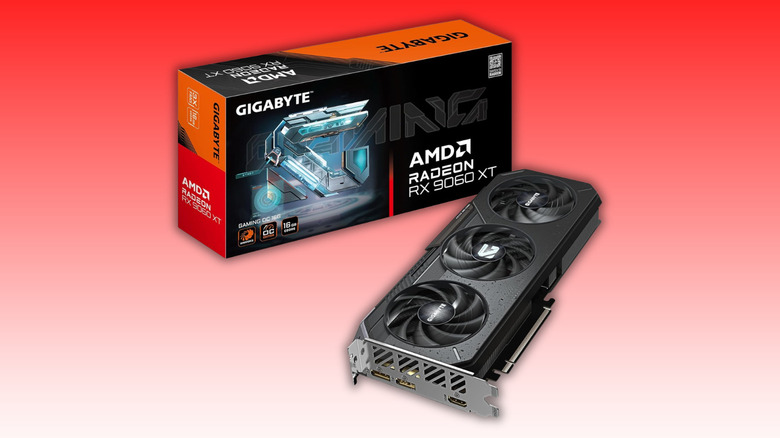
Following the "RX" prefix is a four-digit number, with the first digit representing the architectural generation and the second digit showing the GPU's performance tier. So, higher first numbers mean newer GPUs — for example, the RX 7000 series is an older generation than the RX 9000 cards.
The RX 9000 series uses the third digit to indicate performance, such as in the 9050. This is simply because AMD releases better GPUs within the same generation, so model numbers climb to 9060 and 9070. The "7" is the highest performance tier for this ninth generation of AMD GPUs, so the RX 9070 is a high-end model. The "XT" that may be added at the end represents a step up in performance over the standard RX 9070. It's a GPU that I run myself, and it's fantastic for 4K and 1440p gaming while avoiding higher pricing of Nvidia hardware, as it boasts higher specifications when being compared to an RTX 5080 or 5090.
Benchmarking confirms AMD's naming conventions for performance: An older Radeon RX 7400 scores 11,897 in PassMark's G3D Mark, while the newer Radeon RX 9060 kicks up a score of 17,624. So, these letters and numbers can help consumers get the best value for money based on the power they need while avoiding hardware pitfalls.
Suffixes and finding the best value
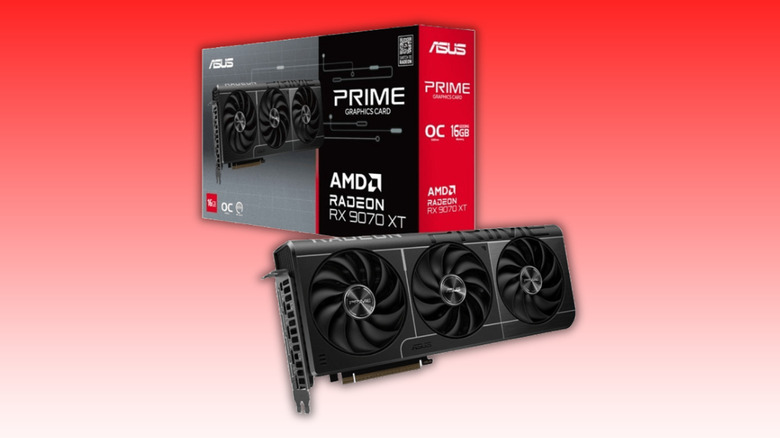
After the four-digit number in the name of an AMD GPU, you may find a suffix like "XT." It represents a tuned GPU model that's capable of higher performance than the same-named GPU, like an RX 9070 compared to an RX 9070 XT. It's a similar naming convention to Nvidia, which uses "Ti" or "Super" labels instead.
It's not just marketing fluff. It's more of an incremental upgrade rather than a distinctive level up on GPU performance. For example, the RX 9060 scores 17,624 on benchmarks, while the RX 9060 XT 8GB scores slightly higher at 19,703. Higher memory variants push performance further, with the 16GB version scoring 20,124.
AMD's naming structure is a way for us to avoid buying underpowered cards disguised by flash marketing and big numbers. A high-tier card from a previous generation might actually perform better than a mid-tier current generation card. For example, the RX 9060 XT 16GB (20,124) is still clawing at the coattails of the older RX 7700 (20,641), which can save buyers around $100 if they pick the older model. And let's not forget that paying for the newest and greatest flagship AMD GPU doesn't mean it's immune to problems.