

The Best Budget Android Is A Phone From 2025 (It Isn't A OnePlus)
We may receive a commission on purchases made from links.
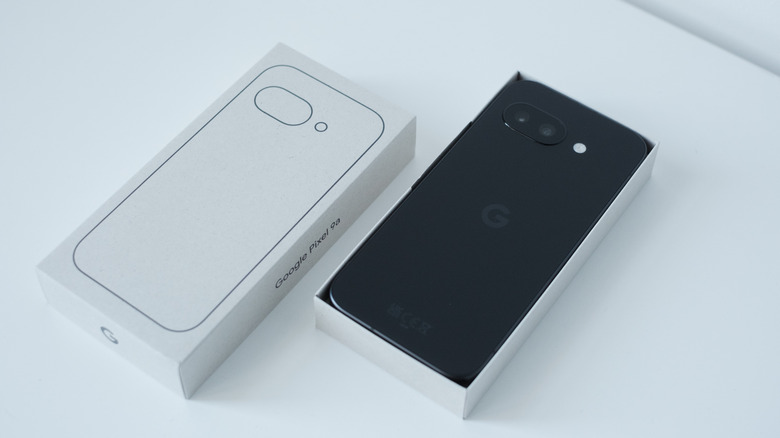
Buyers looking for a new Android device that doesn't break the bank in late 2026 might find it strange to hear that their best option could be a phone launched in the first half of 2025, Google's Pixel 9a mid-range handset. That recommendation may seem even more surprising given that the Pixel 10a is already out, and good alternatives from Samsung and OnePlus exist. The Chinese vendor is especially interesting, considering that OnePlus launched two compelling mid-range phones in the U.S. in 2025 and 2026, the $599.99 OnePlus 13R and the $699.99 OnePlus 15R. But the mobile market itself is in a strange place as of this writing, and that's why the Pixel 9a can be a much better choice for consumers who want to spend only around $500 on a new device.
Handset manufacturers have been raising prices throughout 2026 because of the ongoing RAM shortage. AI data centers have increased the demand for mobile memory and storage, and chip prices went up. Vendors passed some of those costs to customers, including larger companies like Apple, Google, and Samsung. Separately, smartphone makers are releasing more advanced AI features with each new smartphone generation. Google is at the forefront with its Gemini features that are built into Android, including exclusive tools created for Pixel phones. Other vendors operate their own AI solutions, with Android handset makers also offering Google's Gemini features to buyers. Finally, OnePlus announced in July 2026 that it would no longer release new devices in the U.S. and Europe.
Consumers who need to purchase a new device this year would have to pay attention to all these market dynamics to get the best possible phone for their needs. That's why the Pixel 9a is the best budget phone to consider at this time of year.
Why is the Pixel 9a still so good?
The Pixel 9a had a starting price of $499 for the 128 GB version in early 2025, a price that Google continues to list on its website (the phone can be out of stock). Buyers can score even better deals in late 2026 if they purchase the handset from other retailers. Newegg lists the handset for $469.99, while eBay has it down to $424.99. Used versions on second-hand marketplaces would be even more affordable.
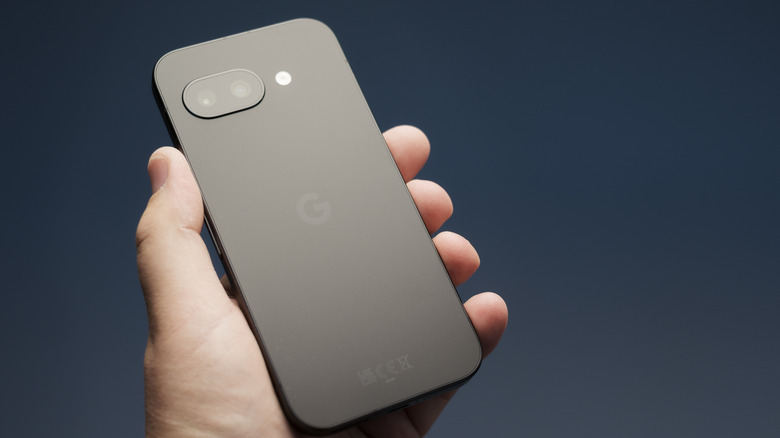
While the phone is roughly a year and a half old, and Google released a successor in February 2026, the Pixel 9a remains a very capable device, and very similar to the Pixel 10a. The phone features a 6.3-inch OLED display with 2,424-by-1,080 resolution, dynamic refresh rate support (60-120 Hz), and up to 2,700 nits of peak brightness. The 5,100 mAh battery is rated for 30 hours of battery life and supports 23 W wired charging. On the back, the Pixel 9a has two cameras: a 48-megapixel wide lens and a 13-megapixel ultrawide lens.
The only potential issue concerns the processor. Google used the Tensor G4 chip in the Pixel 9a, paired with 8 GB of RAM and 128 GB of storage. The phone is likely to offer a fast experience for everyday Android tasks for a few years, including the current Android 17 release. As for Gemini features, it should have no problem running tools that require cloud processing rather than on-device resources. However, the Pixel 9a will not support certain AI tools, like the new Gemini Intelligence suite. To future-proof their device, consumers may also want to choose the more expensive 256 GB version, especially if they plan to keep the handset for four or five years.
Why the Pixel 9a is better than OnePlus budget phones
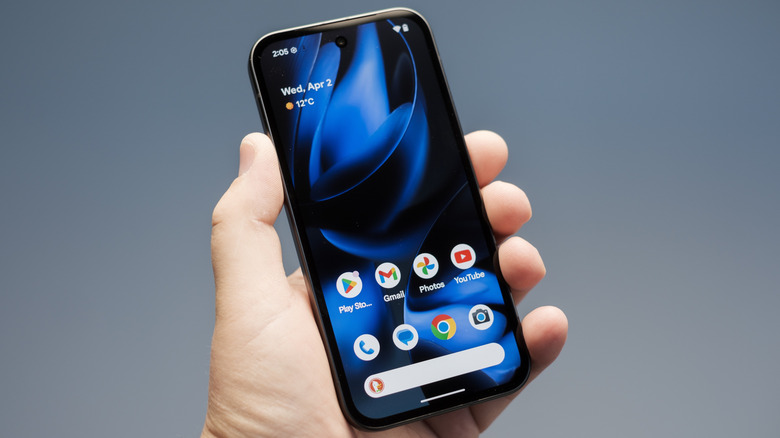
Despite the Tensor G4's potential limitations, the Pixel 9a's software proposition is very appealing and helps explain why the handset is a better choice than the recent OnePlus mid-range handsets. The Pixel 9a runs Google's version of Android and comes with a software update guarantee buyers shouldn't ignore. The phone will receive seven years of major Android releases and seven years of security updates, which means it will be supported through 2032. In addition, Google's version of Android already includes built-in Gemini features for Pixel devices. Future Android releases may bring additional Pixel tools, especially features that do not require local processing.
The OnePlus 13R and 15R will offer buyers only four years of major Android releases. The handsets feature Snapdragon 8 chips that are faster than the Tensor G4 chip, but they won't support Google's latest Android versions for as long as the Pixel 9a. Also, buyers would have to wait for OnePlus to release software updates rather than Google. While that shouldn't generally be a problem, OnePlus' retreat from the U.S. market is a significant development. The company said software updates and after-sales support will continue for existing devices, but buyers who want to use phones for more than four years would be better served by a vendor who is still actively present in the United States.
Finally, the Pixel 9a is also a better choice than the $599 Pixel 10a because the two phones are almost identical. The 2026 device features a slightly brighter display with improved contrast and slightly faster battery charging (30 W). On the software side, it offers a few AI camera features, including Camera Coach and Auto Best Take. But none of these are dealbreakers.