

Will Any Android Phone Actually Last 10 Years?
Smartphones today aren't exactly known for being long-lasting. Technologically advanced, all-in-one devices? Sure. But longevity isn't their strong suit. According to Reviews.org, Americans upgrade their phones every 32 months on average, with degrading batteries and need for faster performance being the primary reasons. However, with RAM shortages driving up the prices of flagship phones, consumers want their devices to last longer and are embracing the "Buy It For Life" mindset.
Smartphone lifespans are cut short by a combination of hardware and software constraints. Today's phones prioritize slim, lightweight, and aesthetic designs. To achieve that, they use sealed batteries, strong adhesives, and complex internal layouts that leave little room for modularity. As a result, phones are harder to repair, and parts like the battery are tougher to replace. This severely affects lifespan since lithium-ion batteries lose capacity over time, and there are also a few mistakes that are ruining the lithium batteries inside your devices even faster. Software, on the other hand, eventually becomes outdated, and newer apps drop support for older Android versions due to security and compatibility reasons.
Keeping that in mind, is it possible to push an Android phone to its limits and make it last a decade? Probably not, and it's not just about wear and tear. Even if your phone is in mint condition on the outside, factors like battery decay, the end of software updates, and hardware limitations like insufficient storage and low RAM make it difficult for an Android phone to stay usable for 10 years.
Battery decay and hardware wear shorten smartphone lifespans
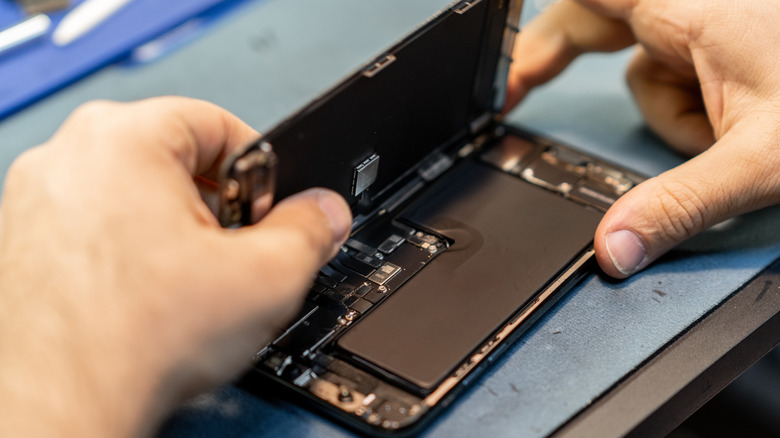
Battery decay tops the list when it comes to shortening your Android's lifespan. It happens because of the chemistry inside lithium-ion batteries, which deteriorates over time, regardless of usage. Better charging habits can slow it down, and there is a good chance that you're probably charging your phone wrong. Even though there are easy fixes, there's no way to stop the degradation completely. Many new phones are rated to keep about 80% of their original capacity after 800 to 1,000 full charge cycles, which works out to roughly two to three years of daily charging. At that point, you can either get a battery replacement or upgrade to a newer device, with the latter being more common.
However, the battery isn't your only concern when it comes to longevity. Years of use can wear down other components too, and the screen is a prime example. Most current Android flagships use OLED panels, which can develop burn-in when static elements stay on screen for long periods. This can leave permanent static ghost images on screen like the navigation bar or the status icons. Beyond burn-in, OLED pixels can dim unevenly with age and in some cases, permanent vertical or horizontal lines can appear on the display. While these problems are fixable, repairs are costly, and over time, they can add up to the point where upgrading becomes the cheaper option.
Additionally, older phones feature low RAM and storage, which leads to slower processing and performance, and miss out on new features. Consider a decade old device like the Samsung Galaxy S7, which shipped with just 4GB of LPDDR4 RAM and 32GB of internal storage. Today, with AI features leaning heavily towards memory, such low RAM will simply not suffice. An aging Android phone will gradually fall behind and get locked out of future features, and eventually, it will stop getting updates altogether.
Software caps and app demands prevent phones from lasting 10 years
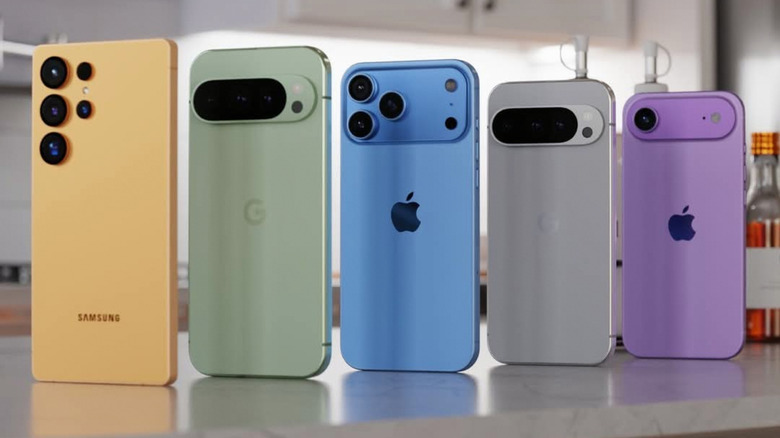
Replacing parts can help counter hardware wear and tear, but software limitations are inevitable. Even flagships like Google's Pixel 10 and Samsung's Galaxy S26, are promised up to seven years of updates, after which support ends. For the S26, it means that the final update arrives in 2033 and here's when Samsung's Galaxy S26 will stop getting software updates. Once updates stop, newly discovered vulnerabilities go unpatched, putting your data, password and other personal information at risk.
While software support is in the hands of the manufacturer, app requirements are not. Newer apps demand more processing power and memory , which older phones struggle to provide. This in turn leads to app slowdown, and some will stop working entirely due to compatibility and security issues. Banking apps are a good example. Because they rely on up-to-date security and encryption, they may eventually refuse to run on older Android versions.
This makes an Android phone lasting 10 years a distant possibility. Considering all the hardware and software hurdles, it's usually smarter to upgrade rather than invest heavily in keeping an older phone functional. For most people, three to five years is a a good sweet spot for a smartphone's lifespan.