

What The Symbols And Colors On An EV Dashboard Mean
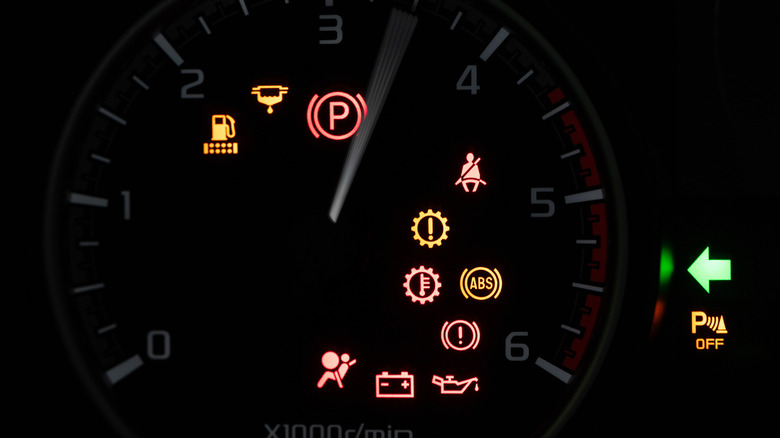
Whether you're experiencing one of the most unique or common problems with electric vehicles (EVs), figuring out what is wrong starts with looking at the dashboard. All cars have dashboard lights that provide clues as to what might be causing a problem. When you own an EV, though, some of the warning lights are unique.
Considering Consumer Reports rates electric vehicles' reliability as below that of gas-powered cars, it's especially helpful for EV owners to understand the colors and symbols used to designate problems on the dashboard of their vehicle. The different colors of lights used for the dashboard symbols on the electric vehicle often indicate the severity of the problem (while generally following the same messaging as a traffic light). One color could be used with a few different symbols.
Typically, red lights on the EV's dashboard indicate a significant problem that requires you to stop driving, just like a stoplight. If you see a yellow (or yellow-orange) dashboard light, you should proceed with caution and have the issue checked as soon as possible. Green lights are often reserved for systems in the EV that are functioning properly, meaning you can proceed without stopping. Some lights may be white and focus on providing information or giving you a reminder. EVs have several dashboard symbols that are unique to this design of car; however, they also share some symbols with gas-powered vehicles, such as for tire pressure.
Before we dive in, it's important to note that many cars perform a power-on self test (POST) with their dashboard lights to help you verify that the lights themselves are working. Once the car is done with this test, the lights should turn off automatically. So the lights we'll discuss below are only potentially problematic if they remain on past the POST.
Why you don't want to see red EV dashboard lights

Red is a color that many people associate with alerts and dangerous conditions. When you see a red symbol light on your EV's dashboard, the same principle applies: You need to pay attention to the problem and try to figure out what is happening right away.
One of the most common red symbols EV drivers see is a low battery indicator. When the battery charge for your car is extremely low, this symbol may flash to grab your attention: You need to charge up as soon as possible. It may show a lightning bolt, a plug, or a battery as part of the icon. Some EVs will use a red charging cable symbol to indicate that the vehicle is still plugged into a charger or that the cable is still attached to the EV. You shouldn't drive when this light is visible.
If you see a red symbol of a battery with a temperature gauge, it may indicate an overheated battery. This is a dangerous situation. You need to pull the EV to a safe place right away and allow the battery to cool before attempting to drive again.
Yellow lights are less worrisome but deserve your attention
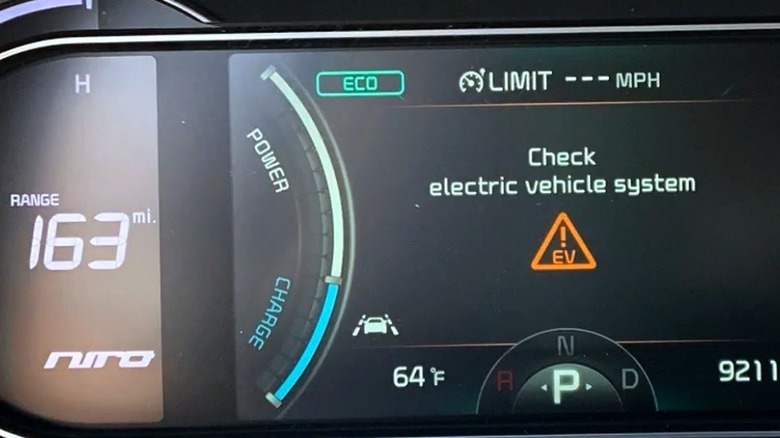
When you see a yellow light on your EV's dashboard, you might be tempted to ignore it. (You might even be tempted to place black electrical tape over it to hide it from sight, which is a terrible idea.) While you don't have to stop the car immediately and seek help when you see a yellow light, you should have the situation checked soon (or you might start seeing red, flashing dashboard lights).
A common yellow EV dashboard light shows up on many models when you're charging the car. As it's taking a charge, it remains yellow — in these cases, it may eventually turn green after reaching a full charge. On other models, however, a yellow charging light can mean that charging is waiting to start or has paused.
Some EVs use a yellow low battery symbol to indicate a battery that needs charging soon. That light may turn red and flash when the charge becomes extremely low. If you see this icon, you might also see a yellow turtle or tortoise icon, meaning the car is operating at reduced output to avoid damaging the battery. You might see this yellow icon if the car is experiencing electrical system issues or the battery is running hot. Depending on the cause, you may need to drive (slowly) to a repair shop.
Green EV symbols are good, but you shouldn't ignore them
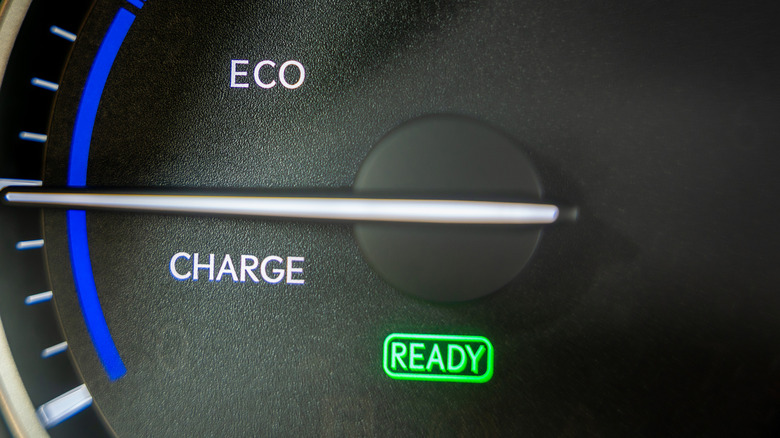
Seeing green lights on your EV's dashboard is usually not a cause for concern. However, when these lights appear, you shouldn't look past them — they are often conveying some important information about the car. For example, if you see "ECO" lit up in green on the dashboard, it doesn't show a problem. It usually means the car is operating at a power level designed to maximize battery life. It's important to know that you may have less acceleration available when the green ECO light is enabled. Your air conditioner may also operate at a lower output level.
If you see a green dashboard light that looks like a car with forward and backward arrows near it, it means the vehicle is ready to drive. Some EVs use a "READY" message in green for the same indication. This is an important dashboard light because electric vehicles are silent when they start. With gas vehicles, the engine often makes at least some noise or a vibration after it starts. If you don't see the green ready light, you may need to try starting the EV again.
White lights generally deliver informational messages
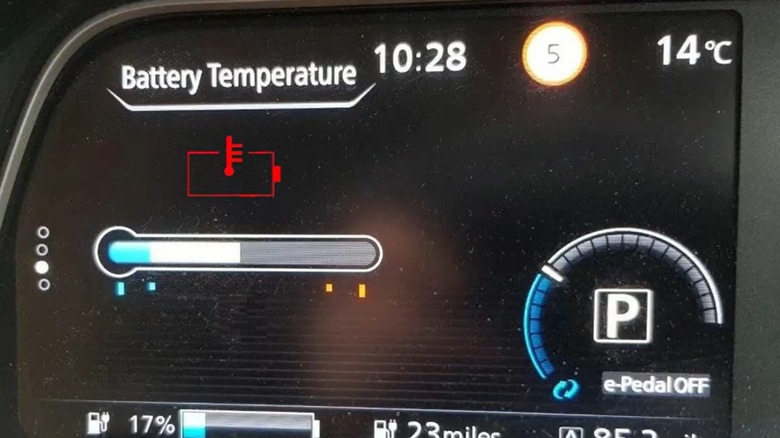
When an EV's dashboard is showing icons with white lights, the car is usually providing information about the system instead of delivering a warning. You don't need to stop using the car or seek help when you see a white light. If you have a Nissan EV, for example, you may see a white icon when the e-Pedal is turned on or off. You can use the single e-Pedal as an accelerator and brake when it's active.
Some electric vehicles use white dashboard lights for a system that is not yet running. The white light lets you know it's ready to function, if needed. If something goes wrong with that system, the light may turn from white to one of the other colors. For example, a white charging icon sometimes indicates that the system is paused but ready to work. It may change to yellow, red, or green as it begins working.
Some EVs may use a white light to indicate a cruise control setting that's been turned on but isn't yet active. Once you begin using it, the light will likely turn green (note that others use a green light all of the time, however).
Some dashboard lights carry across gas and electric cars
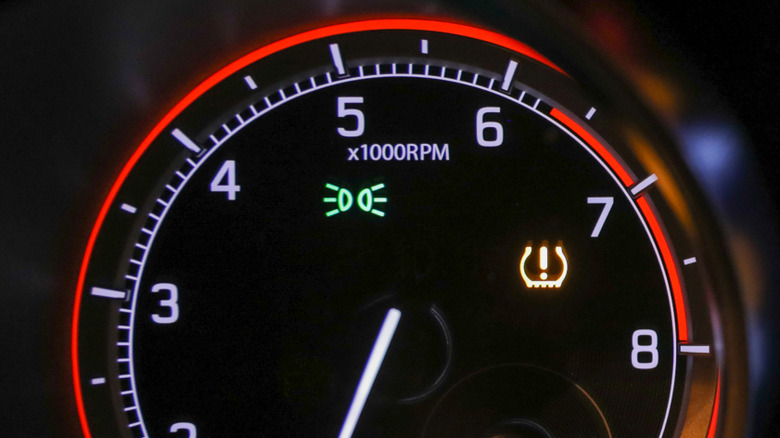
If you've always driven a gas-powered car, you may recognize some lights on your EV's dashboard because they're universal to both types of cars. One of the most common is a tire pressure indicator light, which is usually yellow when the pressure is low. These tire lights can be frustrating because they seem to turn on more frequently in cold weather, making you wonder whether TPMS sensors are actually reliable.
Several dashboard icons shared among EVs and gas cars relate to the headlights. A green icon that looks like headlights indicates they are active. A blue icon indicates the brights are turned on, while an orange icon may indicate that the vehicle's fog lights are active.
Other lights that fit both types of cars include safety-related features. Your seat belt light might be red if the driver and passengers aren't wearing the safety restraint. It might be white when they're being properly worn (or might turn off completely). Cars that have airbags often turn on an airbag icon light when you start the vehicle, and like others involved in the power-on self test (POST), it often turns off after a few seconds. If it stays on and is yellow or red, visit a garage.