

5 Samsung Galaxy Phones That Have Software Support Until 2029
We may receive a commission on purchases made from links.
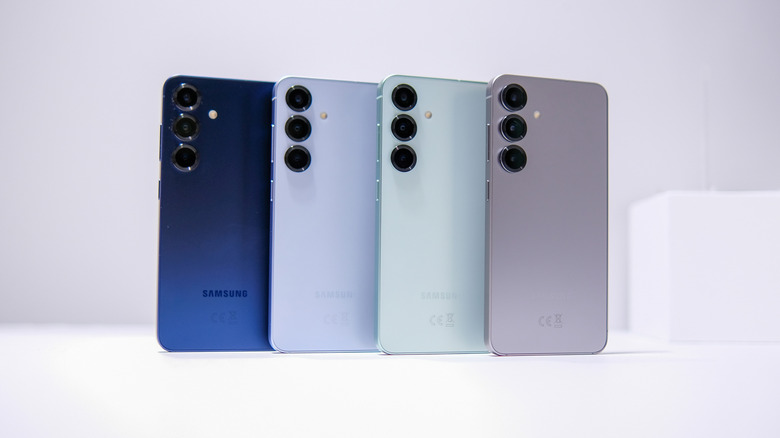
Samsung announced that it would offer seven years of software updates with the Galaxy S24's release in January 2024, giving the company's newer models some of the longest software support guarantees among Android phones. This initially only applied to Galaxy S- and Z-series phones, but the company later extended this to its lower-end A-series phones — though with only six years of updates instead of seven. However, S- and Z-series phones released before the announcement and budget devices that came out before the extension still generally follow Samsung's older policy of four years of OS updates and five years of security updates.
The average lifespan of a Samsung phone depends on whether it came out before or after this announcement. The Galaxy S24's seven years end in 2031, while the S23 (released a year prior in 2023, before the announcement) will stop being supported in 2028. Users with S-series smartphones from 2024 and beyond don't have to worry about software support ending anytime soon, but several of Samsung's A-series and rugged smartphones will stop receiving updates in 2029. We've compiled a list of Samsung phones that have an end-of-life date in 2029 to give you plenty of time to consider trading your Samsung phone in for a newer model or switching to another brand.
1. Samsung Galaxy A55
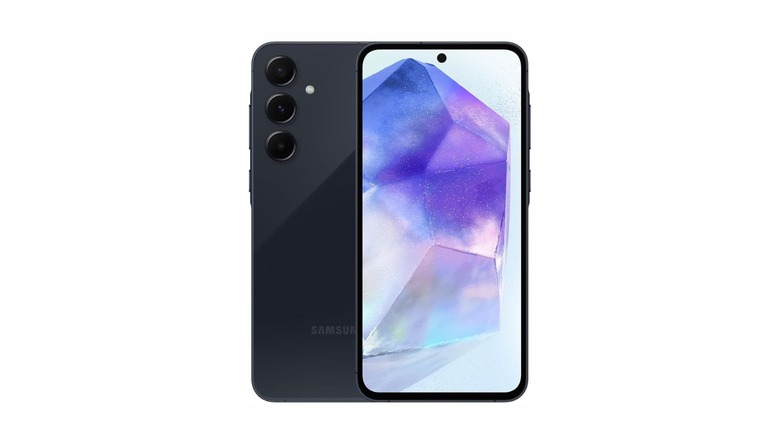
Samsung categorizes different smartphone lineups with letters. The Galaxy S series represents the company's flagship slab phones, the Z series includes its fold and flip devices, and the A lineup represents Samsung's affordable, budget-friendly phones. The Samsung Galaxy A55 was the highest-end A-series phone in its generation, featuring a 1,080-by-2,340 AMOLED HDR10+ display with a 120 Hz refresh rate, an Exynos 1480 chipset that provides ample performance for gaming and daily use, and three cameras: a 50-megapixel wide, a 12-megapixel ultra-wide, and a 5-megapixel macro. There's also a decent 32-megapixel selfie camera that's quite competitive for the price.
The phone debuted in early 2024, which means that the A55 only gets four versions of Android updates and up to five years of security patches. The phone launched with Android 14 and will get Android 18 in 2028, then users will continue getting security updates into 2029. The Samsung Galaxy A56 from 2025 gets six years of software updates, which means support for the A55's successor will end in 2031 rather than in 2030. Since Samsung offers several trade-in programs, it's worth upgrading to either the A56 or the newer A57 if you want to make the most of Samsung's software update guarantee. Regional variants of the phone, such as the C55, M55, M55s, and F55, all follow the same update cycle.
2. Samsung Galaxy A35
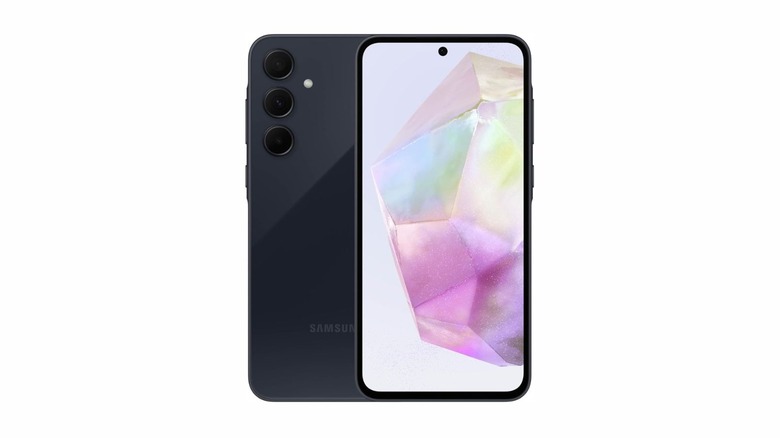
The Samsung Galaxy A35 came out alongside the A55 in early 2024 as a budget phone a tier below the latter. Belonging to the same lineup, it features many similar specs: a 1,080-by-2,340 AMOLED screen with a 120 Hz refresh rate, three cameras, and access to certain Galaxy AI features. However, as the A35 is more than $100 cheaper than the Galaxy A55, there are many downgrades: It uses a slower Exynos 1380 processor, lacks HDR10+ support, and the ultrawide and selfie cameras are 8 and 13 megapixels compared to the A55's 12 and 32. The video recording surprisingly doesn't take a hit, as the Galaxy A35 still supports 4K recording at 30 FPS and 1080p video at up to 60 FPS.
Since the phone came out at the same time as the Galaxy A55, the A35 follows the same policy of four years of major One UI OS updates and five years of security support. The device (and regional variants such as the M35) will receive its final OS update in 2028, with security patches concluding in 2029. The phone's successor, the A36, benefits from the six-year update guarantee and thus will continue receiving major updates until 2030 and security updates until 2031.
3. Galaxy A15
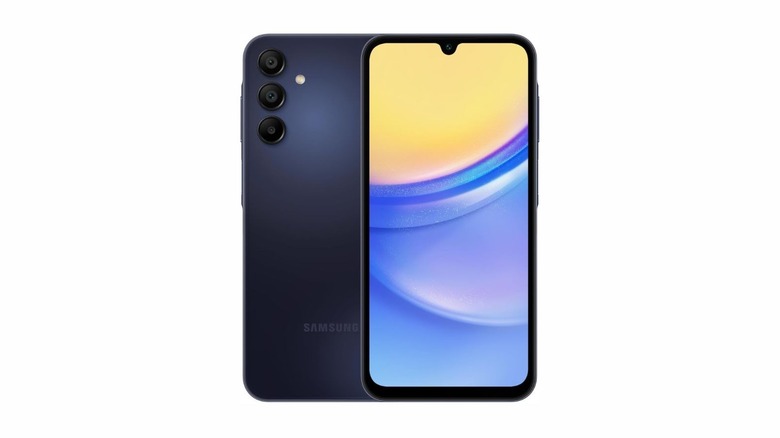
Announced in late 2023 and released in cycles globally through December 2023 and January 2024, the Samsung Galaxy A15 follows the same trend of getting four Android updates to go with security patches that span five years. Samsung Support confirms the phone's final OS update will be Android 18 in 2027-2028, with security support extending until early 2029 at the latest.
As for the phone itself, it's among the cheapest Samsung phones you can buy. The MediaTek Helio G99 struggles to keep up with demanding modern applications, but it still provides serviceable performance for daily tasks, especially at this price. The AMOLED screen retains the pricier models' 1,080-by-2,340 resolution, but only supports a 90 Hz refresh rate. It also doesn't come with any water or dust protection ratings, and you can only get a maximum of 8 GB of RAM. The cameras are a step below pricier models: The phone keeps the same 50-megapixel primary wide camera (though without the OIS) but downgrades to a 5-megapixel ultrawide and 2-megapixel macro camera. The phone also lacks stereo speakers, but comes with a headphone jack that its costlier siblings lack.
4. Samsung Galaxy A06 5G
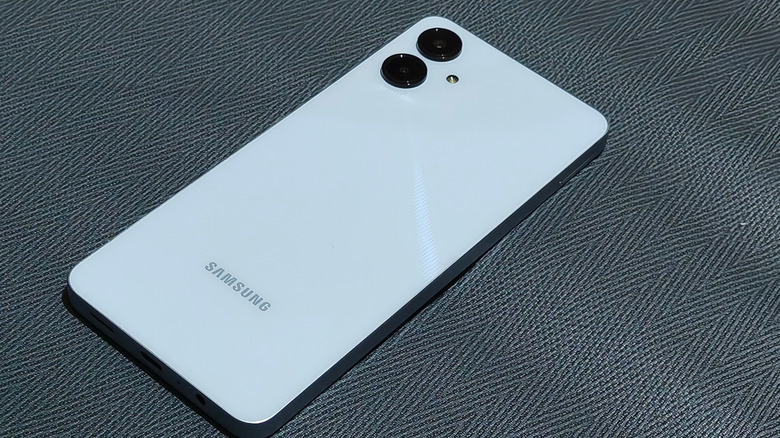
The Galaxy A06 originally launched in August 2024, with an updated 5G version debuting in February 2025. Samsung promises two major OS updates and four years of security updates for the earlier 4G version of this model, which already received its last major upgrade in 2026 and will continue to get security patches until 2028. The newer 5G version of the Galaxy A06, meanwhile, was promised up to four "generations of OS upgrades" to go with four years of security patches, so it will get security updates through 2029 and OS upgrades through Android 19.
It's worth adding that despite Samsung promising only four years maximum of security updates, Samsung Singapore's listing for the A06 5G details an end-of-support date of March 31, 2030. It's unclear why this exception exists and if it applies to global variants, but it's something to keep in mind. Like with other models, the expected end-of-life date for the update cycle is also 2029 for regional variants such as the Galaxy M06 and F06 phones.
As for the phone itself, the A0x series includes the cheapest Samsung phones you can buy and offers the lowest level of performance. The A06 is a predecessor to the A07, which itself is now a last-generation device. It features a 90 Hz 720-by-1,600 PLS LCD screen — no AMOLED, but it makes sense for the price. The MediaTek Dimensity 6300 processor surprisingly performs similarly to the Helio G99 in the costlier Galaxy A15, and the phone lacks ultrawide and macro lenses. It still technically features a dual-camera setup, but the secondary lens is only a depth sensor that supports the primary 50-megapixel wide camera and cannot be used to take photos by itself.
5. Samsung Galaxy XCover 7
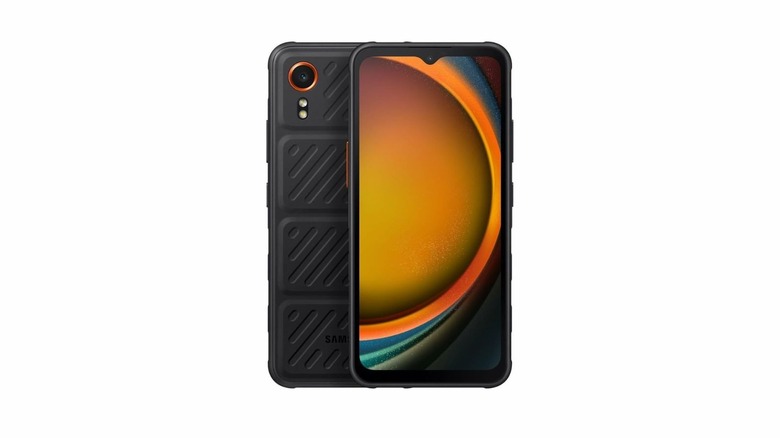
Beyond the company's flagship S-series, its budget A-series, and the foldable Z-series phones, Samsung also produces durable rugged smartphones made to withstand extreme conditions, such as the Samsung Galaxy XCover 7. The phone came out in January 2024, the same time period as the A55 and A35. This puts it under the same update policy as well: four years of major OS updates ending in 2028 and five years of security updates that end in 2029. The Galaxy XCover 7 Pro, released a year later, instead gets seven years of updates, which means its final major OS update will be in 2031, with security updates continuing until 2032.
The phone's standout features include a replaceable battery and its extreme durability — an IP68 rating for dust and water resistance and MIL-STD-810H compliance that ensures the phone is resistant to mechanical shocks, extreme temperature conditions, high altitudes, and more. Its style is also worth talking about, as it manages to look similar to a slab phone despite being a rugged device. Beyond these, the phone comes with a 1,080-by-2,408 PLS LCD display, a MediaTek Dimensity 6100+ chipset, and a single 50-megapixel rear camera.