

Owners Say Galaxy S26 Users Need A Key Accessory
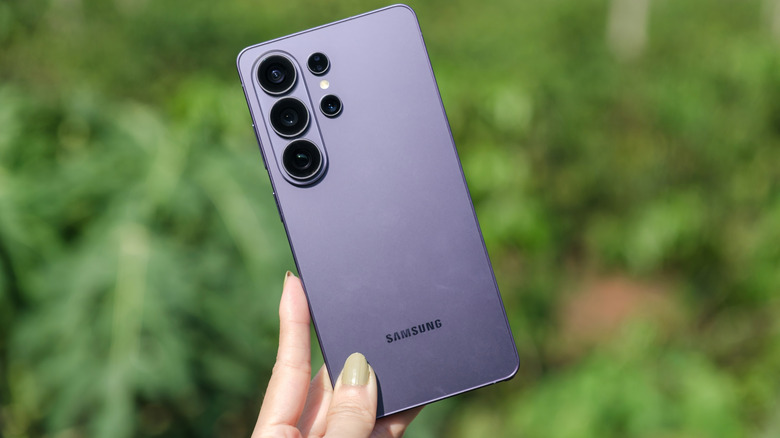
Buying a new phone these days can feel like a thankless transaction, especially if you're spending $800, $1,000, or more, even for some of the cheaper folding phones out there. Say you buy a Samsung Galaxy S26: Open up the box and you'll find a phone, a charging cable, a SIM tool, some paperwork, and that's it. No free case, no power adapter, none of that. Owners say it sucks, especially the missing charger, which companies sold as a way to be more environmentally friendly, rather than as the price hike for people looking for a new charger.
You see, the Galaxy S26 is able to charge at up to 25 watts while the S26+ and S26 FE can take 45 watts. If you've shelled out extra for a Galaxy S26 Ultra, that phone can pull up to 60 watts, allowing for an advertised 75% fill-up from empty in half an hour and a full tank in under an hour as reported by a handful of users. If you don't have a wall wart that supports those speeds, though, you're missing out. Just don't get confused when you're looking for one that supports Samsung's Super Fast Charging standard as many adapters actually do so—they just don't call it that.
Make sure your Galaxy S26 charger supports PPS
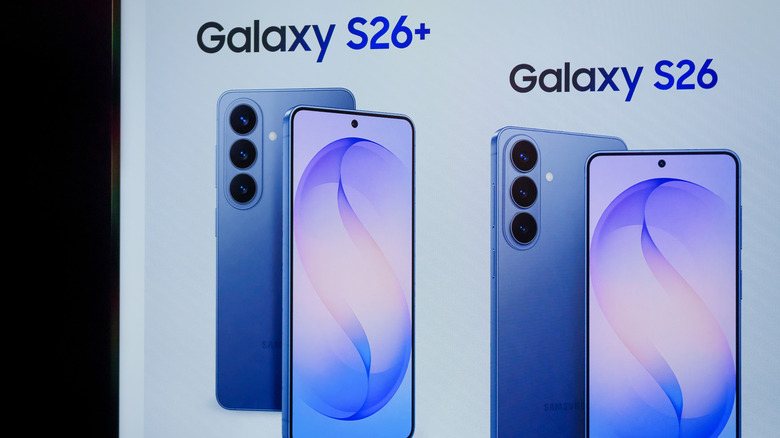
Super Fast Charging is nothing more than fast charging capabilities designated by Samsung as allowed for under the technical specifications for USB. What we're specifically talking about is USB Power Delivery revision 3.0 and a protocol within it called Programmable Power Supply. The quick-and-dirty on PD 3.0 is that it defines specific voltages and amperages to deliver charges of up to 100W while PPS allows host and peripheral devices to negotiate voltages in smaller steps. Super Fast Charging comes in three versions: SFC 1.0 at 25W, SFC 2.0 at 45W, and SFC 3.0 at 60W. All of these use voltage and amperage pairs permitted under PD 3.0 or PPS.
As you plug your Galaxy S26 device into a charger, the two devices go through a handshake phase to determine what their supported protocols are before settling on one and starting the charging process. Sometimes, conditions may inhibit the handshake from selecting the most advanced standard or, even when it is selected, charging at the top rate. Peak rates for any device are only achieved for a short period early on in the charge cycle before they gradually slow down. These measures are in place to protect your electronics from power leakage and other potentially nasty outcomes.
In some cases, you may need a USB-C cable with an E-marker chip to achieve some top speeds on other phones. But that's a whole other specification focused on USB-C charging cables, not the chargers.