

The GameCube Had One Big Disc Problem That Nobody Could Ignore
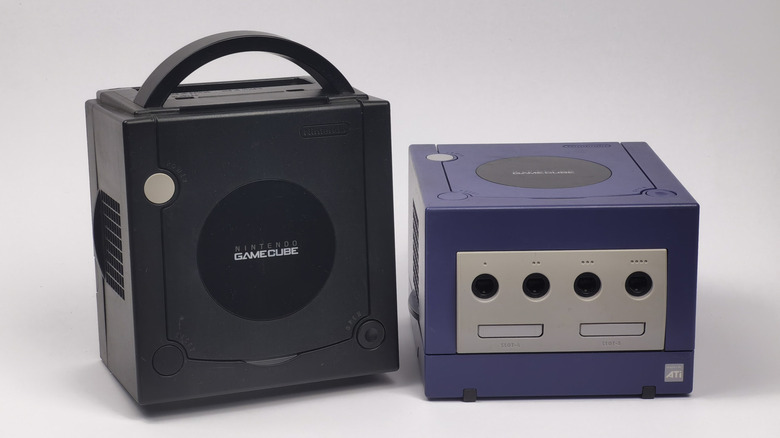
If you've ever used a Nintendo GameCube, then you are already aware that the system didn't use typical 4.7 GB DVD discs for its games, but rather a proprietary disc format sporting disc-based copy-protection measures. These discs were small not only in size, but in storage, at approximately 1.5 GB. During a time when the competition was all aboard team DVD, Nintendo went a different route out of fear of piracy, while also avoiding the licensing costs associated with standard DVD-Video playback. Why Nintendo used small discs in the GameCube is well-known: the knock-on effects of this decision set the stage for the Wii, which was a monumental success. Still, the ramifications of this choice brought the GameCube to second-to-last place during the sixth home console generation, only beating the Sega Dreamcast, in case you were wondering why the GameCube failed.
The DVD format went mainstream, and both the Xbox and PlayStation 2 offered DVD playback, positioning the consoles as all-in-one living-room entertainment machines. This put the GameCube on the back foot with consumers, as it lacked a proper DVD player, unless you were lucky enough to import Japan's Panasonic Q hybrid, one of the rarest GameCube products that you probably didn't know existed.
GameCube discs are cute — a defining product, even — but their limited storage meant some larger games had to be spread across two discs, which is also why some multiplatform releases required noticeable compression. Yes, Nintendo's proprietary mini discs addressed its piracy concerns, but offered only a fraction of DVD's storage capacity — and the console also struggled with declining third-party relations.
Proprietary discs put the GameCube at a disadvantage in the DVD era
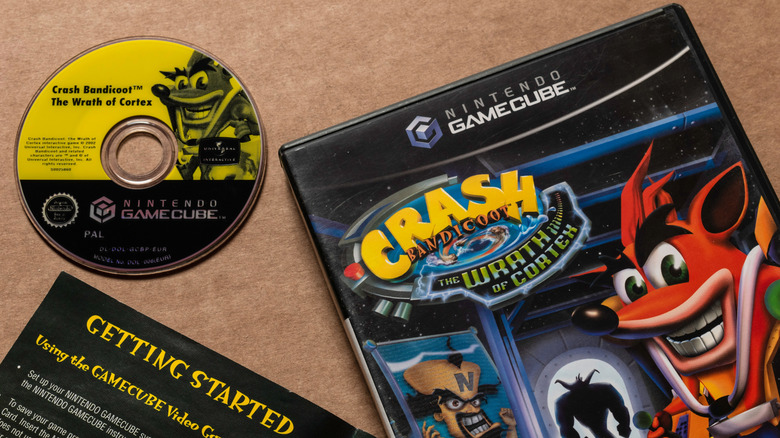
The GameCube's anti-piracy disc design ended up backfiring. The goal was to avoid piracy, yet hackers found a way around the disc problem by exploiting software vulnerabilities in the console itself. Worse, the disc protection was not unbeatable; Datel figured out a way to produce bootable discs that could pass authentication, helping pave the way for homebrew and other workarounds.
A number of GameCube releases shipped on two discs, like Resident Evil 4, Tales of Symphonia, and Baten Kaitos, much like the PlayStation 1, where multiple discs were needed for its large games, showcasing that the GameCube wasn't an evolution, but rather carried over one of the previous generation's bigger annoyances. This is a problem Nintendo's competitors had already fixed, one the company wouldn't address until the Wii's larger, higher-capacity discs. Heck, Capcom's manual for Resident Evil 4 shows how ridiculous disc swapping was, instructing players to remove Disc 1 and insert Disc 2 mid-game, warning that failing to save before powering off could cost players their progress, turning what should be a seamless experience into an immersion-breaking annoyance.
Ultimately, the GameCube's proprietary discs were a reminder that anti-piracy measures can come at a cost to legitimate players, especially when the discs were unreadable by traditional CD, DVD, and BluRay players for over two decades, hindering preservation efforts by the gaming community until a workaround finally emerged in 2026.