

How To Tell If Your Headphones Support Lossless Audio
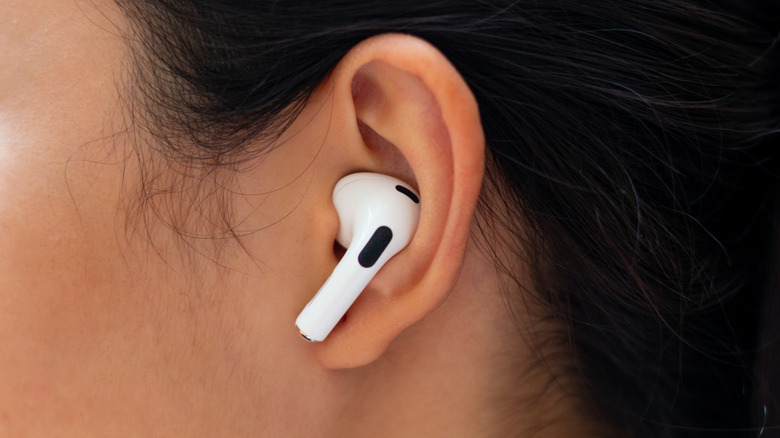
The average music listener may not be in tune with how different audio files can impact their favorite tracks' sound quality. Some may especially have a hard time telling the difference between hi-res and lossless audio. The latter option translates audio files without sacrificing data. "Lossless audio means a one-to-one data-accurate representation of an original audio source," according to RTINGS.com. "This representation is achieved without the use of destructive digital compression along the signal path and is intended to retain the sonic qualities of the original."
Thus, those looking for an untouched, authentic presentation of their top tunes seemingly straight out of the recording booth are better off listening to songs via services offering lossless audio. To make sure you're getting the right experience, however, you'll need to know whether your headphones are capable of transmitting the format. Owners of wireless, Bluetooth headphones and earbuds like AirPods Pro hoping to take in lossless audio will be disappointed to learn they likely won't get the listening experience they wish for.
The YouTube channel SoundGuys explains that most wireless headphones, regardless of brand or quality, will transmit lossy audio. "Lossless audio is only as good as the connection that it delivers," the channel said. "And Bluetooth is still very much a bottleneck." Regardless of your device's codec quality, Bluetooth connections have a weaker bandwidth than wired options. Thus, even if you're listening to a service that offers lossless audio, your wireless headphones will recompress the file before it reaches your ears. You need wired headphones for a real lossless experience.
Wireless headphones allow for a lossless audio experience
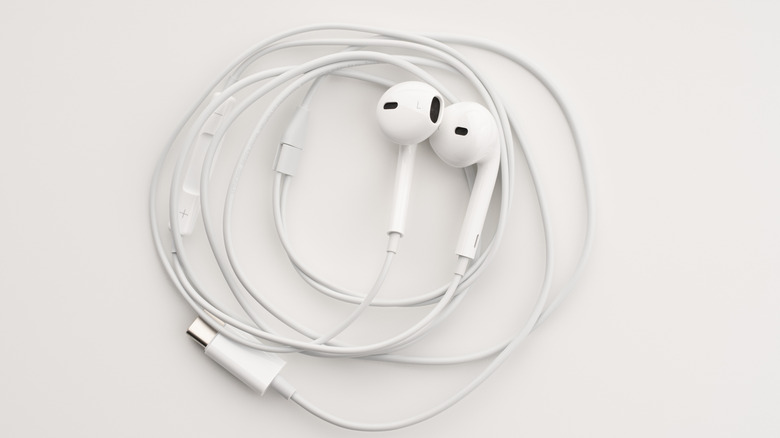
Music lovers who are dead set on listening to songs via lossless audio are better off ditching their AirPods or Raycons. To avoid ruining your sound quality on Spotify and other services, Apple advises audiophiles to choose wired headphones over Bluetooth. The major difference between wired options and Bluetooth devices is that the former directly carries the audio file from your device to your headset, while the latter decodes and then duplicates it, thus losing some of the data along the way.
"A streaming app or local file is decoded by the source device, converted from digital to analog somewhere in the chain, amplified, and then reproduced by the headphone drivers," headset manufacturer Wantek explained. "Passive analog headphones do not decode FLAC or ALAC themselves, so calling a passive headphone 'lossless' is shorthand for saying it can be used in a lossless playback chain."
Advancements are also being made to make lossless audio listening a possibility for Bluetooth users. Companies like Denon have developed products that it claims come equipped with lossless support. However, such earbuds, like the Denon PerL Pro, must particularly support Qualcomm's aptX Lossless audio technology to properly work. Thus, lossless audio via Bluetooth is a luxury consumers must still jump through several hurdles to enjoy.