

Double Check Your Smart Home Devices To See If They Meet This Industry Standard
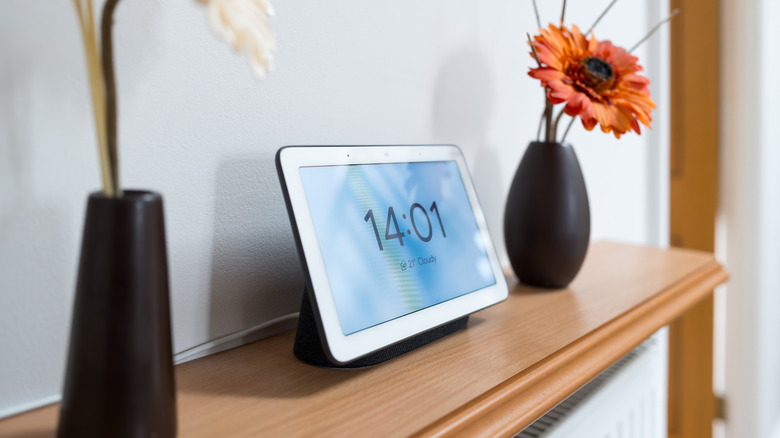
You have countless options when buying smart home devices, so choosing one can be challenging. A standout feature to look for is Matter. If a smart device has Matter support, you're signing up a simpler, unified smart home experience.
The Matter standard enables smart home tech from different brands to work together. It operates over Wi-Fi, Ethernet, or its own wireless "Thread" protocol to transmit data between proprietary smart home devices that normally wouldn't be able to communicate. Your Amazon Alexa device can talk to your TP-Link Tapo light switch, your Roborock vacuum is compatible with your Google Nest Thermostat, etcetera. Matter tech makes the dream of a fully connected smart home possible without having to buy into a single company's proprietary ecosystem. Or, that's the goal. It also standardizes and simplifies setup; a Matter-managed device takes little more than a QR scan to put into action.
To find out if your smart home tech supports Matter, first check the packaging for the Matter logo and name. However, manufacturers aren't always forward. Get confirmation by searching your device's name on a Matter device database. Be aware that to start using Matter at all, you need a Matter-enabled smart hub or app. Google, Apple, IKEA, and Amazon all sell hubs that work as Matter controllers and bridges. You may also need a Thread border router to make sure all your devices work together seamlessly. Some devices can be a controller and a border router, one of Apple TV's hidden functions.
Matter compatibility is sort of a spectrum

Sometimes, a device that didn't initially support Matter when it was manufactured can be upgraded via firmware updates to enable it. Achieving full compatibility might require you have a device called a Matter "bridge," though. The bridge allows devices that weren't designed to work with Matter to be "bridged" to the Matter network, retroactively enabling interoperability. Think of it as a environment- and money-saving smart home investment. A Matter bridge prevents you from having to throw out and replace your old non-Matter smart home tech just to build a complete Matter household.
There are limitations to Matter you should know about, though. One of the most important is that technical limitations on some "supported" smart gear result in specific features simply not working over the Matter standard. Just because a smart vacuum can be controlled over a Matter connection, for example, doesn't mean its sensor data can be transferred over that connection, too. The specific Matter standard version a device was built to work with can also result in surprise deficiencies. These limitations vary by make and model, and manufacturers usually won't make them clear, even when they boast about Matter support. Looking for other people's Matter experience with specific sets of devices in reviews and forums online will help you avoid disappointment.