

Budget Android Phones Aren't Worth The Savings If They Lack These Essential Features
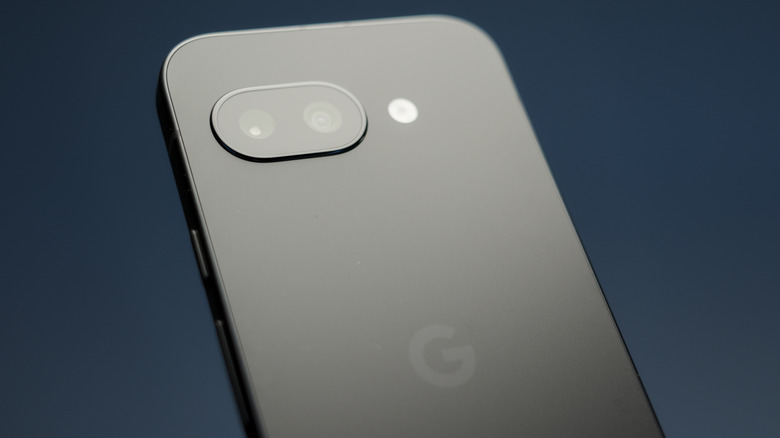
Have you ever had a moment where you had to order an Uber or get a file uploaded on deadline and everything came down to the second? Smartphones may be a necessity for 21st century living, but they're not all created equal. As a tech writer, I've had my fair share of experiences with flagship and budget Android phones. I've learned that premium devices do have their occasional hang-ups, but they're nothing like a bad cheap phone that can slow down your day-to-day and fail you in a crunch. No matter where you're coming from in life, you deserve an affordable, snappy phone that can last you a few years.
If you're shopping for a new Android phone with that in mind, be sure to look for one with at least 6GB of RAM, a minimum wired charging speed of 25 watts, and at least three years of security updates—an especially key factor when you're looking at buying a used or refurbished phone. While other specifications such as display resolution and even Bluetooth version can impact how much you might truly enjoy using your phone, your hierarchy of needs will start below those features. And as for why I haven't mentioned battery capacity, well, we'll get to that.
RAM, also often called memory
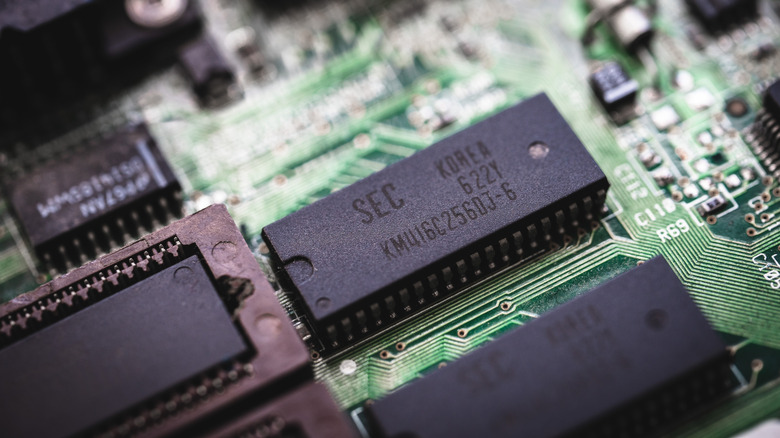
RAM essentially functions as your phone's short-term memory. Its capacity dictates how well your device can handle multiple simple apps at once, and how well it can manage a single complex app. In 2021, I picked up something called the Moto G Pure from Motorola and found myself running into walls any time I needed to cross between a couple apps. The device's 3GB of RAM was not even enough to order food from GrubHub without sudden lags, which led me to press a button I didn't mean to.
Fortunately for all of us, Google in 2025 told phone makers they must include at least 4GB of RAM on their devices in order to work with Google Mobile Services—a package of apps including the Google Play Store, Gmail, Google Search, plus other background services and user security measures like Play Protect. That said, I would suggest 6GB of RAM to give yourself extra headroom in case you do end up juggling between a WhatsApp call, your rideshare progress, and maybe an extra app.
While RAM prices are high because of chip demand from the artificial intelligence industry, brands will choose to compromise in different ways on their budget devices, which typically pull in the least profit margin. Samsung sets an MSRP of $380 for its Galaxy A27 with 6GB of RAM (one of many a Samsung phone to get a price hike in the latter half of 2026) but you can find 8GB if you pay $400 for the Motorola's Moto G Power.
Fast charging
Many budget phones come with batteries of comparable size to those seen in flagship devices. Funnily enough, the Galaxy A27 and Galaxy S26 Ultra both have 5,000mAh cells. Still, even with major spec differences, you'll find guides that are all over the place about which phones last the longest. You'll find mid-range OnePlus models duking it out with the Moto G and Moto G Play in the mid-pack of top 10 rankings. Still, it is ultimately up to you and how you use your phone that will determine how long that battery lasts. While we can't be quite sure which phone is best for your daily needs, you might end up performing a mid-afternoon top-up during a long, busy day.
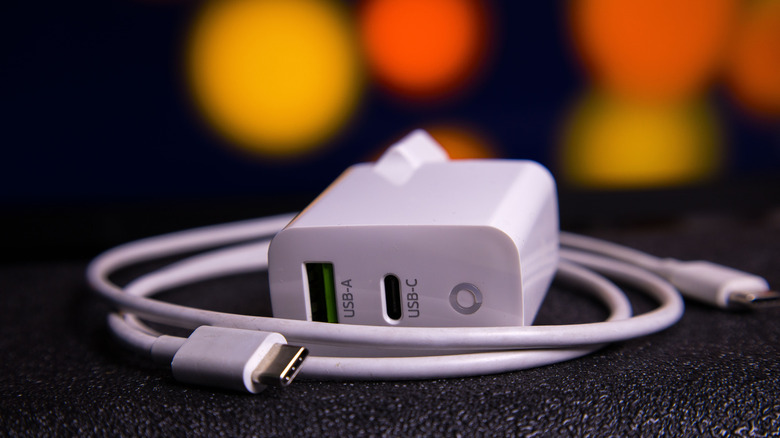
There are nuances to consider—including some myths about charging your phone you'll want to stop believing—but even so, the typical way it works is that the higher the wattage your device can support, the faster your battery gets charged. The Galaxy A27 can charge at up to 25W and it takes somewhere on the order of 90 minutes to go from empty to full. Meanwhile, the $499 Nothing Phone (4a) Pro supports 50W charging and, with a similar battery size, takes only an hour to completely fill up.
If your budget is particularly constrained, you'll still get about 25W charging with the $270 Galaxy A17 or the $300 Moto G. You'll want to avoid the 18W rate of the Moto G Play for $200, which is about as low of a price you can get on a new, unlocked Android phone in 2026.
Security updates
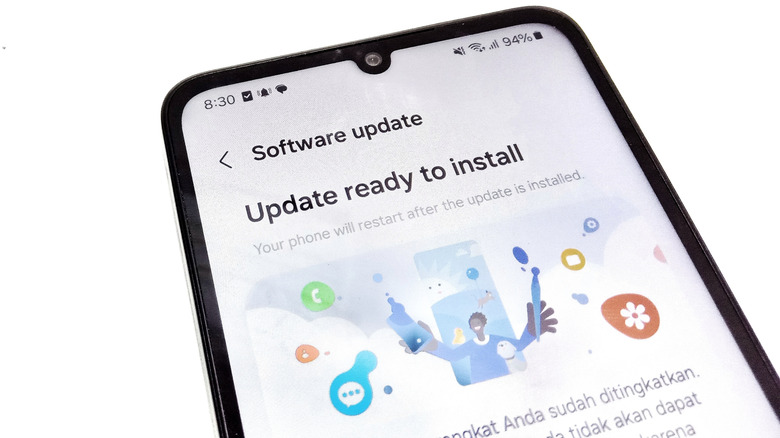
Security patches can seem nonstop these days, and a lot of us keep postponing installation when we really shouldn't. We get it: The threats they cover might be uninteresting or even opaque to the average person and they sometimes come with a graphical interface change that can be a bother to acclimate to. That said, it's just not as safe using a phone that no longer gets update support than one that does.
Google and Samsung are best in the industry when it comes to update policies for Android devices. Pixel phones dating back to the Pixel 8 series (including Pixel A-series phones) are guaranteed for seven years of monthly operating system and security updates from when they were first released. Most Galaxy phones made after 2024 are also eligible for seven years of support.
Of the major brands available in America, Motorola is the laggard here, promising only two years of OS updates and three years of security patches on its current non-foldable devices. If you're lucky enough to snag a Razr phone, you are getting a maximum of three years of OS updates and four years of security. That said, its track record is notoriously poor. Reviewers including yours truly have reported receiving these over-the-air packages late.