

New Jersey's Recent Solar Power Changes Will Have A Big Impact On Local Energy Bills
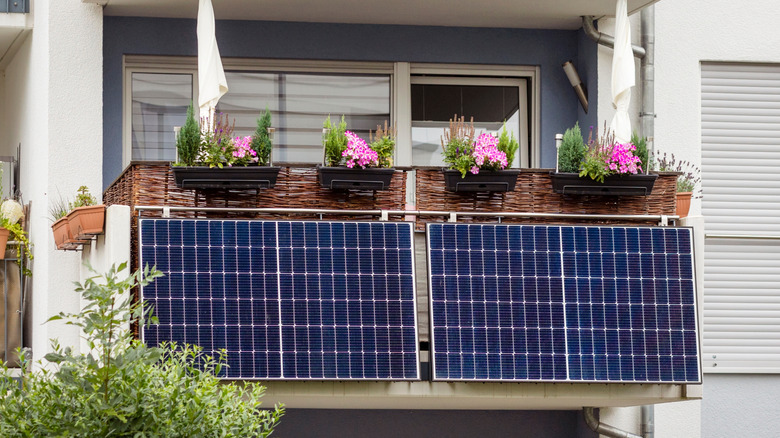
In September 2026, New Jersey Governor Mikie Sherrill signed the Garden State Balcony Solar Act to lift restrictions on consumer plug-in solar panels. The new law is set to go into effect in March 2027, and it will allow New Jersey residents to use plug-in panels with a maximum power output of 1,200 watts. Previously, the only way to utilize solar power at home in New Jersey was to set up an expensive rooftop array — something that wasn't viable for everyone.
Now solar energy savings will be available to a wider population, not just homeowners with access to solar roofs. In particular, this policy change in New Jersey means that renters can finally try home solar power without modifying their homes. So, how much can New Jersey residents expect to save by setting up a plug-and-play panel on their balcony or windowsill?
According to Doug O'Malley, director of Environment New Jersey (via Gothamist), "savings start at roughly $15 per month and can increase significantly by using higher-capacity panels with battery storage." At the signing ceremony for the new bill, Gov. Sherrill asserted that balcony units can shave up to $50 off the typical monthly bill (via New Jersey Monitor). Using a free tool to calculate how much plug-in solar saves on electric bills, some users have found that they could save more than $8,500 over 20 years.
Why aren't plug-in solar panels legal everywhere?
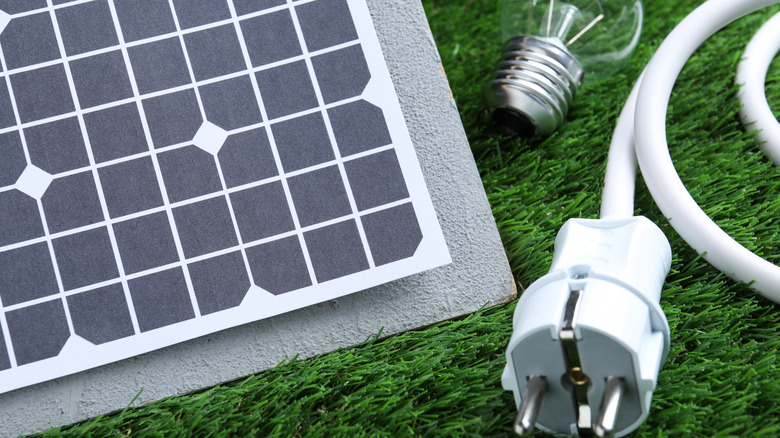
As of October 2026, only 10 states have signed a plug-in solar bill into law. In other states, like Wyoming and Arizona, similar bills have been met with resistance on the basis that consumer-installed systems might not work safely with household electrical systems. Utility systems in the U.S. are designed for a one-way power flow from the home's breaker panel, but plug-in solar panels attempt to contradict that by creating a two-way system that also pushes energy back in.
However, years of progress in European nations and a growing trend of adoption in the U.S. show that these concerns may be unwarranted. Even in places where plug-in solar is legal, there are still common problems owners have with portable solar panels. Namely, every solar panel will degrade with age and use. If you're trying to accurately project how much money you will save on energy bills over a long period of time, it's important to factor in the fact that your panel will lose a small amount of its efficiency every year. But for people where plug-in solar is legalized, it's still well worth the investment; there are many devices you can power with portable solar panels and counteract major parts of your energy consumption.