

Big Googlebook Problem Frustrates Early Adopters
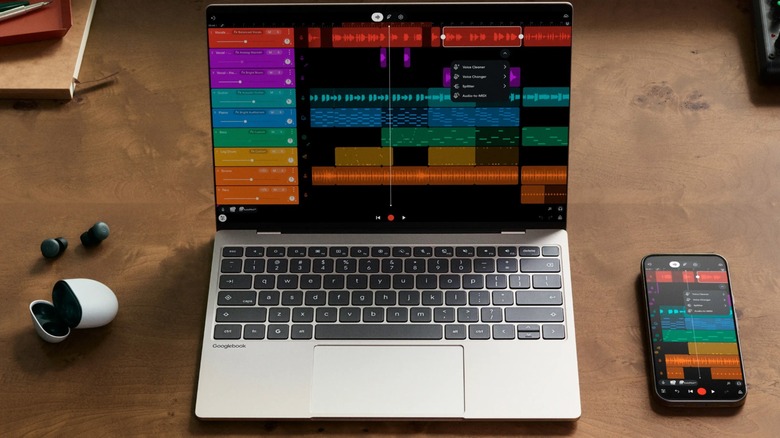
ChromeOS isn't dead, but Google is actively killing the Chromebook era with something more powerful: Googlebooks. The operating system powering these devices may look a lot like the one on a Chromebook, but it's actually built on top of Android with a goal of being able to run more programs natively and integrate better with Google's mobile OS — for instance, the new Asus Googlebook 14 stands out as a product for Android users, by Android. However, some owners observed a glaring issue that may make prospective buyers consider cheaper alternatives instead.
Googlebook OS is reportedly showing fragmentation issues with its app selection and, more aptly, the apps' quality on certain models. Per 9to5Google, the laptop lacks a substantial selection of desktop-caliber programs, and instead relies on apps from the Android OS of varying qualities. These can range from software formatted for mobile devices to those which overall operate better on a website. There also exists a lesser selection which are either compatible with, optimized for, or made for desktop. These, however, are noteworthy for issues like poor performance, iffy UI, and failed downloads, despite some being labeled "Optimized for desktop." Regardless of their true quality, each app is labeled with varying designations on the Google Play Store.
It's worth mentioning that some Googlebooks are equipped with Intel x86 processors, whereas others are powered by Arm-based Snapdragon X Elite processors. While the latter option is noted for its minimal power consumption and smartphone optimization, the former is recognized for its superior performance in some workloads, but higher general power use. Software compiled for one architecture can run into compatibility issues when attempting to run it on a device sporting the other. Thus, knowing that some Googlebooks use Intel chips, it isn't surprising that some Android-based apps are struggling on them.
Intel-based Googlebooks are most affected
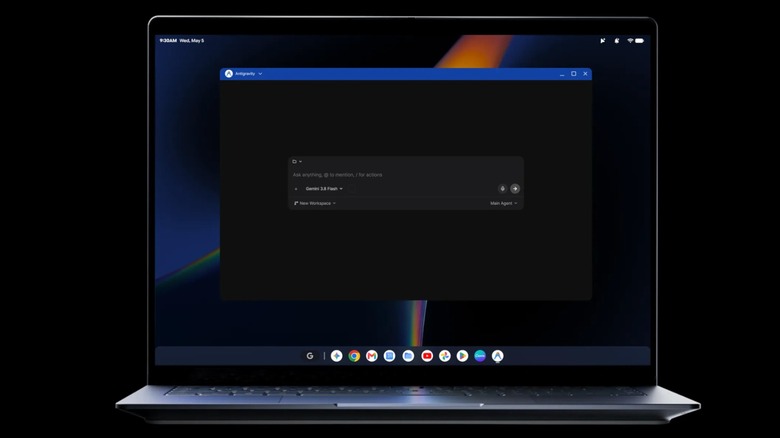
Google conceded that Googlebook models operating with Intel x86 processors, like the Asus Googlebook 14, Lenovo Googlebook 15, and Acer Googlebook 14, are products most impacted by Googlebook OS' app problems. The company explained to Android Authority that, though Android apps should work on the Googlebooks, they were often designed around smartphone-optimized Arm chips, rather than x86. Thus, the developers of these apps may require extra time to refine the software experience. "The vast majority of Android apps run smoothly across both Intel and Qualcomm Googlebooks right out of the box," Google said in a statement. "Because many Android apps were originally designed for Arm chips, a small handful of complex apps or games need some developer tuning to run their best on Intel-based platforms."
Conversely, Intel argued that its x86 processors should be able to enhance Android apps' performance thanks to Intel Bridge Technology. The company attributed these claims to components like the comparable transition layer formerly used in ChromeOS. "Combined with extensive optimization across the Android framework and Intel's longstanding expertise in Linux and open-source performance optimization, our expectation is that users will experience strong application compatibility alongside fast and responsive performance," Intel told Gizmodo. It seems Intel and Google need to get on the same page if they wish to honor Googlebooks' optimization promises for Android apps.