

30 FPS Vs. 60 FPS Dash Cams: Why Frame Rate Actually Matters For Drivers
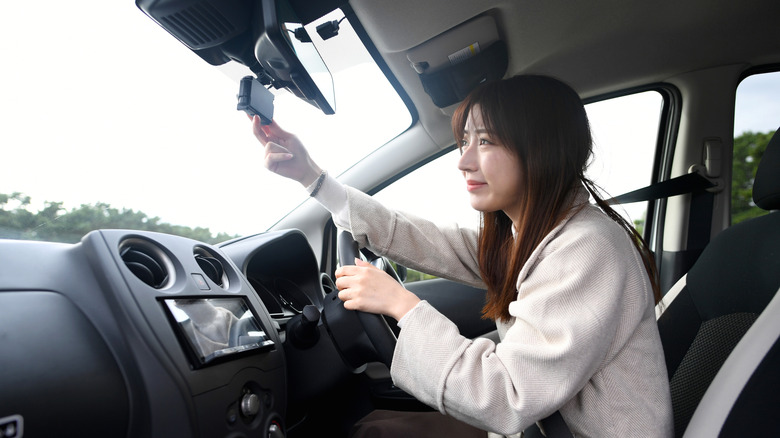
The proliferation of consumer-grade dashcams has made it easier than ever to log accidents, identify hit-and-run suspects, and deal with insurance fraudsters. They can also keep a spectacular drive alive in your memory. But you might be coming to this article wondering whether your 60fps-capable camera should be shooting at that framerate for any given reason, or whether it is worth turning things down to 30fps.
The best case for running your dashcam at 60fps is in low-light situations such as at night or during bad weather. On the other hand, 30fps is a better option in general, as it lets you record more footage in the same amount of storage space while utilizing HDR capture modes that can potentially increase the readability of signs and license plates as well as the clarity of crash scenes. As you don't want to be navigating settings menus while you're driving, we'll run through these scenarios and help you avoid one of many mistakes you can make when setting up a dashcam.
The edge case for 60fps on a dashcam
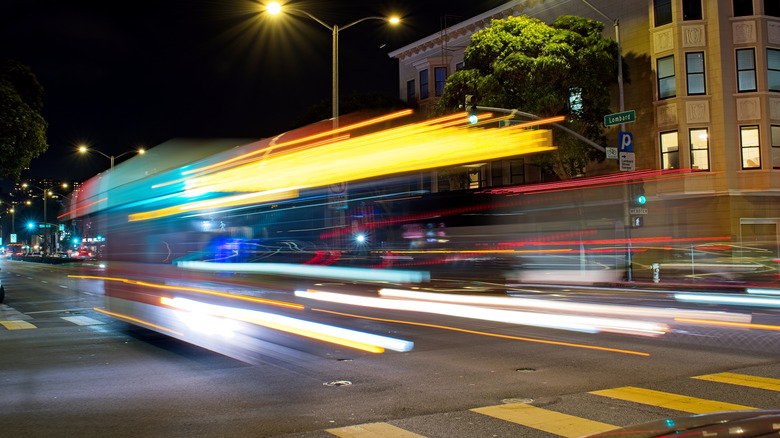
A higher framerate, in theory, mitigates motion blur. Motion blur can be a desirable effect, but we're not talking about gaming or movies here. Video framerates effectively cap the exposure time for each frame. Shorter exposures mean less light is captured, but, crucially, less movement as well. With 1/60th of a second being shorter than 1/30th of a second, 60fps should produce more readable results in certain situations. In good lighting, a smartphone camera in auto mode typically uses fast shutter speeds and a low ISO. ISO numbers loosely relate to a camera sensor's sensitivity to light: higher numbers mean greater sensitivity, but also more discoloration or noise. Darken the scene, and you'll see shutter speeds lengthen closer to one second and higher ISO numbers.
That being said, those situations are rarer in the real world. Vortex Radar has a great video on YouTube demonstrating 30fps and 60fps capture on two identical dashcams. Both have a difficult time producing readable license plates on vehicles that are just passing into the cameras' frame of view and moving quickly across the frame. As they approach the center of the screen towards the vanishing point, the plates slow down and become readable in both 30fps and 60fps. Really, the few edge cases where 60fps did provide a benefit over 30fps were in darker conditions where the dashcam is forced to expose close to the framerate. Only a handful of signs featured enough of a difference in blur without an overwhelming noise penalty to prove more readable.
30fps is more useful overall
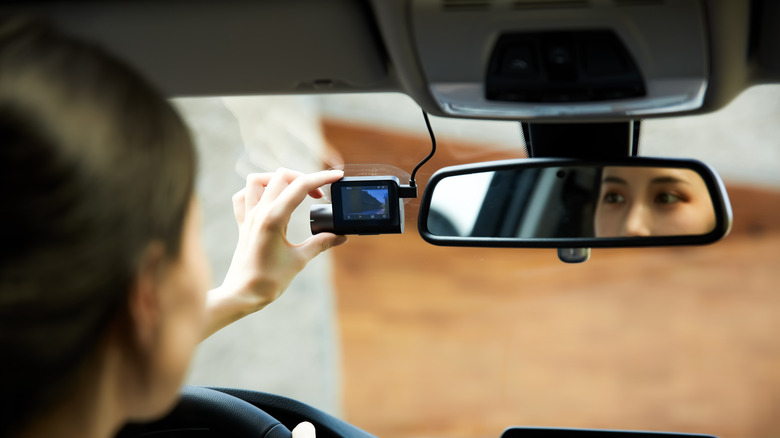
As evidenced by the video we mentioned above, you're highly unlikely to extract greater clarity with a higher framerate when analyzing an incident frame by frame. In fact, you might have a better chance at that by activating an HDR capture mode. Dashcams that are actually worth your money, like ones from Viofo, typically limit this to lower framerates at 4K resolution, as they require processing multiple exposures of a single frame, which is a lot of work to sustain for a modest chipset.
Where factors such as resolution and codec remain the same, it takes less data to record at 30 frames per second than 60. Those data savings are key, especially if you have a multi-channel recording setup, as SD card prices have seen price hikes alongside many other memory products due to AI-inflated memory chip demand. If you're using a less capable dashcam with variable resolution and framerate configurations, prioritize resolution over framerate, even if it means losing out on a 60fps mode.