

Which AMD GPU Is The Closest Equivalent To The Nvidia RTX 5070?
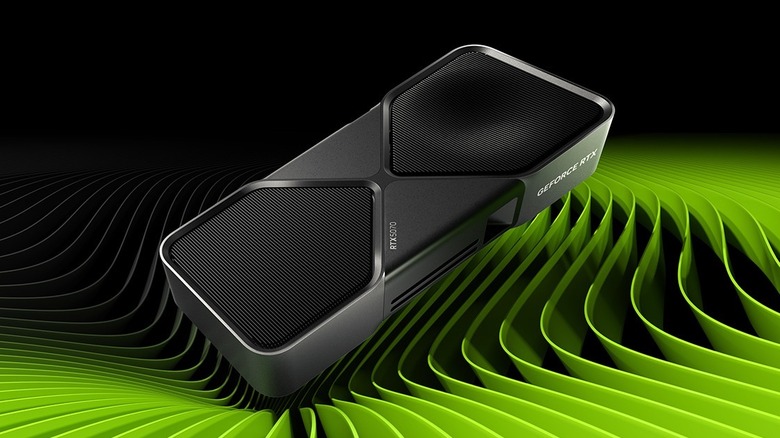
The Nvidia RTX 5070 was a wholly underwhelming card upon launch, with little gains over its predecessor outside of access to new versions of Nvidia's upscaling tech DLSS, and multi-frame generation. So when AMD launched its equivalent, the 9070, all eyes were on the mid-tier graphics card fight. AMD's GPU was also priced competitively with the RTX 5070, with both launching at $549. Neither is at that price now, but AMD has launched the 9070 GRE to facilitate that price point.
AMD's 9070 is nearly equivalent, but the higher amount of video RAM onboard the 9070 allows it to outpace the 5070 in raw power. GamersNexus found that the 9070 reached 64.1 FPS while playing "Dragon's Dogma 2" in 4K, maximum settings. The 5070 lagged behind a little with 56.4 FPS. However, these cards aren't really made with 4K in mind without any upscaling, and 1440p is the usual maximum resolution recommended to play at. GamersNexus again found that the 5070 managed around 95.8 FPS compared to the 9070's 106.1.
When it comes down to raster power, the AMD matches Nvidia well on this lower end. In Hardware Unboxed's review of the card, equivalent scores were found in the same review when playing "Dragon Age: Veilguard," where the pair of cards scored 79 FPS on average at 1440p, Ultra Quality.
The 9070 pulls ahead of its Nvidia equivalent
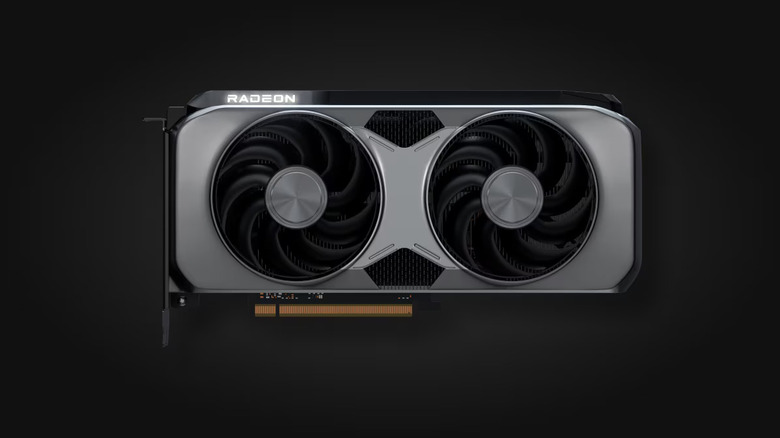
The RX 9070 outpaced the RTX 5070 by nearly 20 FPS in "Call of Duty: Black Ops 6" at 4K, max settings in that same review. However, it's been reported by players and outlets that some titles from the franchise generally run better on AMD hardware regardless. "Crimson Desert," meanwhile, runs nearly comparably between the two, with 85 FPS from the RTX 5070 and 91 from the 9070. Looking at the lowest FPS for both reveals how close the matchup is, with Nvidia scoring 74 and AMD with 78.
Where Nvidia tries to scrape back everything across the poker table is when upscaling is applied. Nvidia's upscaling tech is DLSS, while AMD has FSR. Both use algorithms to blow up the image onscreen to the desired resolution, while the game is actually rendering at a much lower resolution. This can then be adjusted to different quality levels. Alongside this is frame generation, which creates a "fake" frame in between every other frame displayed onscreen to boost performance, but can introduce latency and weird artifacting if the PC isn't already hitting a decent baseline.
AMD launched FSR 4 into the world in 2025, and in 2026, followed it up with 4.1, which has been praised for its significant image quality increases and performance gains. Nvidia has launched the much-hated DLSS 5, which doesn't provide much in the way of performance, as it applies an AI-generated layer on top of every asset in the game. Its previous DLSS entries and updates have been mostly lauded as better than AMD's alternatives.
RTX 5070 vs RX 9070 is a different conversation with DLSS
PC Centric's tests showed that the 5070, with its 12GB of VRAM, once DLSS is on, hits nearly 200 FPS in "Marvel Rivals." The RX 9070, using the same settings with FSR 4, manages 170 FPS. It does edge out Nvidia in "Fortnite," with AMD's card gaining around 5-6 FPS with upscaling applied.
Both cards perform valiantly, and if prices were more normal (thanks, AI data centers), we'd probably be recommending you take a look at the RX 9070 for your next PC upgrade. AMD has launched the 9070 GRE, which sports a similar 12GB of VRAM, but hasn't been warmly received, with its results seemingly a disappointment compared to both the regular 9070 and RTX 5070.
AMD's next GPU is rumored for 2027, and it's possible it could be the only graphics card launched next year. Nvidia has made no indication, as it's wholly invested in the AI industry currently.