

These New 'AI Worms' Could Eventually Infect Your Smart Home Devices
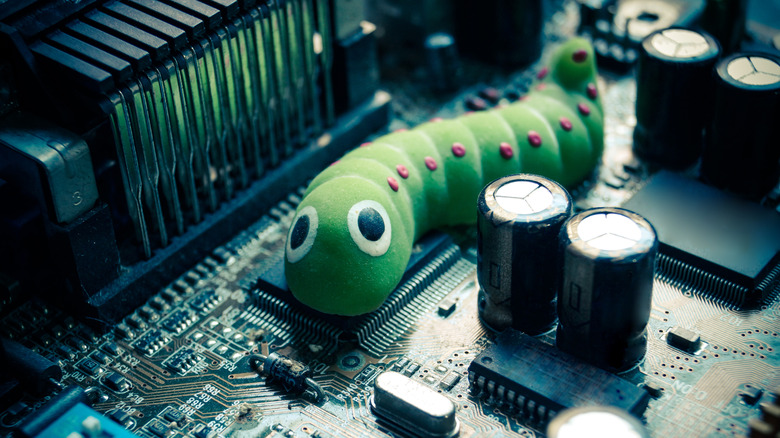
Over at Anthropic, the company that owns Claude, researchers have completed a series of experiments that may suggest that small AI models are "months away" from being able to self-replicate on commercial internet-of-things (IoT) devices. These small AI models have the potential to act like "AI worms" that infect household smart devices, like your smart thermostat or video doorbell, and copy themselves to other devices in the network.
This is an example of autonomous replication and adaptation (ARA), which is one of the chief concerns surrounding the rapid improvement of AI capabilities. Currently, AI models require connectivity to a device like a powerful laptop or data center in order to function. This is both a technical limitation of AI in most of our lives, but also a failsafe because users can simply cut off the connection between the AI and its server if the model takes unwanted action. But an ARA-capable model is not so easy to shut down. It would carry all of its capabilities within itself–which could include a malware payload–and have the ability to copy itself without human input or centralized processing.
It's more important than ever for you to know how to protect your smart home from hackers. If cybercriminals manage to get their hands on self-replicating AI worms in the future, a single vulnerability is all it would take for them to compromise every connected device you own.
Cybersecurity is becoming more and more tenuous

The advent of self-replicating AI could have far-reaching implications beyond simple IoT devices. Back in 2025, hackers were using AI to break AI — and the technology has become exponentially more sophisticated since then. Anthropic warned that bad actors were turning to vibe hacking, the act of using AI to generate malicious code for use in cybercrime. The latest evolutions are dangerous because they even remove the hacker from the hacking.
There's no need to so much as vibe-hack when the AI will replicate itself and carry on the job in perpetuity without human intervention. Until now, there was the possibility, however minimal, that we might be able to hold a human accountable a hacking attack. When concerns were raised about LG TVs possibly letting attackers spy on you, consumers were at least able to take action by raising complaints against the company. But the situation may become increasingly tenuous if there are autonomous AI worms that will continue to infect systems even after authorities put a stop to the hacker who set them loose in the first place.
Right now, the researchers at Anthropic believe that IoT smart home devices are at the highest risk of becoming hosts to swarms of self-replicating AI worms. But does that mean you'll have to shut down your smart home to stay safe? Not necessarily, but it does mean that network engineers and IoT manufacturers will have to work much harder to stave off future cyber threats.