

Study Finds A Better Way To Stop Wind Farm Bird Collisions - But It Isn't Easy

It seems like every other day, scientists and researchers have a new solution to make wind farms safer. Some say that painting one turbine blade black makes it easier for birds to see and avoid wind farms, while others found that AI-powered cameras could turn off turbines to prevent collisions with eagles. As it turns out, the answer depends on the species of bird.
According to a recent study published in Renewable and Sustainable Energy Reviews, researchers are finding new and different ways to prevent wind farm bird collisions because no one solution can account for every variable. However, by combing through preexisting studies, the researchers developed general recommendations for bats, migratory birds, and diurnal birds. For instance, they say that special whistles attached to wind blades can deter a wide range of bats, whereas the best method to prevent diurnal bird deaths relies on camera and radar trigger systems. If either detects oncoming birds, they initiate a system shutdown. However, small birds generally don't pop up on radar, so the researchers recommend combining technologies to enhance their effectiveness and cover as wide a net as possible. Engineers can implement different deterrents and anticollision devices at once or fuse them into an all-in-one solution.
Unfortunately, some of the conclusions scientists reached in this paper were based on incomplete information — their words, not ours. The authors also admit that some technologies require additional testing in order to improve performance, and that's assuming companies that run wind farms are interested. Remember, one proposed solution involves camera and radar traps that shut down turbines until the detected animals pass. That means less electricity generation overall and lost potential revenue. Not every company is going to make that sacrifice.
Blind as a bat ... or a bird
While the research paper provides generalized advice to keep birds safe around wind farm turbines, relying solely on those conclusions does the research a disservice. To fully understand the problem future wind farm technicians face, you need to dive into some strategies the paper covers.
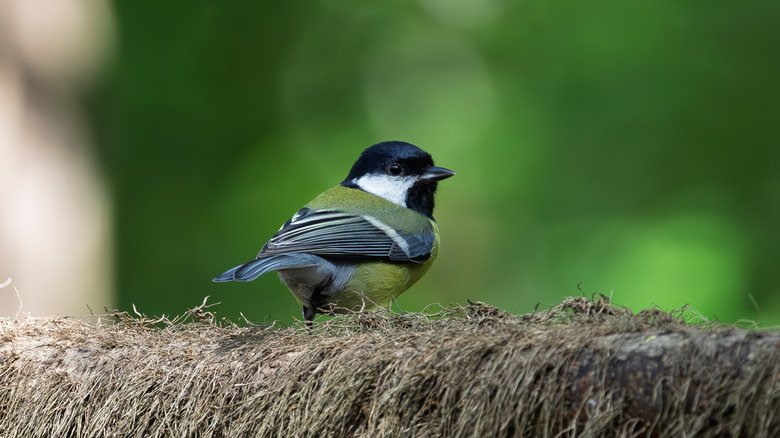
If you want to find the best example of why no one solution produces universal results, look no further than painted turbine blades. Due to differences in visual acuity, what some birds can clearly see might be downright invisible for others. For instance, American kestrels can easily avoid turbines that sport a single black blade, but that type of contrast doesn't work for great tit birds. Instead, these tiny critters tend to avoid turbines where all three blades are painted in combinations of black, red, and yellow stripes. And these are just two out of around 83 billion species of birds wind farm engineers must consider.
When the researchers studied methods to prevent bat fatalities, they discovered that the technologies encountered similar problems. While all bats respond to ultrasonic deterrents, a problem cropped up in the frequencies of their jamming signals. While systems like the aforementioned whistles can confuse most bats, certain species use higher-frequency chirps, which is a problem, as signals that counteract their echolocation aren't audible from long distances. Sure, these bats will hear the ultrasonic jamming eventually, but by then, they might already be within the turbine's kill box.