

Here's How Much It Would Cost To Launch Your Own Satellite
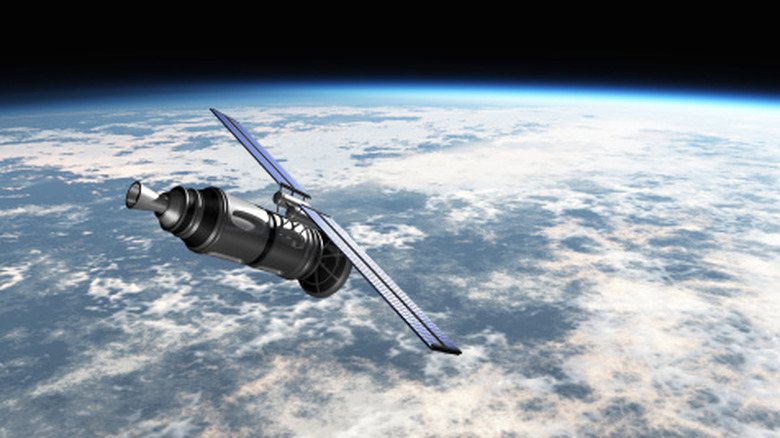
SpaceX is always increasing the total number of satellites it has in orbit, with as many as 11,000 or higher by some estimates by October 2026. That same month, it launched a Falcon 9 rocket containing 28 more Starlink satellites. But what if you wanted to launch just one satellite of your own? How much would that actually cost you? The answer depends on the size of the craft, as larger satellites are much more expensive than smaller ones, with some costing as much as $400 million to put into space. Then again, the top 10 most expensive satellites are huge compared to something like a 570-pound Starlink satellite, which is about the size of your average kitchen table. The costs to launch smaller craft can start as low as $10 million and range to a few hundred million (which doesn't even include the cost of building the satellite in the first place).
But here's another thing: The cost of launching a rocket, to carry and eject a satellite into orbit, is just the start. Once the craft is up there, companies have to pay for bandwidth — like you would for cell data — and also have to maintain and repair hardware, which brings additional expenses. Bandwidth costs alone can be $1.5 million or more per year.
Altogether, that would be upwards of $11.5 million to get the satellite into orbit and operational during its first year of use. The good news is, if you have that kind of cash, you might be able to trim the costs further. A private company called United Spaceports Corporation may soon allow wealthy individuals to buy and launch their own satellites — about the size of a small refrigerator — for a flat rate of $5.5 million.
Infrastructure is a hurdle but getting more affordable
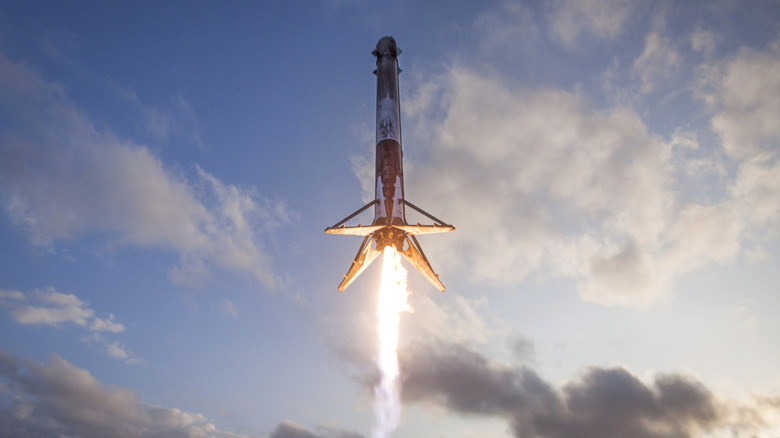
Realistically, if you were to launch a private satellite, it would be nowhere close to the size of commercial options. Smaller variants called picosatellites and CubeSats weigh a mere fraction of the dozens or hundreds of pounds of your average weather- or internet-focused satellite. They cost significantly less to build and would theoretically cost much less to put into space, but most likely, you'll need to find a partner to leverage their rocket infrastructure to get your hardware into orbit. The infrastructure on the ground – ground stations, control software, and launch hardware, among others – would add more costs to your project total, if you were to build and maintain it all yourself. And, again, that doesn't include the cost of the rocket and its parts or materials. The logistics needed to avoid space debris and mid-air collisions can also be complicated.
To give you a better idea, though, a CubeSat can cost about $7,000 to $8,000 to build with a kit, while some partners like Rocket Lab charge $40,000 or more to launch hardware. There are ongoing efforts to get these costs down for researchers and smaller academic teams. A company called AmbaSat offers rudimentary kits for roughly $300 to $600, and some of the more expensive kits include the cost of a small rocket launch. But it's also worth noting that the types of satellites going up as part of these accessible programs are much, much more limited than something like Starlink's variety.
Orbit duration is also important to consider
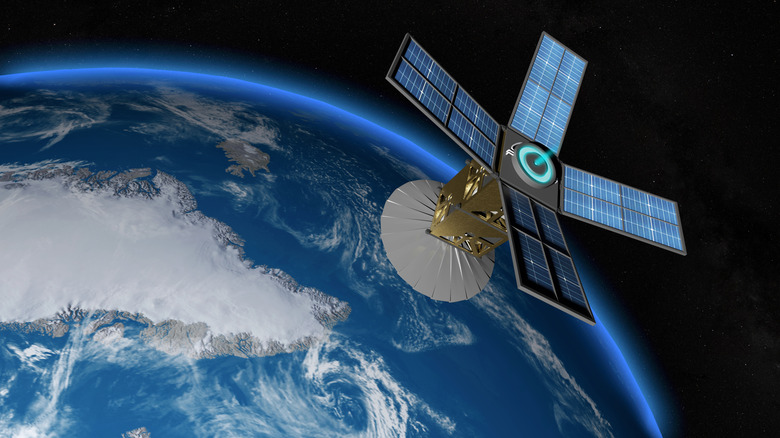
Satellites in orbit, big to small, are in a constant state of free fall, and most of them will eventually reenter the atmosphere and burn up without intervention. A personal satellite, without thrusters or an accelerator, is more likely to fall back to Earth within a few weeks or months, depending on its initial altitude. That altitude determines how long objects stay in orbit, and lifespans can stretch up to 150 years at the highest altitudes. But a small personal satellite, released at lower altitudes, would most likely last a couple years or so at most — CubeSats typically last between one and three years.
Starlink satellites last approximately five years, and they're commercial. But there's an expiration, and that can be a factor for total cost. Your satellite's lifespan, and what you can accomplish during that time, are important to consider. If you need a satellite to remain in orbit for an extended period to complete a goal or objective, you might have to launch more later, increasing overall costs. Beyond the cost to your own bottom line, all of these falling satellites could eventually have a devastating effect on Earth's ozone layer.