

5 Cool New Features That Make The OLED iPad Mini Worth It
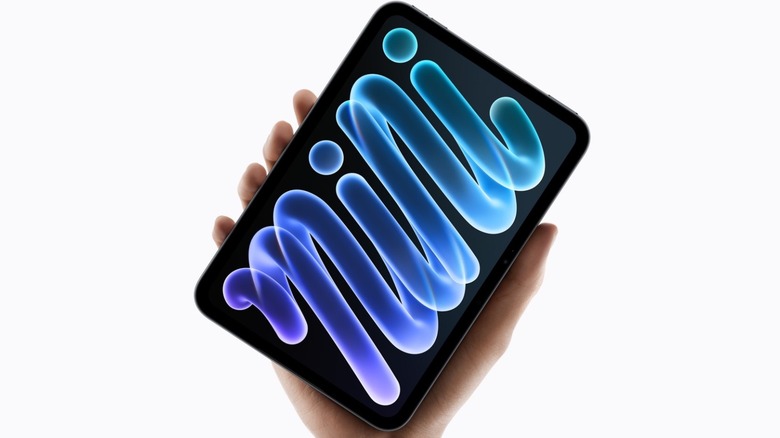
A few days after the new iPhone Duo went on sale, Apple announced another similar product for a different audience: a revamped iPad mini with an OLED display. Among the new features, Apple is making this tablet thinner and more powerful than ever, while also improving connectivity with new, better cameras. The OLED iPad mini has been rumored for a while now – with more products to get an OLED display by 2029 – it puts Apple's tiniest tablet in a new phase, as it continues to prove itself by being powerful, compact, and now with a better display, pushing away from the previous LCD panel.
This new iPad mini arrives amid high expectations that Apple will also release a new iMac with the M6 chip this week, a MacBook Pro with the M6 processor, and completely revamped MacBook Pro models with OLED panels and touchscreen capabilities. While we still don't know whether Apple will announce all of these products, Apple has already invited some media members to a special hands-on experience this Wednesday.
While this new iPad mini isn't comparable to Apple's M5 iPad Pro, which BGR has reviewed, it's closer than ever to this tablet, as it marks the first time another iPad gets nano-texture support, Apple keeps putting its best chip into this device, and now it even has a display technology that, so far, has only been available to Apple's best products. That said, here are some cool features that could make this tablet worth it for you.
A bigger, and better display
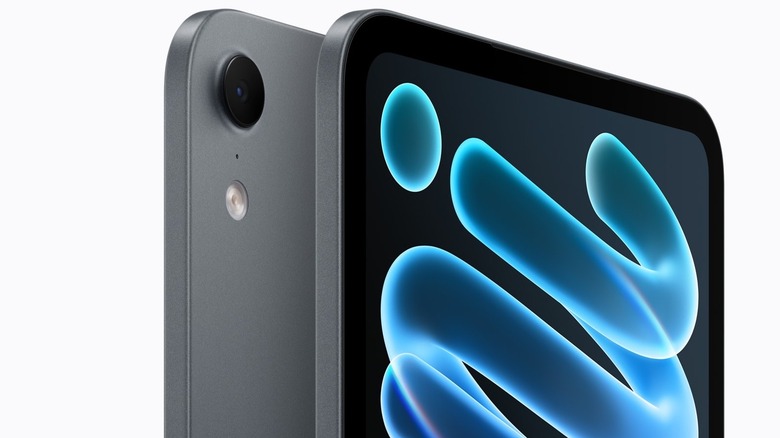
The iPad mini is now bigger than ever, with an 8.5-inch OLED display that, according to Apple, delivers higher contrast (2,000,000:1), more than twice the previous peak brightness (up to 1,200 nits), and 24% thinner bezels. This new Retina display can also dim to as little as 1 nit, which can be great in a very dark environment, if you like using your iPad in bed, or if you're reading on it through the night.
For reading on your iPad, this is the first time Apple adds a nano-texture display option for the iPad mini, which reduces glare outdoors and makes the screen feel closer to paper when using the Apple Pencil or reading.
With these changes, Apple keeps touting the iPad mini for creatives editing outdoors, technicians working in the field, and anyone who wants a smaller but very capable iPad. Interestingly enough, this tablet now looks too similar to the iPhone Duo, which has a similar form factor (although the Duo is slightly smaller when unfolded), but in the iPad mini's case, Apple hasn't added a ProMotion display, meaning it's the first time it introduces an OLED display on a product without offering a 120Hz refresh rate.
IP67 resistant

While the new iPad mini still resembles its predecessor, it has important changes. Apple made the tablet thinner at 5.4mm, lighter, and also IP67-resistant. With that, Apple brings water and dust protection to this iPad, meaning you can finally take it to the pool, the beach, and other environments with more peace of mind. Interestingly, this is the first time the iPad has received an IP67 rating, and we hope the company will expand it to other models, since the iPad isn't a device used only in controlled environments, but one used everywhere by people of all ages.
Although Apple still hasn't explained why it added IP67 resistance to the iPad, an important change to this tablet explains how it achieved it. According to Apple, the company added an Acoustic Display to this iPad to improve the audio experience. In other words, this innovative feature removes the speaker grills we all know from the iPad and instead uses woofers and tweeters under the display to reproduce sound.
At this moment, it's unclear how different the sound is on the new iPad mini compared to the predecessor, but depending on how the company was able to introduce this technology, this could expand to other models in the future, and could even help Apple on its quest to release a completely port-less iPhone.
Pro power in a small form factor
Following the introduction of the A20 Pro chip on the iPhone 18 Pro and iPhone Duo devices, Apple is adding the same processor to the iPad mini — or at least if you get the 512GB version. According to the company, this processor uses a new 2-nanometer manufacturing process, which makes everything more powerful, as it has a 7-core GPU with Neural Accelerators in each GPU, making it 4.5x faster in AI performance than the previous A17 Pro model, while offering up to 2.7x better graphics, including dynamic caching, hardware-accelerated mesh shading and ray tracing. With up to a 6-core CPU, Apple says multithreaded performance on this tablet is up to 60% faster.
The high-end iPad mini model with 512GB of storage features a dual 16-core Neural Engine, which makes it much better for AI workloads and speeds up apps that rely heavily on AI. Compared to the A17 Pro, the A20 Pro has twice the unified memory bandwidth, making the device faster at internal data transfers.
That said, Apple keeps the iPad mini as an alternative to the iPad Air and iPad Pro for anyone who wants serious horsepower in a more compact form factor. Still, it's unclear how this tablet will perform in real-world scenarios, as the Pro chips in the iPhone now use a vapor chamber system to cool the device and improve sustained peak performance while protecting the battery.
Improved cameras

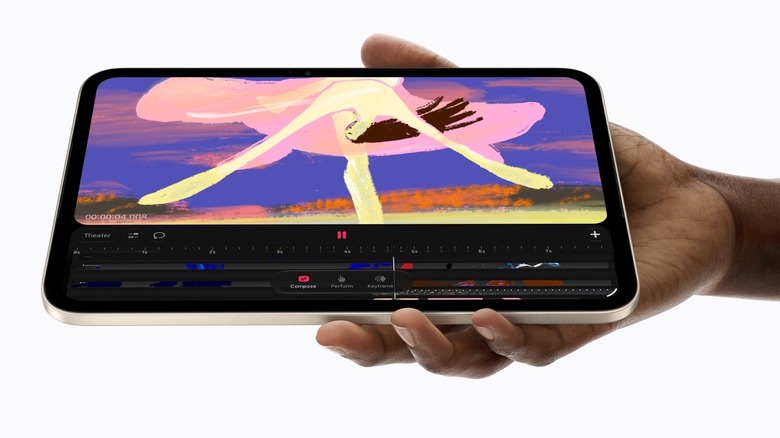
Another important change for the iPad mini is a new 12MP Center Stage front camera in landscape mode. With that, the iPad mini joins all the other iPad models that also feature the front-facing camera in the same position. This way, when you use this tablet in landscape mode, it's easier to join a Zoom meeting, FaceTime with friends, or record a video of yourself talking, since you can now look directly at the lenses. Still, it's interesting that the company made this change, since the iPad mini is more commonly held in portrait mode, especially because Apple doesn't offer a proper Magic Keyboard for this product, so portrait is the most common way to use it.
Apple also says the 12MP Wide camera is great for photos with Smart HDR 4 and for video recording at 4K60fps. The company added an Adaptive True Tone flash to improve photos in the dark, as well as when scanning documents, older photos, and more. Still, some of the iPad Pro's fancier features aren't available on this tablet, such as Portrait mode or Portrait Lighting, Animoji and Memoji support, ProRes recording, Audio Zoom, or stereo recording. Apple's Photographic Styles aren't available on the iPad mini, meaning that even though the company improves the camera on this tablet, it's not optimized for photos and videos, but more for document scanning, FaceTime calls, and so on.
Better connectivity features

Last but not least, Apple is powering up the iPad mini with two new in-house processors: the N1, Apple's wireless networking chip for Wi-Fi, Bluetooth, and Thread, which brings Wi-Fi 7 and Bluetooth 6 support to this tablet for the first time. Apple says this chip improves performance on 5GHz Wi-Fi networks while making features like AirDrop and AirPlay more reliable.
For Cellular iPad models, Apple is adding its new C2 5G modem, the same one available with the new iPhones. Compared to the previous iPad mini, this chip offers 50% faster cellular data speeds and improved power efficiency, meaning this iPad is expected to last longer even on a cellular connection. Apple highlights that iPadOS 27 makes it easier to switch between cellular and Wi-Fi connections, so you can move from your home Wi-Fi to a 5G network as you walk out the door without disrupting your FaceTime experience.
Another key feature that makes the C2 chip so interesting on the iPad mini is that customers can hide their actual location from their carrier. This feature first arrived for the iPhone "e" and iPhone Air models with the iOS 26.3 update, and has expanded to other Apple products with custom 5G modems. With that, Apple expects to offer a more private experience while making everything more reliable, faster, and power-efficient.