

Your Smart Home Devices Might Be Affected By Your Neighbors — Here's Why
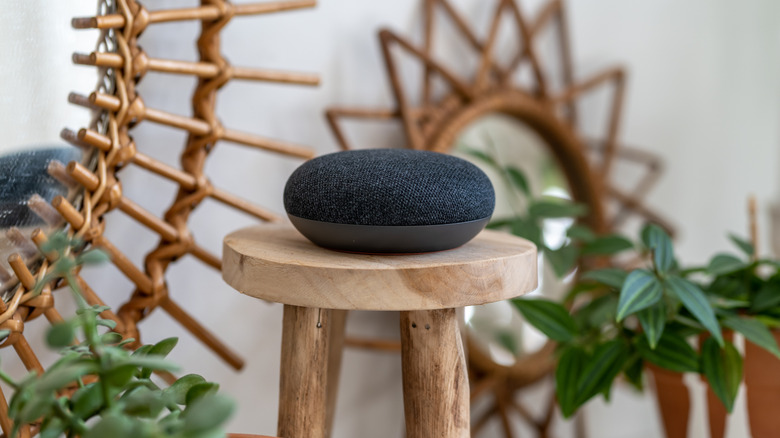
Your smart home devices, as the name suggests, are designed to make daily life more convenient and an abundance of information instantly accessible in more intimate, often private locations. While smart home devices offer actual advantages for users of varying circumstances to introduce them to their living spaces — whether they are future-proof smart home devices worth buying, essential gadgets for parents, or automations that do all the work for you — all might not be well when you actually implement these products inside your abode. They may be meant for your own, personal use, but your neighbors, whether nosy or unknowing, may dictate what your device is up to in your home.
The notion that your neighbors could stealthily drop in on your home life via your smart home products is unsettling. Not all neighborhood interference is intentional, however, and may be the result of accidental interference. Tight quarters like apartment buildings could foster several events of unintentional smart home tampering. Neighbors with thin walls may accidentally control others' devices with remote controls or trigger them when speaking too loudly or blaring their TV's volume. Shared community internet connections will also allow for lag among individual devices.
Nearby users may also trigger devices while trying to control their own, especially if you have thin walls. One Google Home owner, for example, encountered a situation where their neighbor inadvertently took over a device in their home. "Woke up in the middle of the night to my Google Home blasting music," the Reddit user said. "Then realized that my neighbor downstairs was screaming at his new Google Home and trying to get it to play music." The neighbor might not have meant to cause such a disruption, but the result was understandably frustrating.
Malicious behavior from neighbors could also affect smart home devices
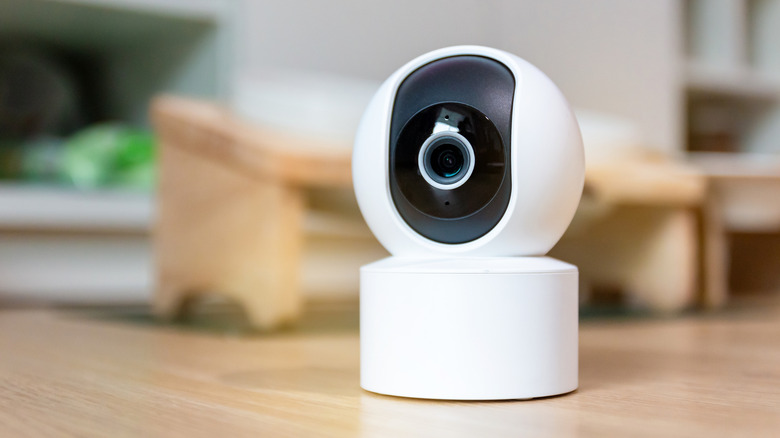
Not all examples of smart home interference are innocent, however. Smart home products like security cameras, smart speakers, and video doorbells are unfortunately susceptible to nearby individuals potentially taking over and peering in on your personal endeavors via hacking, thus providing some homeowners a reason to think twice before buying certain devices. Sally the snoop from next door might easily be able to check in on devices connected to your network if she has access to your login details or was previously given access to your Wi-Fi. Nearby individuals with malicious intent could also exploit smart devices' possible vulnerabilities in connected settings like apartment complexes. They could collect encrypted data through shared walls with antennas, monitor qualities like signal strength to estimate when and where a device is being used, and observe one's personal behavior and habits based on the types of devices they use, how often they do so, and at what times.
Users, themselves, have also reported times their smart home devices' suspicious activities could've been the result of purposeful neighborhood meddling. One Redditor described an instance where their Wi-Fi-enabled cameras stopped working when a neighbor supposedly blocked their internet. The notion that devices like these and others may be accessed or disabled by others should prompt careful consideration and taking appropriate security measures before introducing them to your home.