

How Much Would It Cost To Build Your Own Mini PC In 2026?
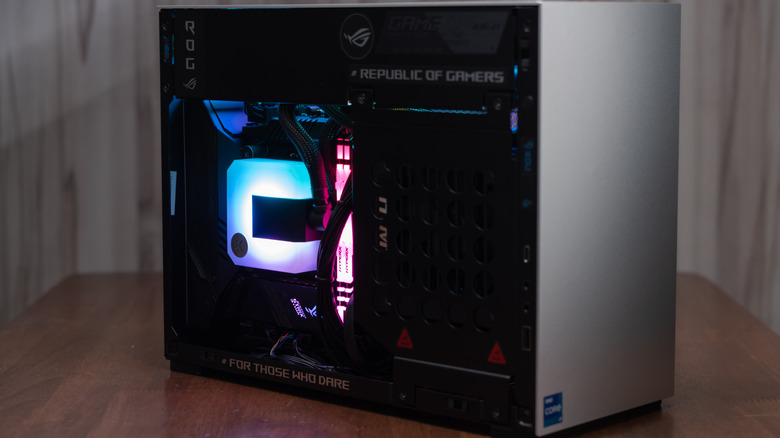
While it's far easier to cool components and manage airflow in a standard-size gaming PC tower, there's something about putting unlimited power into a small box, yet it still works. Is a mini PC worth buying? Of course it is, but there are some caveats to consider before making the switch. For day-to-day users who just browse the internet and create spreadsheets for work, there are a few key perks of switching to a mini PC, including saving on desk space. Smaller components that pack the same punch as bigger ones usually command a higher premium too. A mid-range Mini-ITX PC build from scratch can cost over $2,600, but we'll break down that cost later on.
But can gamers and tinkerers build their own custom mini PC from scratch in this day and age, and save money? Technically yes, but not in the obvious sense. Building something like a Mac Mini at home sadly isn't possible, thanks mostly to these ultra-compact computers running on System-on-a-Chip (SoC) architectures. This is where the processor and graphics share a single chip, with the memory built into the same package on a proprietary motherboard. And when you factor in custom cooling and power solutions, it's easy to understand why high-end mini PCs are so expensive right now.
But there's a solution for builders hell-bent on making the smallest PC they can – a Mini-ITX build — or users can simply try these popular budget mini PCs instead of a full-size desktop. Many of the latter also let users upgrade the RAM or storage down the line, instead of being locked into a soldered-in, ultra-slim solution.
The Small Form Factor alternative
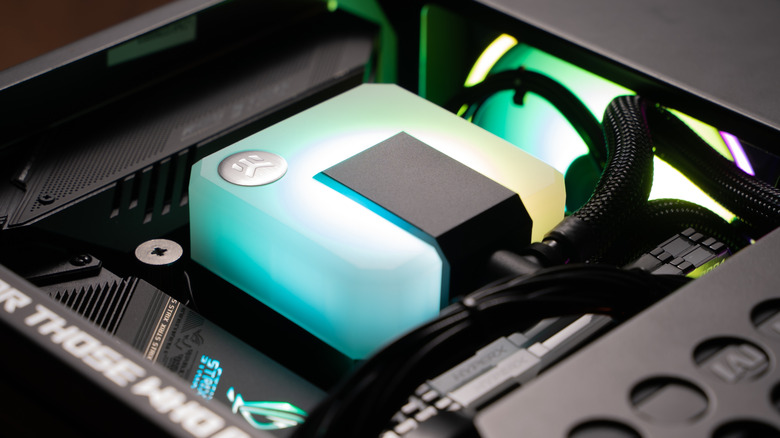
While we can't build a true mini PC ourselves, we can take on an ultra-compact SFF (Small Form Factor) desktop build instead. Using the Mini-ITX motherboard standard, builders will be off to a great start thanks to it measuring 6.7 by 6.7 inches, giving a finished build similar dimensions to a current games console. In fact, mini PC builds are becoming more acceptable in PC gaming circles following the strong early demand for Valve's Steam Machine, and it's just a matter of time before pre-built PCs follow suit.
So what's the smallest form factor gaming PC available? For builders, cases such as the Fractal Design Terra or the modular Phanteks Evolv Shift XT have incredibly tight dimensions but still house desktop components. A case like the Fractal Terra has a capacity of 10.4 liters, which is around the size of a bread bin (can someone make a loaf-themed ITX build please?).
Despite the tiny footprint, modern SFF cases use smart PCIe riser cables that allow builders to "sandwich" a full-size, dedicated graphics card directly behind the motherboard. The riser itself doesn't cost any gaming performance, though heat can build up quickly in such a tight space. Stuffing high-end hardware into a 10-liter chassis also needs an SFX power supply and a low-profile CPU cooler like the Noctua NH-L12S to make sure the side panels actually close.
How much does an SFF build actually cost?
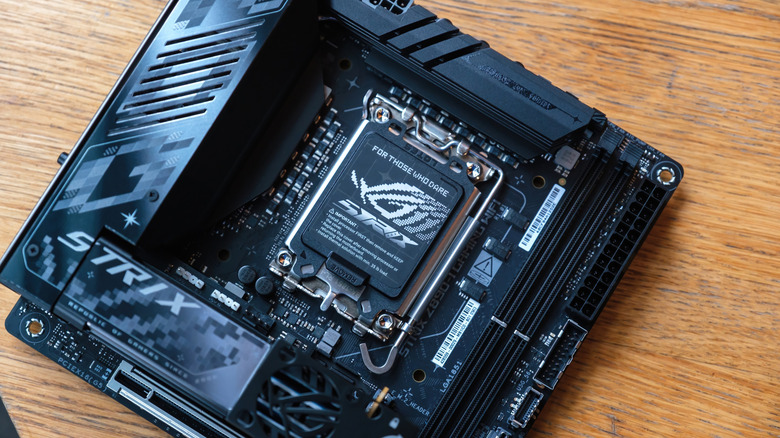
A mini-ITX build is going to be as cheap or as expensive as the components chosen, just like a desktop build, but the small form factor tax is definitely a first world problem. Mini-ITX motherboards are generally more expensive than standard ATX boards as manufacturers have to engineer complex, stacked thermal solutions to fit everything into a 6.7-inch square.
Realistically in 2026, a premium case like the Fractal Terra is around $200, with a high-end Mini-ITX motherboard like the ROG Strix X870-I for around $430. That's $630 before considering a $850 mid-range graphics card, $340 for a CPU, a $160 M.2 SSD, $480 for 32GB DDR5 RAM, specialized $70 low-profile cooling, and a $130 SFX power supply. All in all, a powerful Mini-ITX PC build will cost over $2,600.
For players who aren't interested in building, there's plenty of pre-build Mini-ITX gaming PCs that don't compromise on performance and will likely have a better price-to-performance ratio instead of buying SFF parts and components in today's market. It's almost always going to be cheaper to have an ATX motherboard-based build, but there's something about having a modular, powerful, and stunning gaming PC glowing in the corner of a battle station. For many, it's worth the premium.