

5 Of The Best Routers For Power Users You Can Buy In 2026

We may receive a commission on purchases made from links.
If you have a house full of smart devices, a couple of bandwidth-hungry machines, and a fast fiber line, you may be a power user. If your network drops out when everything is connected at once, or the router you bought a few years ago can't keep up with newer standards, then it's probably time to upgrade. That usually means Wi-Fi 7, though a well-equipped Wi-Fi 6 router can still do the job and cost less. Options like the Asus ROG Rapture GT-BE19000, TP-Link Archer BE900, and Ubiquiti AmpliFi Alien are among the best options power users can buy in 2026.
While it's important to keep in mind these Wi-Fi router brands with the longest software support, you should also take into account if a router with more than four ports isn't enough. For example, you may want to plug a few demanding devices on the Ethernet ports. If you're a power user, you may also find it important to get a router with customization options for your network settings.
With that in mind, we've found the best routers for power users that can handle a lot of products connected at once, and that will give you peace of mind in the years to come. These options can be good for both power users or small businesses, and besides focusing on reputable brands, we also considered reviews by real customers who bought and have been using these products.
1. Asus ROG Rapture GT-BE19000
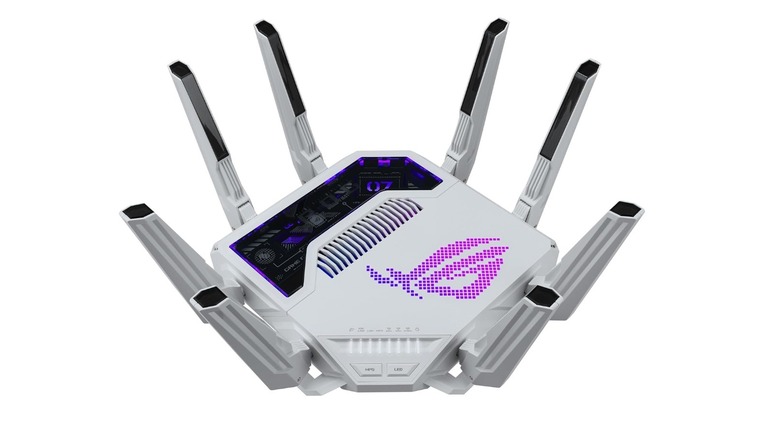
The Asus ROG Rapture GT-BE19000 is an enterprise-like, tri-band Wi-Fi 7 all-in-one router made for heavy network users, creative media studios, and small businesses. This router costs $699 and packs a 2.6 GHz quad-core CPU and 2GB of RAM. It can deliver up to 19 Gbps across 2.4 GHz, 5 GHz, and 6 GHz spectrums and features two 10-gigabit Ethernet ports alongside four 2.5-gigabit LAN ports, which allows users to hook-up multi-gigabit fiber feeds, local high-speed switches, and NAS units without physical issues. Functions like Guest Network Pro offer isolated VLAN tagging for IoT sensors or employee workstations, while VPN Fusion helps different devices through different VPN tunnels simultaneously.
This router is a great pick for power users that also want a cool design and a deep software customization. For example, the ROG Rapture can host high-speed wired transfers alongside low-latency 6 GHz and Wi-Fi 7 connections, which makes it ideal for handling remote workflows, 8K video rendering, and more. Customer reviews on Amazon frequently highlight the great 6 GHz range, exceptional wired throughput, and intuitive VLAN management. Others talk about its great security tools and AI features that don't require a subscription fee. Still, some reviews note that this is a huge router with a premium price tag, and, occasionally they can face firmware bugs in the web interface that can be a problem when enabling complex traffic-shaping settings.
2. TP-Link Archer BE900
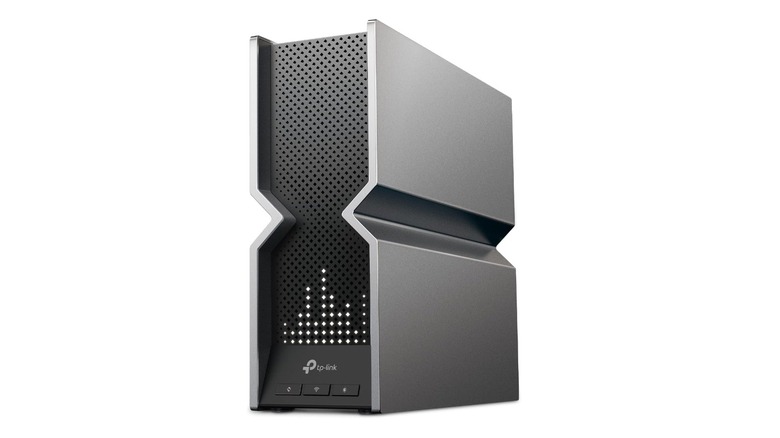
Available for over $1,000 in the U.S. depending on the configuration, the TP-Link Archer BE900 is a flagship quad-band Wi-Fi 7 router made for an environment with massive device density. It can offer an aggregate wireless speed of up to 24.4 Gbps across four distinct bands (one 2.4 GHz, two 5 GHz, and one 6 GHz) . While price can significantly drop if you choose the separate 19 Gbps model, this router features two 10 Gbps ports, including a flexible SFP+/RJ45 WAN/LAN combo port and a configurable 10 Gbps LAN port. It also has four 2.5 Gbps Ethernet ports, a 1 Gbps port, and dual USB ports. Design-wise, it looks like a futuristic tower with 12 internal antennas, a customizable LED grid display, and an interactive touchscreen that shows real-time network diagnostics.
Power users and small businesses can benefit from using the Archer BE900 as a central media and network hub, as the dual 10G ports allow instant multi-gigabit transfers between local storage arrays and editing workstations. Plus, EasyMesh support and the 320 MHz channel can ensure future-proof wireless coverage.
Amazon customers usually say that they like the futuristic aesthetic of this router, its excellent multi-gigabit speeds, and the convenience of checking network health directly from the touchscreen. Buyers also praise the local file servers when transferring data via wire. Still, the high cost — depending on which configuration you opt for — could be an issue. Also bear in mind that the advanced HomeShield security is only available with a paid monthly subscription.
3. Ubiquiti AmpliFi Alien Wi-Fi 6 Router
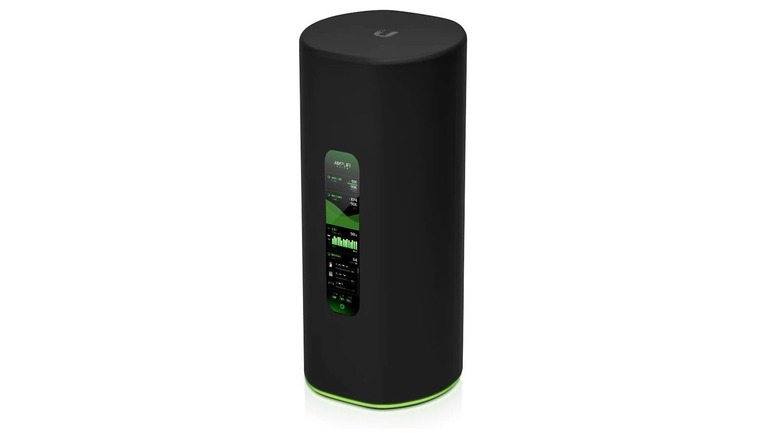
This standalone, prosumer-focused wireless router is built for extreme network stability and ease of use. With a tri-band Wi-Fi 6 architecture with 16 spatial streams, the Ubiquiti AmpliFi Alien can deliver up to 7.68 Gbps of total throughput. Its cylinder body features a 12-antenna array alongside a front-facing 4.7-inch color touchscreen that displays real-time network throughput and diagnostic information. As for its physical ports, this router includes one gigabit WAN port and four Gigabit LAN ports, and a major software highlight is its Teleport VPN, which lets users route mobile device traffic securely through their home network while traveling.
Despite only supporting Wi-Fi 6 — unlike most of the offerings in this list — it's also a lot cheaper than the others at $179. Power users and small office owners might enjoy the AmpliFi Alien if they prioritize reliable connection stability, sleek physical aesthetics, and simple remote access over complex command-line controls. For example, its high client density capabilities allow it to handle dozens of active smart home and office devices without dropped packets or rebooting.
Amazon customers frequently praise the AmpliFi Alien for its "rock-solid" reliability, easy mobile app setup, and touch display. Users also love the Teleport VPN feature for secure travel, but common critiques include the lack of multi-gigabit ports — especially because they're capped at 1 Gbps — the absence of USB ports for local drive sharing, and the lack of the 6 Ghz Wi-Fi band. Still, for its price point, it can be a great option for a 100% wireless solution.
4. Asus ZenWiFi BQ 16 Pro
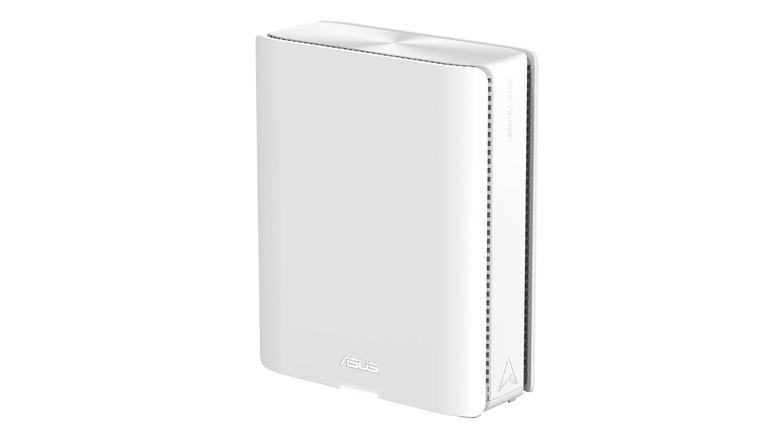
Another top tier Asus router is the ZenWiFi BQ16 Pro. It is a quad-band Wi-Fi 7 mesh system designed to eliminate dead zones at homes or large office buildings. This router was originally listed for $899.99, but it is currently available at Amazon for $659.99. The ZenWiFi BQ16 Pro delivers speeds up to 30 Gbps across four wireless radios, including two dedicated 6 GHz bands. A major feature of this device is its Multi-Link Operation, which aggregates multiple channels to establish an ultra-low latency mesh backhaul between nodes. Each unit includes dual 10-gigabit Ethernet ports, allowing users to build a 10 Gbps wired backbone across distant areas of a business.
The BQ16 Pro can be a great choice for power users and small businesses if they need uniform, multi-gigabit wireless coverage without worrying about network control. Features like Smart Home Master allow easy creation of up to five isolated SSIDs with dedicated VLAN tagging for guest networks, IoT devices, and employee traffic — all of that with a lifetime subscription-free AiProtection Pro security.
On Amazon, customers usually praise the BQ16 Pro due to its incredible signal reach, robust 10G wired backhaul capability, and free enterprise security tools. Reviewers consistently mention that this router covers thousands of square feet effortlessly without dropping speed. Criticism, however, is mostly aimed at its high price tag (especially when purchasing a single unit), the bulky size of the nodes, and the fact that certain advanced setting changes require a slow reboot of the nodes.
5. Netgear Nighthawk RS700S
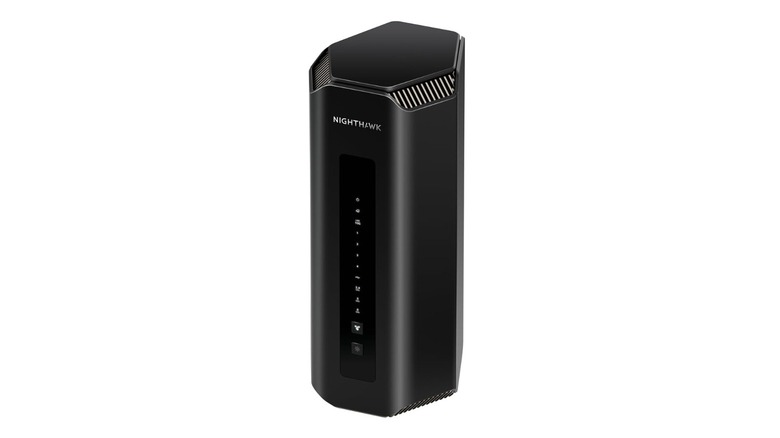
Last but not least, Netgear's Nighthawk RS700S is a sleek, high-tech monolith router that has been engineered for multi-gigabit speeds and maximum device capability. Usually priced at $599 (but currently discounted at Amazon for $539.99), it runs on tri-band Wi-Fi 7 technology and delivers massive wireless throughput up to 19 Gbps across 2.4 GHz, 5 GHz, and 6 GHz spectrums. On the back panel, it has a 10-gigabit WAN port for ultra-fast fiber internet plans, a 10-gigabit LAN port for high-speed local servers, four 1-Gigabit Ethernet LAN ports, and a USB 3.0 port. It's powered by a quad-core processor with 2GB of RAM, and its vertical tower design has an engineered internal antenna array capable of covering up to 2,500 square feet and handling up to 200 connected devices simultaneously.
Those who buy the RS700S will find raw 10 Gbps wired throughput and ultra-low latency wireless bandwidth without taking up a horizontal footprint on a desk. This means professionals can stream 8K video feeds, run a local backup to a 10 Gbps storage array, and host heavy cloud workloads at the same time. Amazon buyers praise the outstanding 6 GHz wireless speeds, great stability with over 100 simultaneous devices, and a sleek modern design that blends into any office space. These buyers also appreciate the mobile app setup and reliable long-range coverage across multi-story layouts. However, some complain about the high price, the lack of support for mesh expansion, and the fact that Netgear places advanced parental controls and security features behind a paid subscription.
How did we choose these routers
We prepared this list of the best routers for power users, thinking about those who usually have connected over 100 devices online. All the picks are also suitable for those who flirt between personal, high-end usage and a small business level. We tried to diversify the options, even though Asus and TP-Link are among the most obvious options, especially considering their level of configuration available. Besides that, we understand that these power users require more than basic internet access, but a robust local network infrastructure capable of handling massive bandwidth and local file transfers without creating bottlenecks.
We prioritized the latest connectivity standards and multi-gigabit hardware. Almost every router in this list features multi-gigabit Ethernet ports, ranging from 2.5 Gbps to 10 Gbps WAN and LAN interfaces. With both Wi-Fi 7 and Wi-Fi 6 options, the routers in this list can deliver multi-band throughput that can prevent wireless congestion when connecting over 100 devices. We also considered real-world user feedback from verified buyers on Amazon and other retailers to evaluate long-term stability, thermal dissipation under sustained heavy load, ease of setup, firmware support, and value for money. While most of these routers are on the costlier side, the majority don't require a subscription for extra features.