

There's No Point In Buying A Projector If Your Room Doesn't Meet These 3 Requirements

Replacing your TV with a projector is something that requires a lot of planning and patience. Do it right and you can have a display far bigger than any commercially-available TV. If you fail to account for a single crucial variable, though, you'll be left with an underwhelming, warped, or washed out image. Thankfully, avoiding this heartache is easy and this post will discuss three key criteria your room has to meet in order to be a good fit for a projector.
First, your room has to be large enough. Your projector's throw ratio will tell you how far away it has to be in order to create a display of a given size. For instance, if the ratio is 2:1, a 10-foot wide screen would require the projector to be 20 feet away from the screen. It's also important to note that, like with TVs, output size is measured diagonally, not horizontally. Failing to account for throw distance is one of the most common mistakes when buying a projector and will result in an image that's either far smaller or duller than expected.
Short throw projectors can be helpful in smaller rooms, but they can tend to cost more and still require up to eight feet of distance from the projection surface. There are also ultra-short projectors that only need around four feet, though these tend to make the wall's texture extremely noticeable, so ideally, you'd still use a screen.
Never buy a projector without considering light and logistics
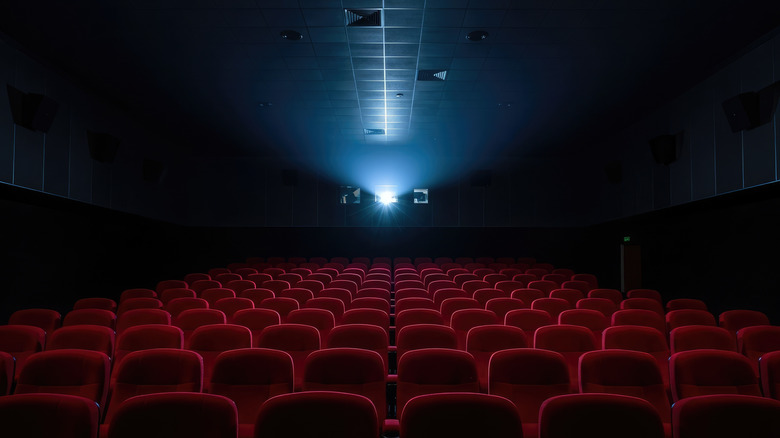
No surprises here: projectors work best in complete darkness. The more ambient light there is, the more lumens your projector has to emit in order to display a vivid picture. High-powered projectors tend to be more expensive to purchase and maintain, so smaller, enclosed spaces are generally better options for consumer projectors than open-plan areas, though the quality of your experience is largely determined by how well you manage light sources. It may be cheaper to opt for blackout curtains instead of a more-powerful projector, for instance, and an ambient-light-rejecting screen minimize light's impact on contrast.
Finally, is your room actually a viable location for a projector? Typically, this would require suitable mounting points for a projector and screen, as well as nearby power outlets and a seating arrangement that positions everyone within the optimal horizontal viewing angle (generally between 30-40° for home theaters, though this varies based on screen size). This ensures everyone sees the highest-quality image and won't trip over cables or be dazzled by the beam when they move around.
Although TV are more convenient and easier to set up, a properly-calibrated projector can really elevate your viewing experience. Carefully evaluating your space before purchase helps make the transition as smooth as possible and lowers the risk of you being stuck with an expensive projector that's not suitable for your home.