

Ring Doorbell Vs. Google Nest: Which Has The Best Video Quality?
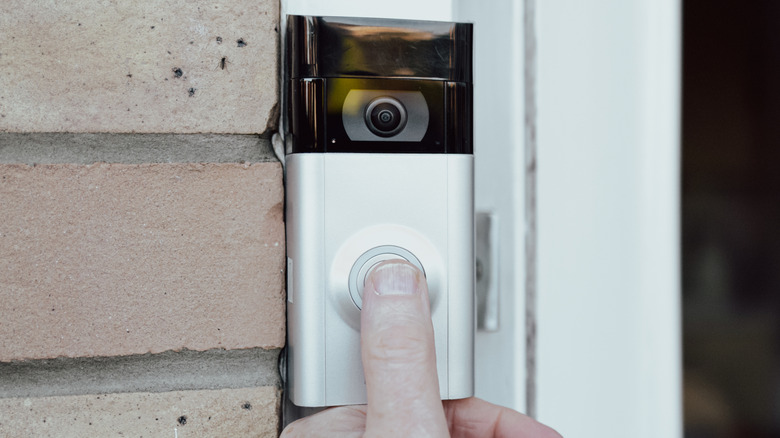
Two major contenders in the smart video doorbell market are Google Nest and Ring. They're great home security additions thanks to their video recording capabilities, but which one offers the best video quality for keeping a front door secure? All video doorbells have limitations, so it's important to choose the one that fits your needs.
Google Nest doorbell cameras are one of the first bits of hardware users should buy if they want a full Google Home smart home setup. It supports a 960 x 1280 resolution with a 3:4 aspect ratio and 145° field of view, which is more than enough to capture visitors head-to-toe without artificial distortion. Ring doorbells offer higher raw pixel counts and wider coverage, but they rely on a different lens style. Higher-end Ring models feature 1536p HD+ resolution with a 155° to 160° field of view thanks to a wider fisheye lens that covers more ground. It also adds a circular view that some may find distracting, but it isn't compatible with Google Home.
Real-world lighting performance varies significantly between the two ecosystems on bright days and at night. Ring's HDR video handles direct sunlight much better than Nest by preventing blown-out details, and it also offers full-color night vision. Google Nest offers only a black-and-white infrared night feed, so Ring wins on nighttime security. Although I've used a Nest doorbell for over three years and found the video quality good enough for my home security at all hours, I wouldn't say no to full-color video in this day and age.
Live view speed, push notifications, and two-way talk
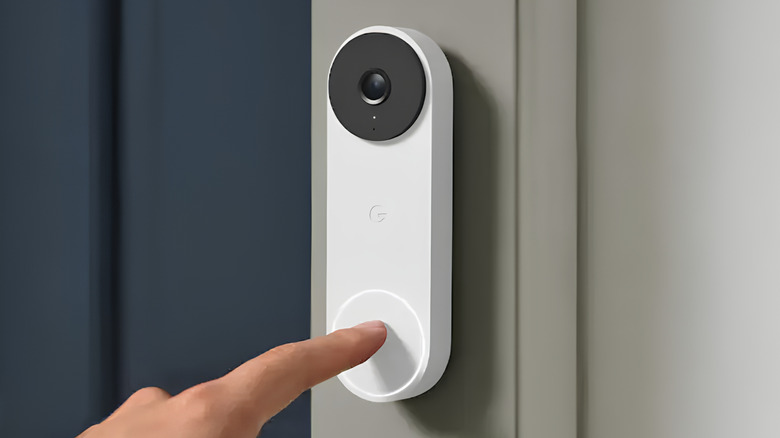
Seeing who's at the door instantly requires reliable real-time video streaming and low-latency alerts. Both Nest and Ring doorbells offer this functionality, but testing shows Ring delivers faster push notifications and smoother real-time tracking, while Nest doorbells have slight latency delays that may cause users to miss visitors. While latency delays might happen once or twice over years of use, missing a visitor twice is too much for some users.
Two-way audio interaction and doorbell chime handling performance differ as well. The Ring Wired Doorbell Pro has improved two-way talk audio and treats doorbell rings like incoming phone calls on an owner's smartphone, so you can't miss a doorbell press. Ring also handles preconfigured automated voice replies well when users aren't home or are busy, a feature Google Nest doesn't offer natively.
I chose the Google Nest Doorbell because of its ecosystem integration, since I have a Google Home smart home setup. It pairs seamlessly with Google Assistant to cast live video onto a Nest Hub display or TV, while Ring doorbells similarly integrate directly with Amazon Echo Show screens. In this regard, both doorbells are great. As far as I'm concerned, it just comes down to which one fits best with a user's smart home setup.
Recorded video history vs. 24/7 continuous recording
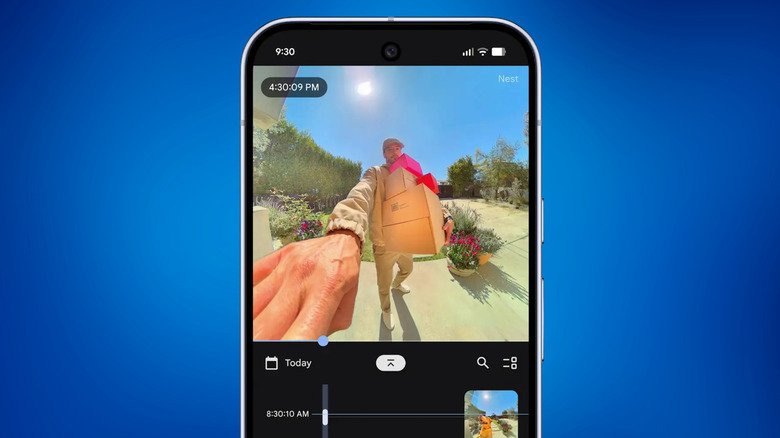
Choosing the best security camera inside a doorbell comes down to how each brand handles recorded video event history and continuous storage. Video recording tech also differs, with Nest's 24/7 continuous timeline and Ring's event-based clips and pre-roll buffers.
Without a subscription, the Google Nest doorbell provides 3 hours of free event video history, whereas Ring offers no free video recording storage out of the box. For owners who need a complete front-door security solution, continuous video recording varies greatly by brand. As mentioned, Ring doorbells don't support 24/7 continuous video recording; instead, they rely on event-based clips with 15-second snapshots between motion events.
For a single doorbell setup, Ring Solo ($4.99/month) is the lowest-cost cloud recording plan. If you add outdoor cameras, floodlights, or multiple doorbells, Google Nest Standard ($10/month) and Ring Multi ($9.99/month) add value by covering unlimited hardware at a single address.
Continuous 24/7 recording is paywalled behind a Google Nest Advanced subscription ($20/month), with up to 10 days of history on a wired doorbell to review moments between motion triggers. Ring offers longer event clip retention, up to 180 days across all subscription tiers, compared with Nest's 60 days.