

China's $1.5 Million AI-Generated Movie Is A Box Office Disaster No One Wants To See
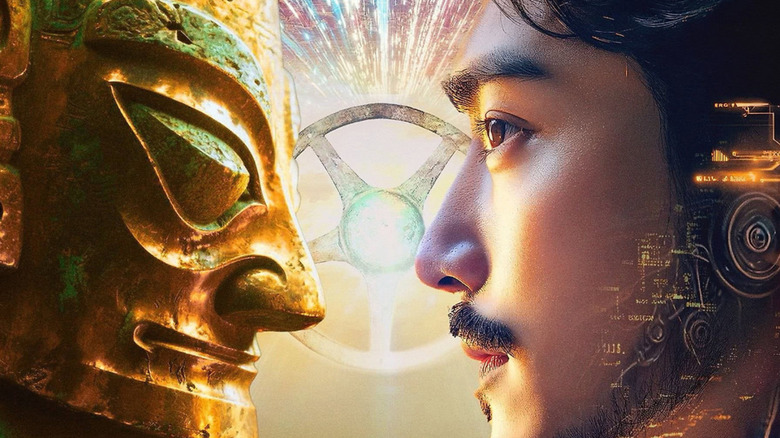
In what can only be described as no surprise, an entirely AI-generated movie out of China has flopped at the box office in the country. Costing $1.5 million, "Sanxingdui: Future Past" only managed to scrape in $181,000 despite flooding theaters with over 10,000 showings on its debut date. According to reports, Bona Film Group, the company behind the slop-flick, had nearly 100 people working on it over two years. The plot follows a future where AI systems run the world as everything goes wrong.
It's clear that despite a huge uptick in AI development in China, with a reported 700-million-strong user base, no one is interested in seeing a wholly AI-generated film. It turns out people want something a little more human-made when going to the cinema. The reason for the film's failure at the box office was explained by Jiang Defu, an executive at the studio. According to Jiang, being the "first" with this kind of film in the country presented a challenge: "We are the first to try it, the first to get a theatrical release permit, and the first to be tested by the audience ... I think that is not easy at all."
As reported by AFP, some of those who attended the film weren't impressed. One person said it "falls short" of human-based productions, adding that maybe in the future it'll be worth the ticket price. According to AFP, when a representative from the website attended the screening, only four people were there.
Sanxingdui: Future Past sounds like the future is already past
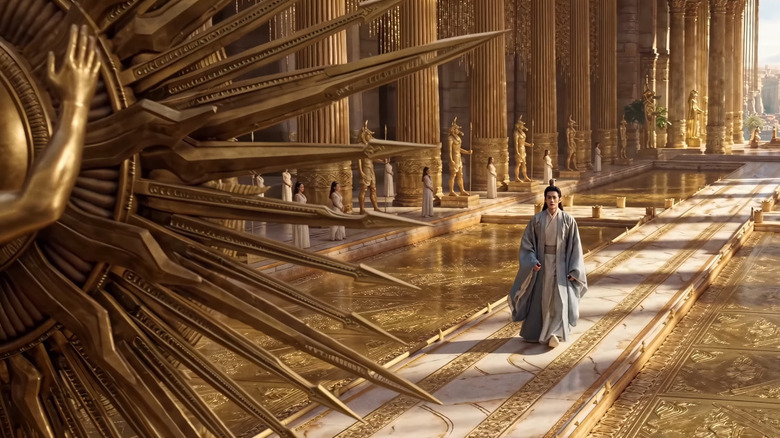
Recent Western attempts to integrate generative AI into the mix of films have also been rebuffed, despite being slid into sequences rather than entire films. Ben Affleck's recent Netflix film, "Animals," was lampooned online for its use of AI. In 2023, Marvel faced similar criticism after using generative AI in the opening credits of "Secret Invasion." Even smaller films, like drag queen RuPaul's movie, "Stop! That! Train!," used AI much to the chagrin of fans of the roster of talent in the movie.
Audiences are beginning to reject AI-generated media in certain spaces, particularly visual. Complaints over the inundation of crass flyers and posters with grotesquely ugly food on them or horrendous generated ads, like from Coca-Cola, have begun to grow as generative AI toolsets become more commonplace. Primarily, it's beginning to become obvious that despite the time savings, generative AI still isn't ready for major primetime usage, and audiences aren't exactly ready to accept it as a whole just yet. People were a little unnerved by a Super Bowl commercial.
The reason this story has gained traction is that earlier in 2026, China saw the release of "Niu Lai," an animated film that cost $200 and went on to make over $10 million after becoming a bit of a meme for its low quality. Even the posters for the film were hand-drawn. Despite its incredibly low quality, the effort and love that went into "Niu Lai" clearly resonated with people enough for them to give it a go, even if it was for a joke.