

This New Study Shows If Data Centers Are Actually Creating New Jobs
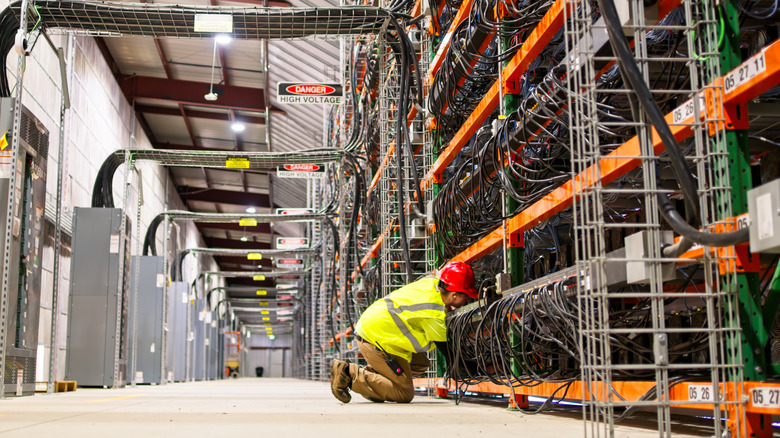
As more and more data centers pop up to accommodate increased AI use, there have been a lot of questions regarding who benefits from them. Though the facilities themselves don't employ many people once open, proponents claim that data centers can boost the local economy by creating lots of new jobs. A study from the MIT Center for Real Estate provides some useful insight, revealing that the truth is, unsurprisingly, more complicated. While it does link data centers to "a gradual increase in local employment following data center entry," the research shows that modest success doesn't transfer across the board.
Before getting into the details, it's worth mentioning that this study was not peer reviewed and was published for "discussion and comment purposes." The researchers looked at 1,584 active data centers in the United States that opened and operated between 2000 and 2023 to examine their impact on things like employment and income in the surrounding area. Since counting data centers can be tricky, the study focused on those listed in the Aterio database with clear activation dates.
The study found that, after a small increase in the first couple of years, job growth picks up a bit after approximately three to five years and ends up equaling around 2.74 jobs per megawatt of capacity. However, these jobs are primarily in the transportation/warehousing and professional/technical services industries, showing little impact on things like retail and restaurants.
Given that the data ends in 2023, it doesn't account for massive investment in new data centers over the last couple of years. Still, it's a useful glimpse at the economic impact of data centers, which can help determine whether the benefits justify the costs.
Data centers don't help local economies as promised
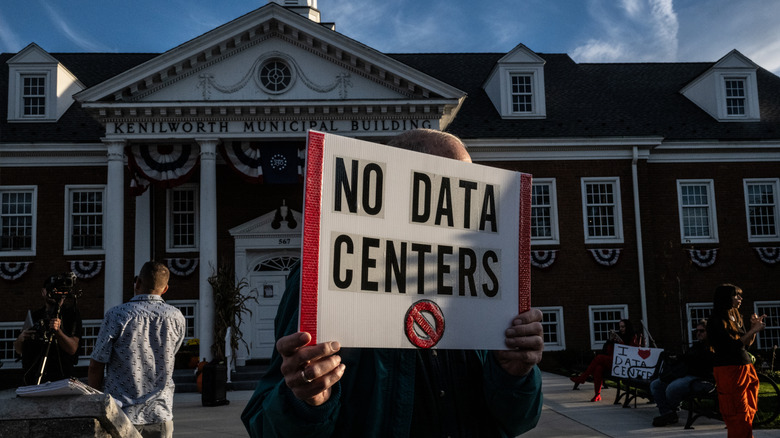
While data centers are connected to some job creation, the MIT Center for Real Estate's study indicates that this isn't happening on a scale that could transform struggling communities. In fact, most would say their negative impacts outweigh the positives. There are common problems associated with living near a data center, including increased utility prices and pollution, which have an outsized impact on the rural areas where they tend to crop up.
Data centers are power-intensive, requiring lots of electricity to power their supercomputers and clean water to cool equipment. That puts further strain on already stretched resources, having a frustrating impact on power bills that looks like it'll get worse as more data centers get built. Even if data centers do create jobs, their benefits seem minimal to nonexistent when weighed against the economic and environmental harm they cause, the burden of which falls on the average American rather than those running the data centers.
That's why a lot of communities are fighting back against new data centers. According to Data Center Watch, pushback from local residents has blocked or delayed nearly $200 billion worth of data center projects in the first two quarters of 2026 alone, and that's led to increased scrutiny from politicians. The governors of New York and Texas have implemented moratoriums on new projects, joining local ones in places like Oklahoma City and Seattle in showing that opposition to data centers is one of the few things Americans across the political spectrum can agree on.