

Can An EV's Battery Pack Really Power A Home?
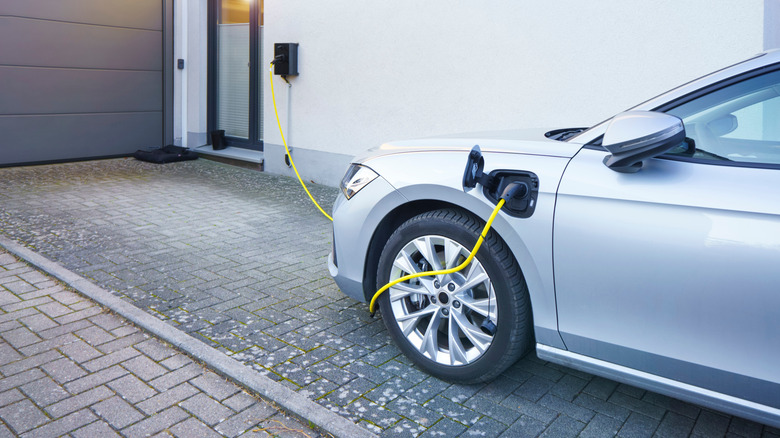
Electric vehicles, or EVs, may still seem futuristic in today's world for their ability to run on electrical energy alone. It's all the more promising that breakthroughs in EV battery research are still being made, and some EVs may be able to perform more novel or unprecedented tasks. While the notion that an EV's battery pack could power an entire home may seem like an annoying myth that just refuses to die, rest assured, it's a truthful tidbit some plug-in vehicle owners might want to try out.
Some EVs offer bidirectional charging and could be capable of acting as temporary home power sources because they can redirect electricity out of their batteries, in addition to taking it in. In order to have an EV send power directly into your home, you may need to install an upgraded breaker box or seek out a professional for integration. You may also need to choose which appliances and aspects of your home it charges.
Redditors with experience powering their abodes with their EVs have reported the feature can make for a solid power backup for emergency purposes. "We used our 240 outlet in our Silverado to power 7,000 watts of appliances in the house for 6 days during a major storm and power outage last year," one user said. "Neighbours were bringing their food to our place to save it. Was plug n play easy peasy." Others showed hope this capability will become more commonplace in the future.
EVs with bidrectional charging could power your home
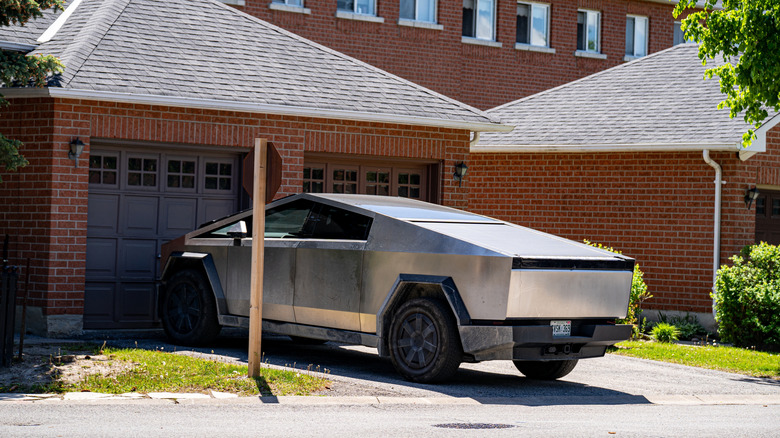
Electric vehicles with bidirectional charging offer the potential to turn your car into a spare generator capable of powering your home in an emergency. Some, like the Tesla Model Y and Cybertruck, directly advertise this capability. With a Powershare-compatible Tesla vehicle, bidirectional charging can be accessed with a Powershare Gateway or devices like the Tesla Powerwall 3, which is a wall-mounted, Powershare-equipped energy storage unit that can power your home for two or more days in the event of a power outage. It siphons power directly from the vehicle and can transfer it to your home or share it with the public power grid. The money you may earn from the latter option, a feature which is available only with the Cybertruck as of October 2026, is advertised to help lower your monthly electric bill.
Other EVs with home-charging capabilities include the 2025 Ford F-150 Lightning, which requires a 19.2 kW Ford Charge Station Pro and Home Integration System to convert electricity into house-ready AC power. Other models fitted with bidirectional charging capabilities include the 2026 Nissan Leaf, 2026 Kia EV9, and 2026 Cadillac Escalade iQ. While an EV should not be your living space's primary power source, one can be a convenient power reserve to crack open in times of need.