

GM's OnStar App Sold Drivers' Data Without Consent, It's Now Paying $220M To Settle
General Motors (GM) is the company behind major vehicle brands like Chevrolet, GMC, Buick, and Cadillac. GM also runs a subscription-based safety service called OnStar, which provides drivers with features like automatic crash response and turn-by-turn navigation. Until 2024, OnStar users could enroll in GM's Smart Driver program to earn insurance discounts by sharing their driving results and information. Now, GM has agreed to pay a $220 million settlement across 36 states for illegally selling customer data collected through its defunct Smart Driver program.
According to the Washington State Attorney General's Office, an investigation found that GM sold driver behavior data and location information to data brokers without the drivers' consent. Furthermore, GM failed to notify drivers about whether their data was being tracked in the first place. More than 370,000 drivers were falsely told that they were not enrolled in Smart Driver, but those drivers had actually been enrolled and later unenrolled while their data continued to be sold to brokers and insurance companies.
GM discontinued Smart Driver in 2024 after users expressed concerns about trust and data privacy. But by that point, the damage had already been done. If you use an official GM mobile app to remotely control your car, such as myChevrolet or myGMC, you might want to play it safe by learning how to prevent your smartphone from spying on you.
Everyone is vying for your data
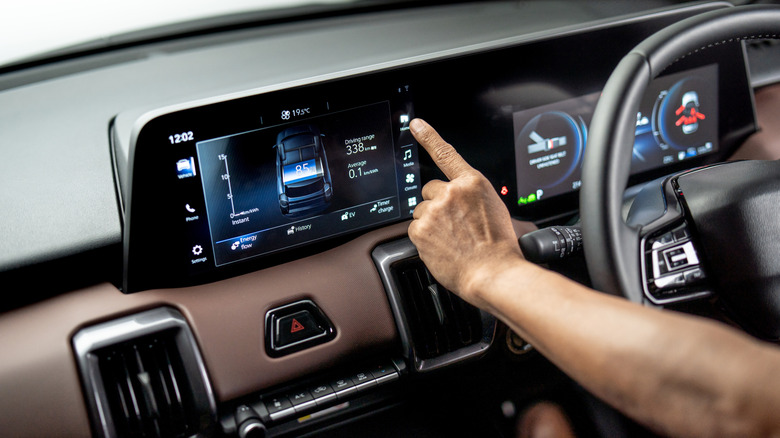
GM is far from the first company to turn a profit by selling user data, and it certainly won't be the last. In a similar case from 2025, Toyota was sued for sharing drivers' data with Progressive Insurance (via Bloomberg Law). As reported by The New York Times, insurance companies have been found to buy this type of data and use it to increase premiums for certain drivers.
It's not just automotive companies, either. There has been a recent series of accusations that LG TVs are listening to conversations. And that's just one of many times that smart TVs were accused of collecting user data. Every TV manufacturer stands to profit by using your viewing habits, app interactions, and voice data to generate personalized viewing recommendations or inform targeted ad placement. This strategy works much better for them when you don't know it's happening — and far too many companies are willing to risk doing it without your consent.
There is a silver lining in the recent case against GM. As part of the terms set forth by a coalition of attorneys general, GM will be required to take part in a comprehensive data privacy program that will limit the driving data it collects. GM has also agreed to conduct oversight and training at the dealership level to protect consumers from enrolling in data collection schemes without their consent. With any luck, this may serve as a promising precedent for similar cases in the future.