

James Woods And Debbie Harry's Cult Classic '80s Sci-Fi Movie Deserves More Fans
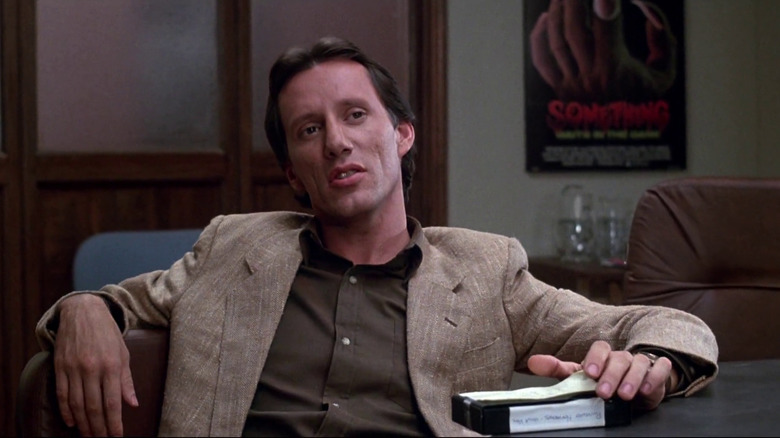
From the beginning of his career, David Cronenberg has always dabbled in the weird and deviant, with a track record lesser filmmakers have surely envied. No one makes gooey, gory, and intriguingly psychosexual tales of body horror quite like him. Starring James Woods and Debbie Harry, 1983's "Videodrome" was his first movie backed by a major studio and a sizeable budget, which only pushed the macabre maestro to go even weirder than in his previous phantasmagorias like "The Brood" and "Scanners." Even from more than 40 years away, the wild script and exquisite practical effects feel like nothing else here, keeping the sci-fi horror fresh and uncanny while showing why it was ahead of its time despite the technical and technological limitations of the era.
The plot follows Max Renn (Woods), the smarmy and increasingly amoral CEO of a Canadian UHF television station called CIVIC-TV, a quite "out there" channel that broadcasts everything from softcore pornography to extreme on-screen brutality. The more sensational and scandalous, the better, as far as Renn's mentality goes. He's always searching for unthinkable, aberrant content to hook more viewers. When he stumbles upon a broadcast showing snuff films (seemingly from Malaysia) called Videodrome, he thinks he's found the golden ticket. Renn records the broadcasts of people getting tortured and murdered to air them on his own station, and begins to obsess over them. The more he consumes these recordings, the more he seems to lose his grip on reality and succumb to hellish hallucinations. After learning the signal actually comes from Pittsburgh, he goes on a hunt to uncover the source for his own sanity and safety.
Media, sex, and mind-control
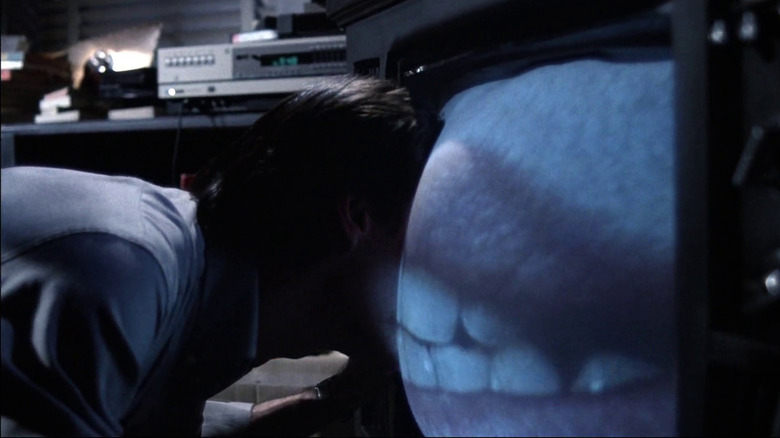
Essentially, nearly every Cronenberg movie deals in (and is directly or indirectly about) sex. Particularly in his earlier films, the director was obsessed with studying, observing, and contorting human sexuality by removing or adding stranger and stranger layers to it. "Videodrome" may seem primarily about how the media (TV in particular) rapidly extends its grasp on humanity to gain full control over us, but the driving force behind all that originates from pure sexual desire. It's no coincidence that Renn's lover, radio host Nicki Brand (Debbie Harry), points out early on that she's turned on by watching the torment and killing shown in Videodrome. After all, lust and desire are what keep us running.
But "Videodrome" never announces that loud and clear, leaving us to guess and contemplate where this bizarre bonkersness might go without giving us blatant directions. Our exploration of this obscurity — the richness of themes ranging from mass media manipulation to sexual perversion to raptured reality — is really the fun part in most Cronenberg horrors that are both thought-provoking and viscerally gross. Even today, the practical effects in the hallucination sequences have an off-putting appeal, making them feel like watching a car crash that grosses you out, yet you can't look away. It's body horror at its most upsetting and uncomfortable (and the director doubled down on it in "eXistenZ," a spiritual companion piece to "Videodrome"), and only Cronenberg can pull it off in such high fashion. Their integration into the often high-brow narrative is as seamless as putting a puzzle piece into its intended place. And they certainly played a pivotal part in the picture becoming a cult classic over the years after flopping at the box office.
Videodrome was too grotesque and uncanny for the 80s
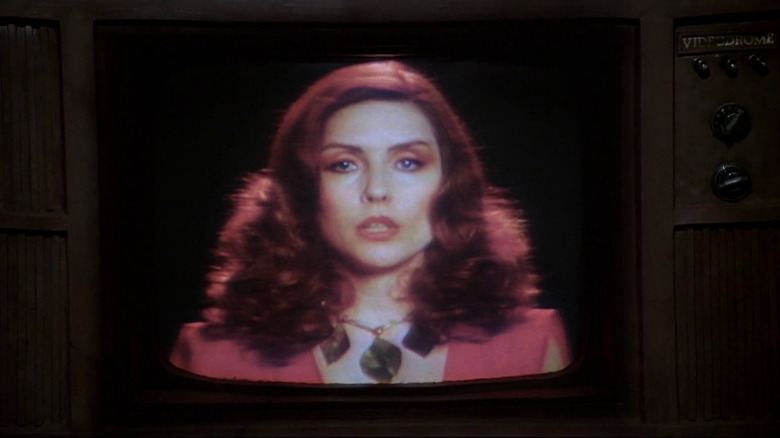
It's hardly a surprise to anyone familiar with Cronenberg's oeuvre that audiences didn't receive "Videodrome" well when it was released in February 1983. Although many critics took to its unusual appeal and praised its provocative qualities, moviegoers mostly stayed away, which made the film a box-office bomb, grossing only $2.1 million and change worldwide against its near $6 million budget. Like most Cronenberg features, "Videodrome" wasn't a crowd-pleaser (how could it be?) and it took a while to earn its cult classic status, even if it managed to bag a few awards in 1984. It was too bizarro and off-the-wall for a merited R rating, and it was also peculiarly introspective. In the long term, though, it's all those quirky traits and idiosyncrasies that made it stand the test of time and remain relevant for decades as one of the most influential sci-fi body horrors ever made.
It's not an easy or even a particularly scary watch — despite some great acting from Woods, Harry, and supporting actors like Sonja Smits, Jack Creley, and Les Carlson — but if you can find the right mood and connect with its wavelength, it emits a great deal of food for thought; you might get something special in return.