

What's The Difference Between Discs And Disks?
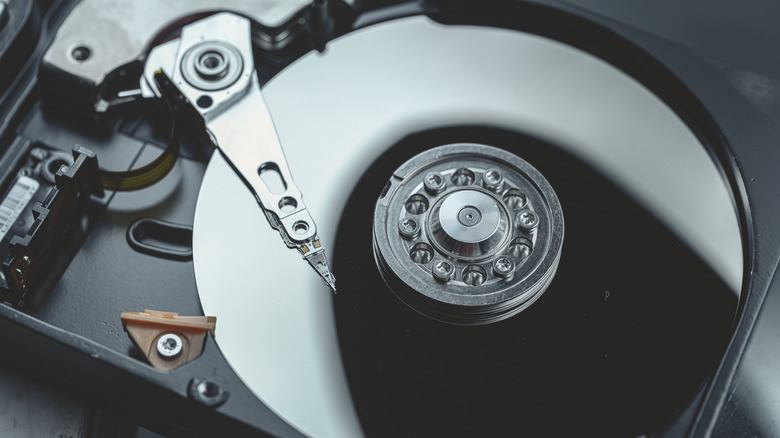
The words disc and disk are often used interchangeably, but the spelling can matter depending on the context. Both spellings are correct, and both refer to a flat, usually circular object — and while they often describe data storage media, their meanings can overlap in contexts related to the technology. For example, technology companies and technical writing guides commonly use disc to define optical media such as CDs and DVDs, and disk for magnetic storage such as hard disks and floppy disks.
The distinction isn't simply a matter of British versus American English. While disc is more common in British English and disk is generally preferred in American English, established technical terms follow their own conventions based on the functionality and purpose of the storage media. The difference becomes clearer when comparing the style guides used by major technology companies. For instance, Apple and Microsoft each have their own guidelines for using these terms.
Which one is correct, disk or disc?

In the world of technology, the choice between disc and disk often depends on the type of storage medium being described. For example, Microsoft recommends using discs when referring to CDs and DVDs. Its computer and device terminology also prefers the use of hard drive over hard disk when referring to a computer's primary storage device for a general audience. On the other hand, Apple recommends using the term disc for optical media and disk for magnetic storage media. The terminology used by the manufacturer matters in both instances, but generally speaking, Apple's style guide is more common in the technology world.
Optical storage formats or discs use laser-based technology to read the stored information. Some common examples are compact discs (CDs), digital versatile discs (DVDs), and Blu-ray discs. On the other hand, magnetic storage media or disks usually refer to hard disk drives (HDDs). These drives store data on rotating platters coated with magnetic material, which a read/write head uses to record and retrieve information. Another example of a disk is the floppy disk.
Regarding solid-state drives (SSDs) and USB flash drives, these store data in electronic flash memory rather than on rotating magnetic platters. They are not magnetic disks, yet computing terminology still uses expressions such as disk space and disk image. One useful example of how spelling makes a difference is searching for them on Amazon. For instance, in our search for discs on Amazon, we found that the results mainly featured non-technology products. On the other hand, searching for disk showed results related to HDDs, SSDs, and computer-storage products. However, search results may vary depending on the marketplace, location, and search algorithm.