

How Long Does A Power Supply Last In Your PC?
We may receive a commission on purchases made from links.
The efficiency of a PC depends on several components, and one of the most important of those is your power supply unit (PSU). Your entire PC runs on this power supply, and over time, degradation can cause random power outages or PC malfunctions. This type of hardware malfunction often continues intermittently until your power supply eventually stops working altogether. But how long do power supply units actually last, and when is a good time to look for a replacement? The answer is usually somewhere between three and 12 years, but there are many factors that can land your PSU at various places along that spectrum.
There are two reasons why you might need to replace your power supply. The first is a total hardware failure. Factors like a blown capacitor or shorted transformer can cause a power supply to stop working altogether. As a result, your other components won't get any power, and your PC won't turn on. The second is that your power supply unit can become outdated. Newer games require advanced graphics, and modern GPUs require significantly more power than older units. If you're equipping your PC with higher-tier parts, it's a good idea to check their power requirements before you run them on a lower-tier power supply unit.
By this logic, purchasing a good PSU can save you money in the long run. Assuming that it doesn't run into any major hardware failures, a strong power supply won't become outdated anytime soon and will be able to handle higher-tier components. Conversely, running a weak power supply near its maximum output limit can not only cost you more in future replacements but can also actively damage your other PC parts.
Thermal conditions and components dictate PSU lifespans
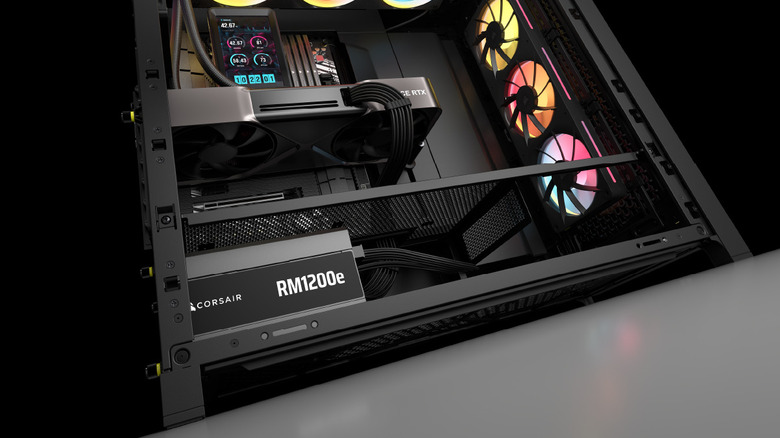
A power supply's lifespan depends on two things: functioning hardware and power capabilities. For most standard units, the average lifespan is five to 10 years. After five years, some budget PSUs might start to malfunction, while good PSUs can run a decade without any significant issues if maintained properly. But this range can vary depending on factors like overall build quality, system thermal conditions, workload intensity, and keeping dust out of the ventilation pathways.
One of the most important determining factors for a power supply is capacitor quality. Capacitors help to smooth out voltage fluctuations and abnormal power spikes that could damage your PSU. Heat is a major issue when it comes to power supplies, as it wears out internal components. However, a good capacitor combats this problem by absorbing voltage ripples and keeping the power supply steady in demanding conditions. Higher-tier PSUs use Japanese capacitors rated for 221 degrees Fahrenheit for maximum efficiency.
Other components that impact your power supply's lifespan include the cooling system, transformers, inductors, and protection circuits. The cooling system of any device plays a pivotal role in preventing heat degradation, but especially so in power supply units, which are tightly packed inside a closed PC case and are under constant load. Transformers, on the other hand, handle energy transfer between different voltage stages and can impact the PSU's ability to handle rapid load changes. A good inductor can reduce coil whine and ensure smooth power delivery, while protection circuits play a role in damage control -– preventing short-circuits or overheating by shutting down the PSU during unsafe conditions.
Quality tiers and wattage headroom maximize longevity
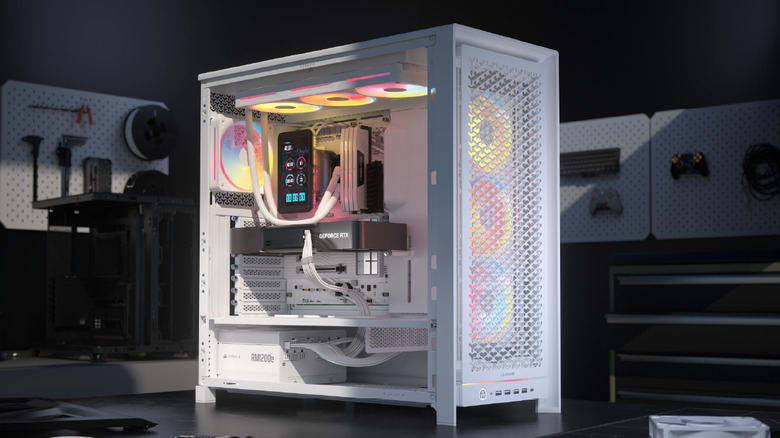
Quality tiers play a major role in how long a power supply can last. Broadly classified, PSUs fall into three tiers: budget, midrange, and premium power supplies. Budget power supplies usually have a three-to-five-year lifespan at a lower price tag, but rely on lower-quality components. A midrange power supply can last around five to eight years, provided you keep it in good working condition and under a reasonable load. Premium power supplies cost significantly more upfront, but can work for up to 12 years without any major issues. They are best for heavy-duty usage, such as streaming and professional rendering.
Warranty length is also a highly accurate indicator of how reliable a power supply is. Manufacturers that cover 10 years or more in warranty are confident their PSUs are built to last. Another point to keep in mind alongside quality tiers is 80 PLUS efficiency ratings (administered by CLEAResult). You'll often come across Bronze, Gold, or Platinum written on PSUs. These are 80 PLUS efficiency ratings, which indicate how effectively a power supply turns electrical power into usable power for the PC. For example, Platinum-rated PSUs convert 90% of electrical power into usable output, losing just 10% as heat. This can affect a power supply's lifespan in the long run since more heat energy degrades components more quickly.
Finally, longevity relies heavily on wattage headroom. Wattage headroom refers to the extra power cushion available between your system's actual energy consumption and the maximum power capacity your PSU is rated to supply. Having this space allows your power supply to absorb moderate power spikes without suffering hardware damage. It also means your power supply is less likely to get outdated and require replacement, since it has a higher power capacity to run heavier GPUs.