

Adding Plastic To Roads Sounds Like A Bad Idea, But Scientists Found An Unexpected Benefit
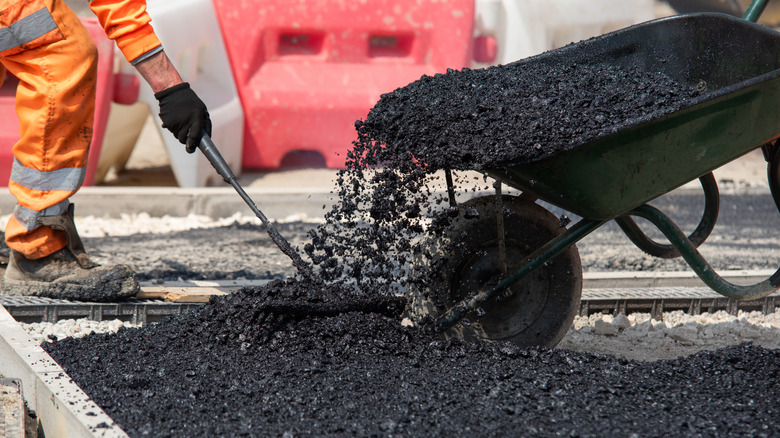
Plastic has had a devastating impact on the environment, largely due to the fact that it typically requires fossil fuels to produce and can take centuries to degrade. Worse still, the U.S. only recycles less than 9% of its plastic, meaning most of what's thrown away is destined to end up in a landfill. But what if it was possible to re-use old plastic that took full advantage of its durability? That's exactly what new research is suggesting, with one idea being to strengthen roads by mixing asphalt with recycled plastic. The end result would theoretically increase longevity and resilience to potholes, while also reducing the amount of harmful microplastics introduced into our air, soil, and water.
Plastic-infused asphalt is nothing new, though it goes by several names including "plastic roads" and Recycled Plastic-Modified Asphalt (or, RPMA). It was first developed in 2001 but until recently, nobody had formally examined just how much microplastic they would disperse during their lifetime. A new study from Penn State University, however, found that roads made of asphalt and low-density polyethylene — which is often used in product packaging – released a staggering 56.5% less plastic-like materials than roads made of asphalt alone (via ScienceDirect).
It's certainly an exciting time for civil engineering. While roads have existed for millennia, the technology behind them is still evolving. For instance, researchers have been experimenting with using MRIs to detect failing roads before potholes form and using AI to create self-healing concrete that can last longer and even survive natural disasters such as earthquakes.
Creating a highway to healthier ecosystems
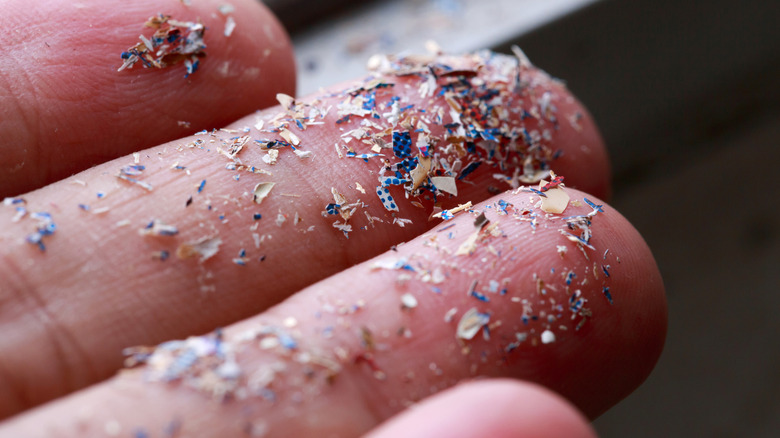
Let's not get ahead of ourselves: These findings were based on laboratory tests and may not reflect real-world microplastic dispersal. Still, Texas is trialling plastic roads so we may have verifiable data on this sooner rather than later.
The Penn State University researchers simulated real-world conditions using a process called the Hamburg Wheel Tracking Test, which involves immersing the plastic-infused asphalt in hot water and repeatedly running weighted wheels over it, then analysing the runoff for microplastics. If this proves accurate, it represents a potentially huge step forward for both sustainability and road quality.
If the research findings are accurate, RPMA could significantly curb the spread of microplastics. This is particularly important because us humans alone typically ingest a credit-card size amount of plastic every week, yet the long-term impact of this remains unclear. Plastic is similarly devastating to birds and marine life, as it can cause serious or even fatal harm when eaten, ultimately impacting the fragile balance of local ecosystems. Scientists and environmentalists agree that any progress humanity can make towards reducing microplastic exposure is a dramatic step in the right direction.