

Nvidia GPU Connectors Are Still Burning Up Years Later — Here's What We Know
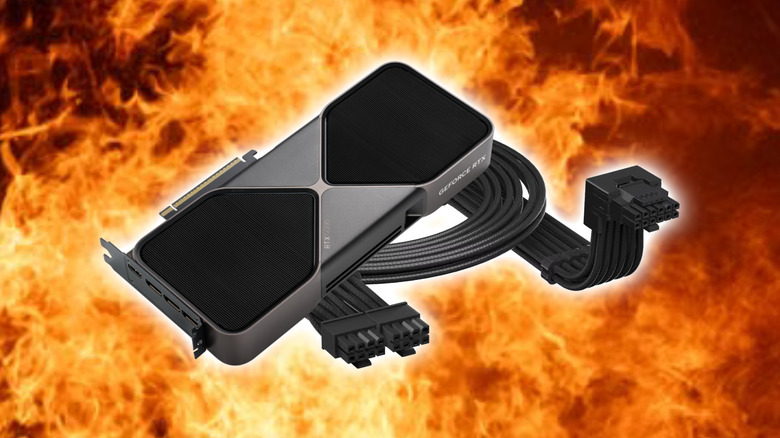
Since its launch, the RTX 4090 has introduced a brand new problem for PC hardware enthusiasts or professionals opting to cram as much graphical horsepower as possible into their rigs. With so much power, the 4090 required a more powerful connector, but it has one fatal flaw: It likes to melt. Issues that began years ago on the 4090 are still happening now, as the RTX 5090 — along with the RTX 50 series, which uses the same connector — has had its fair share of melting incidents, too.
The multi-trillion-dollar AI hardware company Nvidia has seemingly still not solved the problem, despite having already solved the problem beforehand. As pointed out by Hackaday, the RTX 3090 Ti, Nvidia's upgraded version of its flagship card from the generation before the 4090, is built so that the power is balanced over a three-phase distribution. This allowed for the 450-watt device to track any potential damage that might be coming through the pipes. The up-to-600-watt RTX 4090 and 5090 don't feature anything of the sort — the 5090 does have shunt resistors to measure the current, but again, nothing to balance it.
Issues arise with the connector, the 12VHPWR and 12V-2x6, because a fault in the balancing of the current can melt the connector. 12V-2x6 is the updated standard for the 5090, with 12VHPWR being found on the 4090. In a Hardware Unboxed video, the YouTube channel found that the new connector on the RTX 5090, rated at 600 W, was piping all the power through just two of the cables on the connector. It melted the connector during further testing.
It seems there's no real fix for melting Nvidia cables
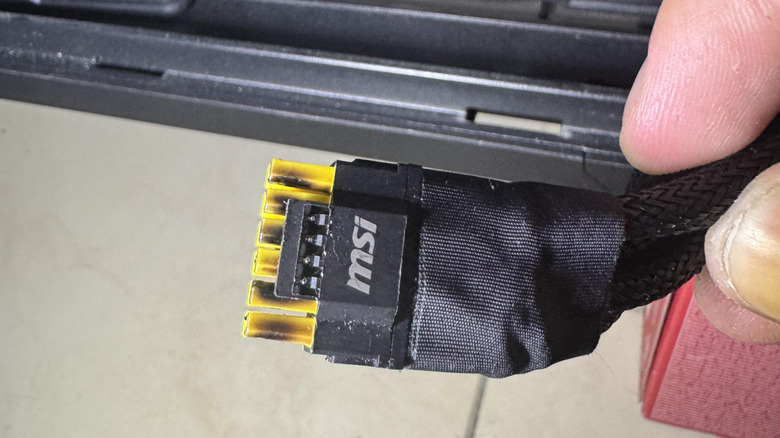
In updating the standard to 12V-2x6, while the outer casing is pretty much identical and it should be backward compatible, it introduces longer pins. A huge issue with the 12VHPWR cable was that the connector could deliver power without being fully plugged in, leading to electrical issues that spurred the melting. Of course, this has also spurred on the weird world of products designed to prevent this, because it's clear that Nvidia has no real interest in fixing it properly.
MSI has introduced yellow-tipped cables to give an indication of when the cable is fully connected. However, faults with the cable or GPU itself can still cause melting. Zotac added a safety light that would tell the user when it is fully inserted. Galax took it a step further and introduced RTX 50-series cards with RGB lights baked into the card's shell to indicate when it is properly powered.
It seems unlikely that we will see Nvidia tackle this problem any time soon. Even on its RTX Pro 6000 cards, some cables are still melting. Despite its legacy in gaming-centric and consumer-facing hardware, Nvidia is now all in on the AI industry. Unlike every year for nearly the last decade, Nvidia has not launched new consumer-dedicated cards, with an RTX 50 Ti series or RTX 60 series missing from its CES announcements in January 2026. It did launch RTX Spark chips, and of course, a lot of new and expensive AI hardware for data centers.